V-J Day: Japan's Surrender on August 15, 1945
1945 · Tokyo, Japan
Japan announced its surrender to the Allies, effectively ending World War II. This day is known as V-J Day (Victory over Japan Day).
August 9, 1945
The United States dropped an atomic bomb on Nagasaki, Japan, leading to Japan's surrender in World War II.
Nagasaki, Japan | United States Armed Forces
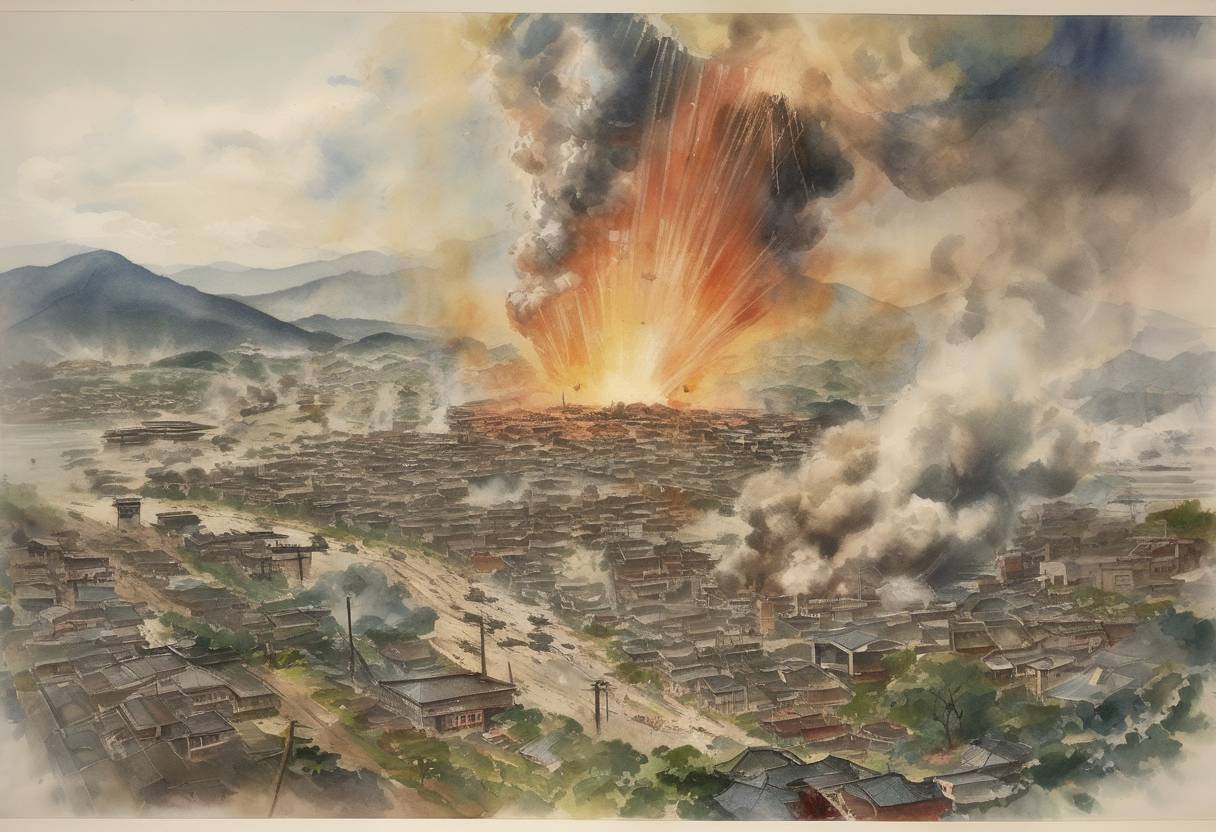
On August 9, 1945, the United States dropped an atomic bomb on the city of Nagasaki, Japan. This event was a pivotal moment in World War II, leading to Japan’s eventual surrender and the end of the war. Here is a detailed account of the events surrounding this significant historical moment.
Manhattan Project: The development of the atomic bomb was part of the Manhattan Project, a secret U.S. research and development project during World War II. The project aimed to harness nuclear energy for military purposes, culminating in the creation of two types of atomic bombs: “Little Boy” and “Fat Man.”
Hiroshima Bombing: Just three days prior, on August 6, 1945, the U.S. dropped the first atomic bomb, “Little Boy,” on Hiroshima. The devastation was unprecedented, resulting in massive civilian casualties and destruction.
Japanese Resistance: Despite the catastrophic impact on Hiroshima, Japan did not immediately surrender. The Japanese government was divided, with some leaders advocating for continued resistance and others pushing for peace.
Target Selection: Nagasaki was not the original target. The primary target was the city of Kokura, but due to poor visibility caused by cloud cover, the mission was redirected to Nagasaki.
The Bomb: The bomb dropped on Nagasaki was code-named “Fat Man.” It was a plutonium implosion-type bomb, more complex than the uranium-based “Little Boy” used on Hiroshima.
Impact: At 11:02 AM, “Fat Man” exploded over Nagasaki, releasing energy equivalent to approximately 21 kilotons of TNT. The explosion resulted in the immediate deaths of an estimated 40,000 people, with total casualties rising to around 70,000 by the end of 1945 due to injuries and radiation sickness.
Japanese Surrender: The devastation wrought by the bombings of Hiroshima and Nagasaki, coupled with the Soviet Union’s declaration of war against Japan on August 8, 1945, pressured the Japanese government to surrender. On August 15, 1945, Emperor Hirohito announced Japan’s unconditional surrender, effectively ending World War II.
Global Impact: The use of atomic bombs on Hiroshima and Nagasaki marked the first and only use of nuclear weapons in warfare. It ushered in the nuclear age, significantly influencing global politics and leading to the Cold War arms race.
Moral and Ethical Debates: The bombings have been the subject of extensive moral and ethical debates. Critics argue about the necessity and humanitarian impact of using atomic weapons, while proponents claim it hastened the end of the war and saved lives that would have been lost in a prolonged conflict.
The bombing of Nagasaki, along with Hiroshima, remains a powerful reminder of the destructive potential of nuclear weapons. It has shaped international policies on nuclear proliferation and continues to influence discussions on war, peace, and human rights. The events of August 1945 serve as a somber reflection on the consequences of warfare and the importance of striving for global peace.
Source: en.wikipedia.org