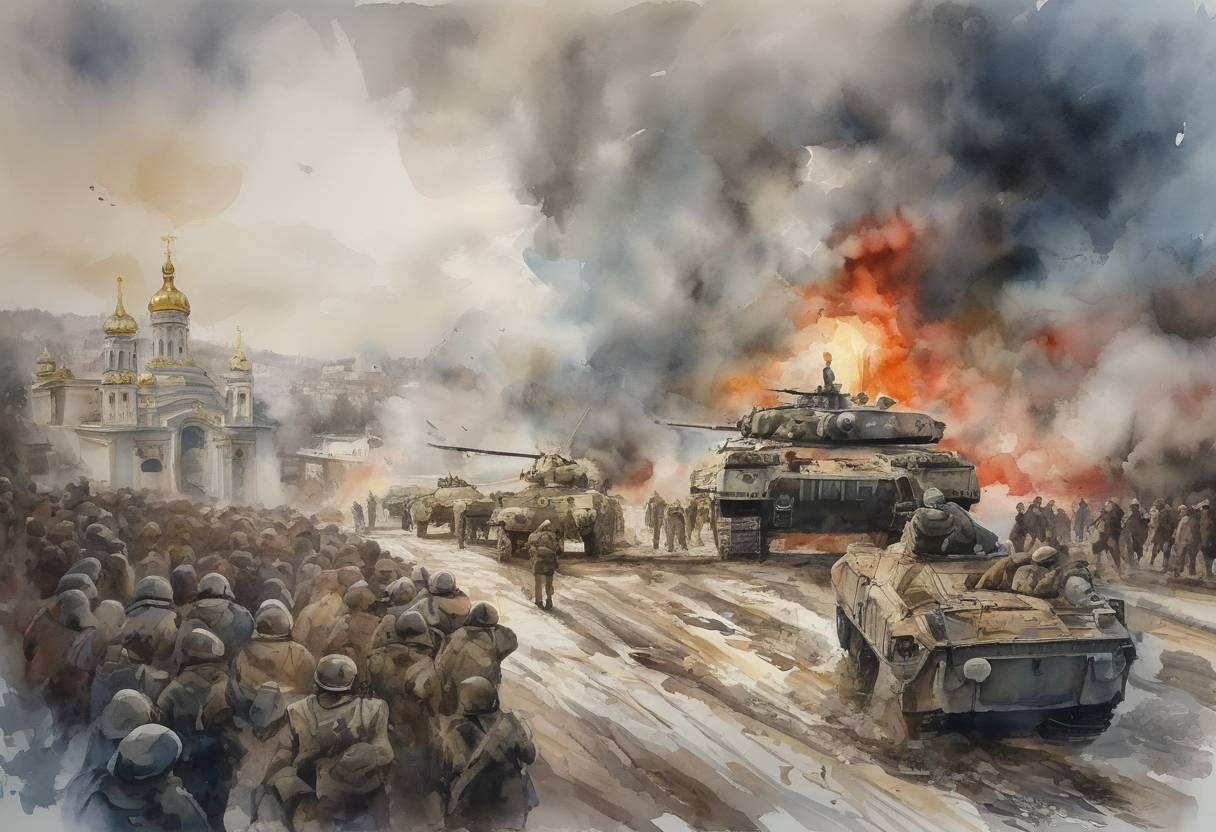
Russia’s Full-Scale Invasion of Ukraine on February 24, 2022
On February 24, 2022, Russia launched a full-scale invasion of Ukraine, marking a significant escalation in the ongoing Russo-Ukrainian War. This invasion was a pivotal moment in international relations and had profound implications for global politics, security, and economics.
Background
The roots of the conflict trace back to 2014, when Russia annexed Crimea following Ukraine’s Euromaidan protests and the subsequent ousting of Ukrainian President Viktor Yanukovych. This annexation was widely condemned by the international community and led to the imposition of sanctions on Russia. The conflict further intensified with the outbreak of war in the Donbas region, where Russian-backed separatists declared independence from Ukraine, leading to ongoing skirmishes and a fragile ceasefire.
Key Events Leading Up to the Invasion
- Military Buildup: In the months leading up to February 2022, Russia amassed a significant military presence along its border with Ukraine, raising alarms among Western nations and NATO allies.
- Diplomatic Tensions: Diplomatic efforts to de-escalate tensions, including negotiations and summits, failed to produce a resolution. Russia’s demands for security guarantees, including a halt to NATO’s eastward expansion, were not met to its satisfaction.
- Recognition of Separatist Regions: On February 21, 2022, Russian President Vladimir Putin recognized the independence of the self-proclaimed Donetsk People’s Republic and Luhansk People’s Republic, further escalating tensions.
The Invasion
On February 24, 2022, Russian forces launched a coordinated assault on Ukraine, targeting major cities, military installations, and infrastructure across the country. The invasion involved airstrikes, artillery bombardments, and ground troop movements, marking one of the largest military operations in Europe since World War II.
International Response
- Condemnation and Sanctions: The invasion was met with widespread international condemnation. The United States, European Union, United Kingdom, and other countries imposed severe economic sanctions on Russia, targeting its financial institutions, energy sector, and key individuals.
- Military and Humanitarian Aid: Many nations provided military and humanitarian aid to Ukraine, supporting its defense efforts and addressing the growing refugee crisis as millions of Ukrainians fled the conflict.
- Diplomatic Efforts: The United Nations and various international organizations called for an immediate ceasefire and withdrawal of Russian forces, though diplomatic resolutions remained elusive.
Consequences and Aftermath
- Humanitarian Crisis: The invasion resulted in significant civilian casualties and widespread destruction, leading to a humanitarian crisis with millions displaced both internally and across Europe.
- Global Economic Impact: The conflict disrupted global supply chains, particularly in energy and agriculture, contributing to rising inflation and economic instability worldwide.
- Geopolitical Shifts: The invasion prompted a reevaluation of security policies among NATO members and non-member states, leading to increased defense spending and strategic realignments.
The full-scale invasion of Ukraine by Russia on February 24, 2022, remains a defining moment in contemporary history, with ongoing ramifications for international relations and global stability.