Skylab: The United States' First Space Station
1973 · Cape Canaveral, United States
Skylab, the United States' first space station, was launched by NASA.
July 11, 1979
The abandoned U.S. space station Skylab re-entered Earth's atmosphere and disintegrated, with debris falling over the Indian Ocean and sparsely populated areas of Western Australia.
Esperance, Australia | NASA
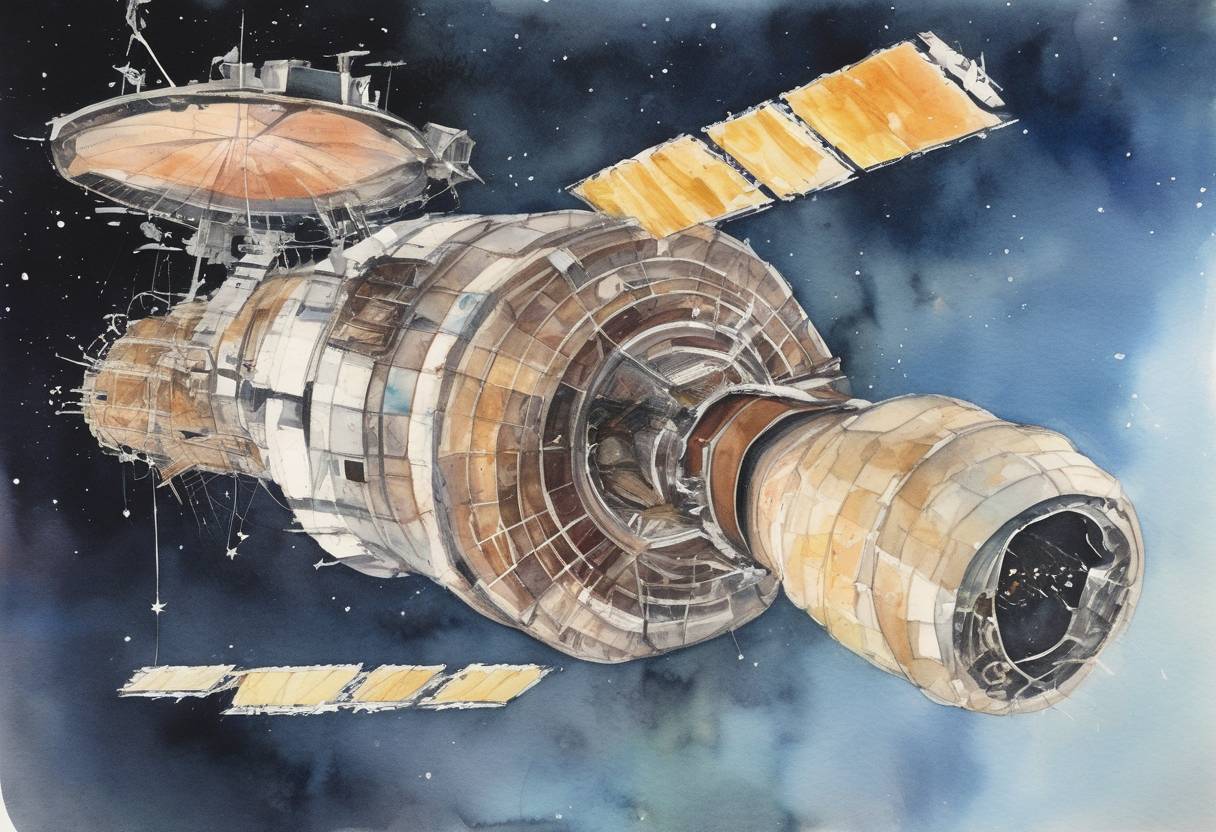
On July 11, 1979, the United States’ first space station, Skylab, made an uncontrolled re-entry into Earth’s atmosphere, marking a significant event in the history of space exploration. This event was notable not only for its scientific and technological implications but also for the public attention it garnered worldwide.
Skylab was launched by NASA on May 14, 1973, as part of an ambitious program to establish a permanent human presence in space. The space station was designed to house astronauts for extended periods, allowing them to conduct scientific experiments and observations. Over its operational life, Skylab hosted three manned missions, during which astronauts conducted numerous experiments in fields such as solar astronomy, Earth resources, and biomedical studies.
End of Manned Missions: The last crewed mission to Skylab ended in February 1974. Afterward, the station was left in orbit, with plans to boost its altitude using the Space Shuttle, which was still under development.
Orbital Decay: Over time, Skylab’s orbit began to decay due to atmospheric drag. The delay in the Space Shuttle program meant that NASA could not execute the planned re-boost, leaving Skylab’s re-entry inevitable.
International Attention: As Skylab’s re-entry approached, there was significant global concern and media coverage about where the debris might land. NASA calculated potential impact zones, but the exact location remained uncertain until the final moments.
On July 11, 1979, Skylab re-entered Earth’s atmosphere. The intense heat and pressure caused the space station to disintegrate, with most of the debris burning up. However, some fragments survived re-entry and fell over the Indian Ocean and sparsely populated areas of Western Australia.
Debris Impact: The largest pieces of debris landed near the town of Esperance in Western Australia. Fortunately, there were no injuries or significant damage reported.
Public Reaction: The event captured the public’s imagination, with some people collecting debris as souvenirs. The town of Esperance famously issued NASA a fine for littering, which became a humorous anecdote in the aftermath.
Space Policy Implications: The Skylab re-entry highlighted the challenges of managing space debris and the need for international cooperation in space exploration. It underscored the importance of planning for the safe disposal of space structures.
Legacy: Despite its dramatic end, Skylab was considered a success, having provided valuable scientific data and experience in long-duration space missions. It paved the way for future space stations, including the International Space Station (ISS).
Cultural Impact: Skylab’s re-entry remains a memorable event in space history, often cited in discussions about space debris and the risks associated with uncontrolled re-entries.
In conclusion, the re-entry of Skylab on July 11, 1979, was a significant moment in space exploration history, demonstrating both the achievements and challenges of human endeavors in space.
Source: en.wikipedia.org