1975 · Saigon, Vietnam
Operation Frequent Wind, the evacuation of American civilians and 'at-risk' Vietnamese from Saigon, begins as the Vietnam War draws to a close.
March 29, 1974
The last United States soldiers leave South Vietnam, ending direct U.S. military involvement in the Vietnam War.
Saigon, South Vietnam | United States Armed Forces
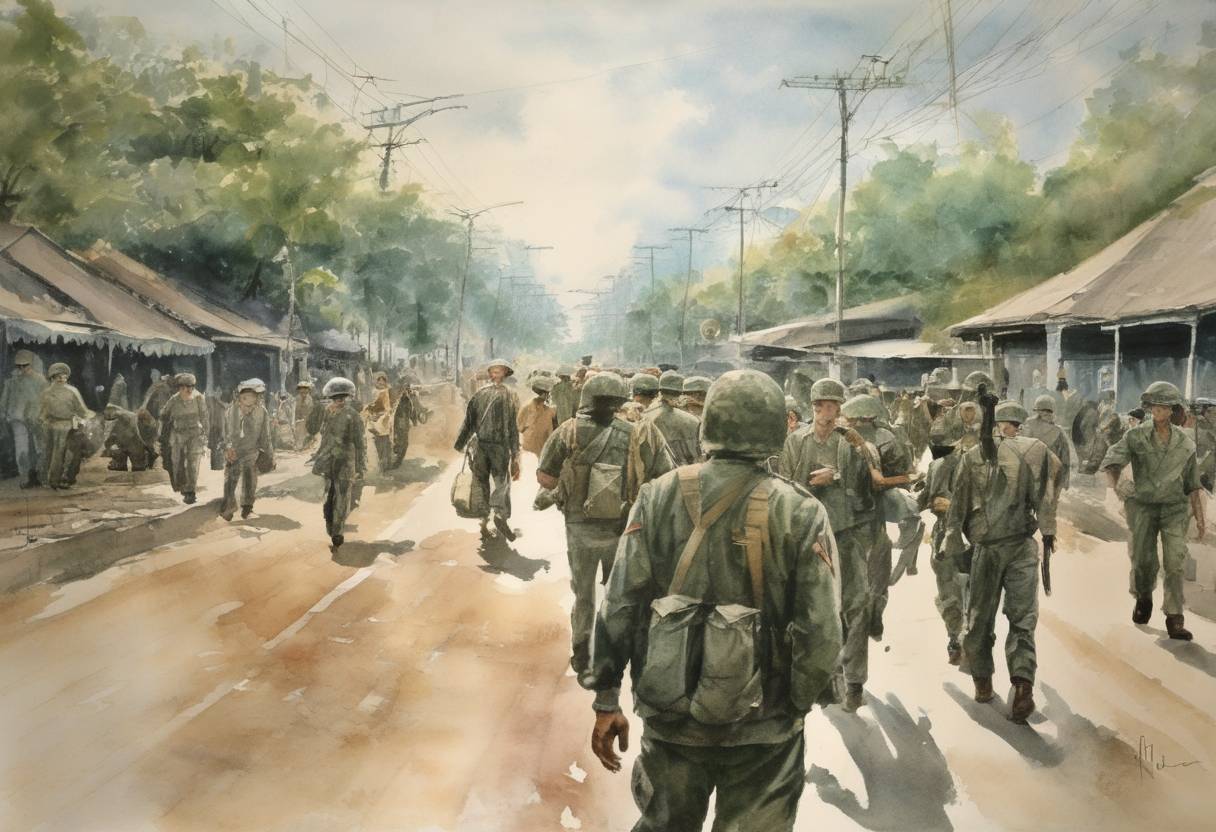
On March 29, 1973, the last United States soldiers departed from South Vietnam, marking the end of direct U.S. military involvement in the Vietnam War. This significant event was the culmination of a complex and contentious conflict that had spanned nearly two decades and had profound impacts on both Vietnam and the United States.
Vietnam War Overview: The Vietnam War was a prolonged conflict that pitted the communist government of North Vietnam and its allies in South Vietnam, known as the Viet Cong, against the government of South Vietnam and its principal ally, the United States. The war was part of a larger regional conflict as well as a manifestation of the Cold War between the United States and the Soviet Union.
U.S. Involvement: The United States became involved in Vietnam in the late 1950s, initially providing military advisors to the South Vietnamese government. Over the years, U.S. involvement escalated, peaking in 1969 with over 500,000 American troops stationed in Vietnam.
Paris Peace Accords: The withdrawal of U.S. troops was a result of the Paris Peace Accords, signed on January 27, 1973. These accords were intended to establish peace in Vietnam and end the direct military involvement of the United States. The agreement included a ceasefire, the withdrawal of U.S. forces, and the return of prisoners of war.
Vietnamization: Initiated by President Richard Nixon, this policy aimed to gradually transfer combat responsibilities to South Vietnamese forces, allowing for the withdrawal of American troops.
Public Pressure: Growing anti-war sentiment and protests in the United States exerted significant pressure on the government to end its involvement in Vietnam.
Negotiations: Prolonged negotiations between the United States, North Vietnam, South Vietnam, and the Viet Cong eventually led to the signing of the Paris Peace Accords.
Fall of Saigon: Despite the accords, fighting continued between North and South Vietnam. In April 1975, North Vietnamese forces captured Saigon, leading to the unification of Vietnam under communist control.
Impact on the U.S.: The Vietnam War had lasting effects on American society, including changes in military policy, a more cautious approach to foreign interventions, and a deeply divided public opinion.
Legacy: The war left a profound legacy in Vietnam, with significant human and economic costs. It also influenced U.S. foreign policy and military strategy for decades to come.
The withdrawal of U.S. troops from Vietnam on March 29, 1973, was a pivotal moment in the Vietnam War, symbolizing the end of a contentious chapter in American history and the beginning of a new era for Vietnam.
Source: en.wikipedia.org