Edward VI's Coronation as King of England
1547 · London, England
Edward VI is crowned King of England at the age of nine following the death of his father, Henry VIII.
January 15, 1559
Elizabeth I was crowned Queen of England at Westminster Abbey.
London, England | Church of England
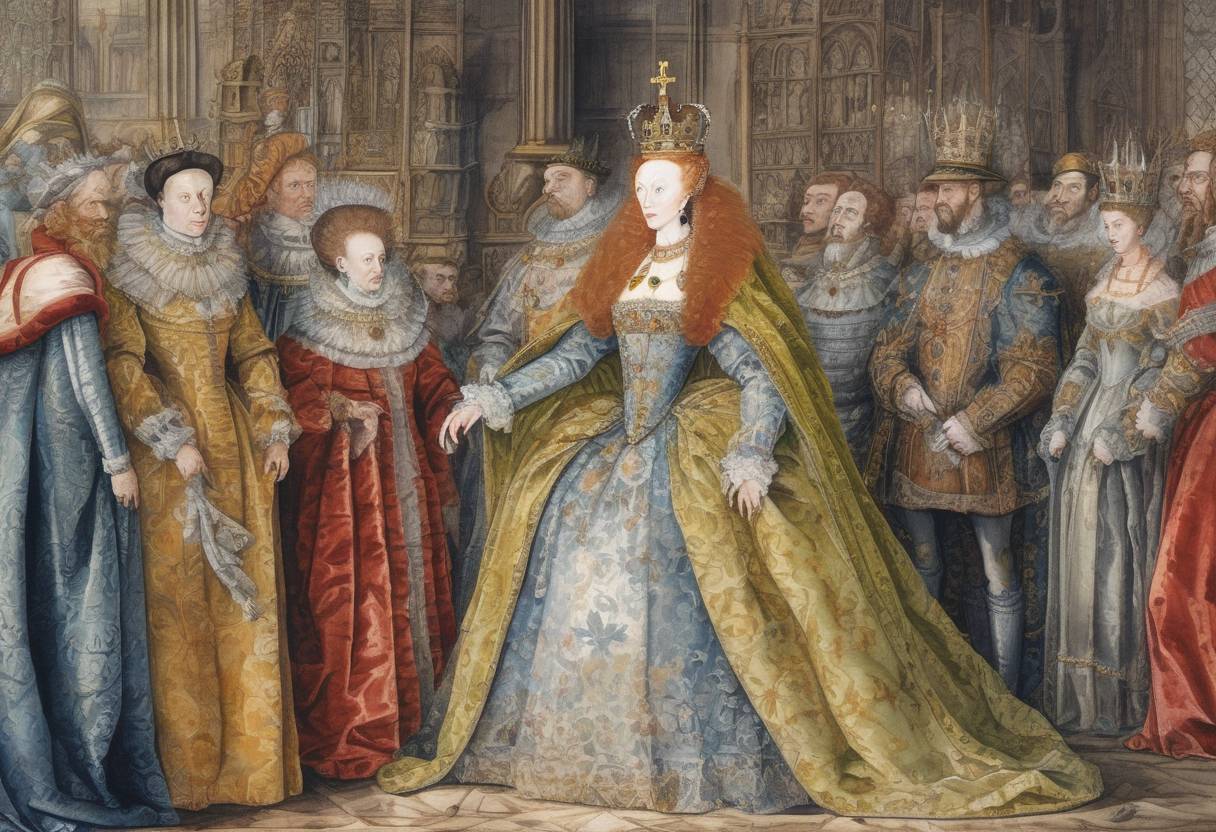
On January 15, 1559, Elizabeth I was crowned Queen of England at Westminster Abbey, marking the beginning of a significant and transformative reign in English history. Her coronation was a pivotal event that set the stage for the Elizabethan Era, a period noted for its flourishing arts, exploration, and the strengthening of England as a major European power.
Elizabeth I ascended to the throne following the death of her half-sister, Queen Mary I, on November 17, 1558. Mary I’s reign had been marked by efforts to restore Roman Catholicism in England, which included the persecution of Protestants. Elizabeth, the daughter of King Henry VIII and Anne Boleyn, was seen as a Protestant figurehead and her accession was welcomed by those who opposed Mary’s Catholic policies.
The coronation took place at Westminster Abbey, a traditional site for English coronations, and was conducted by Owen Oglethorpe, the Bishop of Carlisle. Notably, the Archbishop of Canterbury, Reginald Pole, had died the same day as Mary I, and the Catholic bishops refused to officiate due to Elizabeth’s Protestant faith. Despite these challenges, the ceremony was a grand affair, blending traditional Catholic rites with Protestant elements, reflecting Elizabeth’s desire for religious compromise and unity.
Procession and Pageantry: Elizabeth’s coronation was marked by elaborate pageantry. The day before the ceremony, she participated in a grand procession through the streets of London, which was lined with cheering crowds and decorated with tapestries and flowers.
Religious Significance: The coronation service itself was a delicate balance of religious practices. Elizabeth took the oath in English rather than Latin, signaling a shift towards Protestantism, yet she retained several Catholic symbols and rituals to appeal to both religious factions.
Symbolism and Legitimacy: The coronation was crucial in establishing Elizabeth’s legitimacy as queen. As the daughter of Anne Boleyn, whose marriage to Henry VIII had been contentious, Elizabeth’s right to the throne was not universally accepted. The ceremony helped solidify her position and authority.
Elizabeth I’s reign, which lasted until her death in 1603, is often regarded as a golden age in English history. Her policies fostered economic growth, cultural development, and the expansion of English influence overseas. The Elizabethan Religious Settlement of 1559 sought to establish a moderate form of Protestantism, aiming to unify the country and reduce religious conflict.
Under Elizabeth’s rule, England saw the defeat of the Spanish Armada in 1588, the flourishing of English drama with figures like William Shakespeare, and the beginnings of English colonial expansion. Her reign laid the foundations for the future British Empire and left a lasting legacy on the cultural and political landscape of England.
Elizabeth I’s coronation was not just the crowning of a monarch but the dawn of an era that would shape the course of English history for generations.
Source: en.wikipedia.org