The 17 July Revolution: The Ba'ath Party's Rise to Power in Iraq
1968 · Baghdad, Iraq
Iraq's Ba'ath Party under Ahmed Hassan al-Bakr and Saddam Hussein take power after a coup, reshaping Iraqi politics for decades.
July 16, 1979
Saddam Hussein becomes the President of Iraq, succeeding Ahmed Hassan al-Bakr.
Baghdad, Iraq | Ba'ath Party
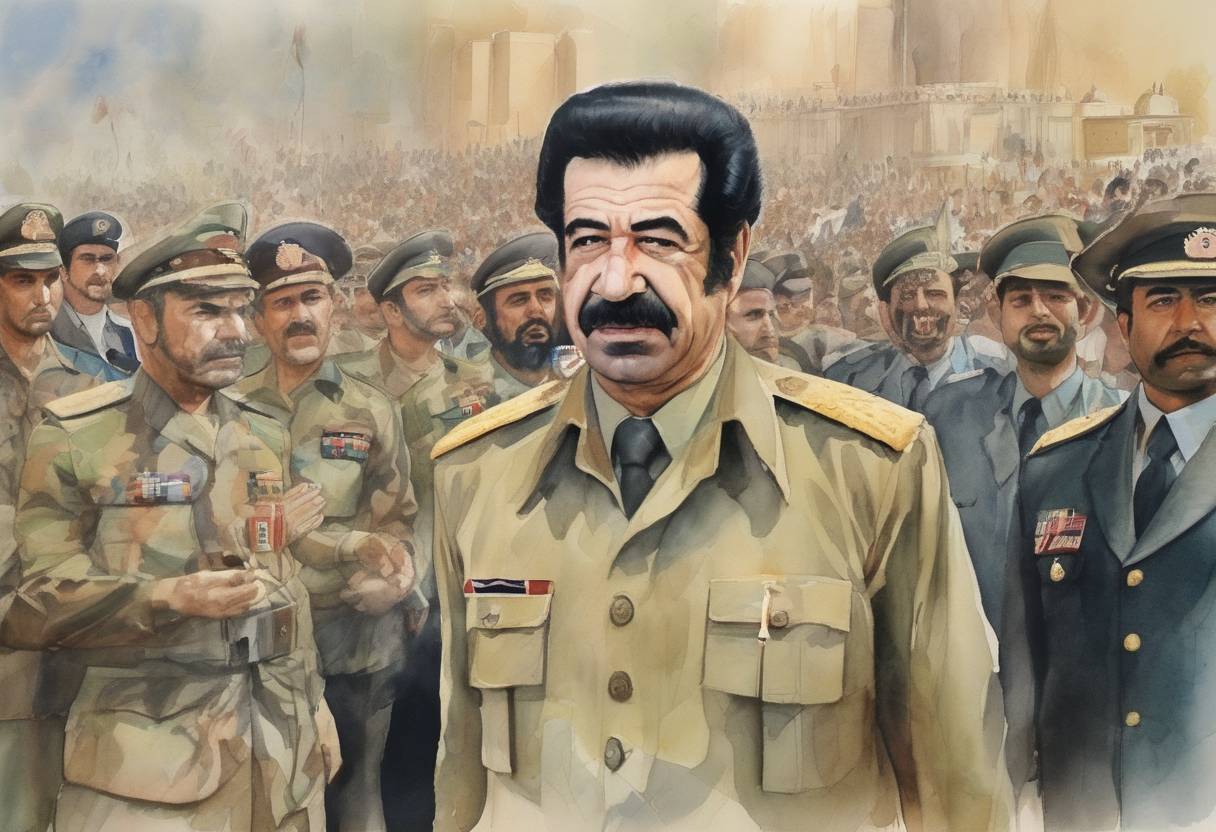
On July 16, 1979, Saddam Hussein officially became the President of Iraq, succeeding Ahmed Hassan al-Bakr. This transition marked a significant turning point in Iraq’s political landscape and had profound implications for the region.
Saddam Hussein had been a prominent figure in Iraqi politics long before his presidency. Born on April 28, 1937, in Al-Awja, near Tikrit, Saddam joined the Arab Socialist Ba’ath Party as a young man. The Ba’ath Party, which advocated for Arab nationalism and socialism, played a crucial role in Iraq’s political scene.
In 1968, the Ba’ath Party came to power in Iraq through a coup, and Ahmed Hassan al-Bakr became the president. Saddam Hussein, who was instrumental in the coup, was appointed as the vice president. Over the next decade, Saddam consolidated power, becoming the de facto leader of Iraq by controlling the security apparatus and the Ba’ath Party.
By 1979, Ahmed Hassan al-Bakr’s health was declining, and Saddam Hussein was well-positioned to take over the presidency. On July 16, 1979, al-Bakr resigned, citing health reasons, and Saddam officially assumed the presidency. This transition was relatively smooth, as Saddam had already established himself as the dominant force in Iraqi politics.
Consolidation of Power: Shortly after assuming the presidency, Saddam Hussein moved quickly to consolidate his power. He orchestrated a purge within the Ba’ath Party, eliminating potential rivals and dissenters. This included a dramatic televised meeting where several party members were accused of treason and subsequently executed.
Domestic Policies: Saddam focused on modernizing Iraq’s infrastructure and economy, using the country’s oil wealth to fund development projects. He also implemented social programs aimed at improving education and healthcare.
Foreign Policy: Saddam’s presidency was marked by aggressive foreign policy moves, including the invasion of Iran in 1980, which led to the prolonged and devastating Iran-Iraq War. This conflict had significant regional and international repercussions.
Saddam Hussein’s rise to power had long-lasting effects on Iraq and the Middle East. His authoritarian rule was characterized by widespread human rights abuses, including the use of chemical weapons against Kurdish populations and political repression. Saddam’s policies and military ambitions eventually led to conflicts with neighboring countries and strained relations with the international community.
The legacy of Saddam’s presidency continued to influence Iraq’s political and social landscape long after his removal from power in 2003 during the Iraq War. His rule remains a critical period in understanding the complexities of Middle Eastern geopolitics and the challenges faced by Iraq in the subsequent decades.
Source: en.wikipedia.org