NASA's Mars Exploration Rover Spirit Lands on Mars
2004 · Mars, N/A
NASA's Mars Exploration Rover Spirit successfully lands on Mars, beginning its mission to explore the Martian surface.
May 25, 2008
NASA's Phoenix spacecraft lands on Mars to study the planet's arctic soil.
Mars, None | NASA
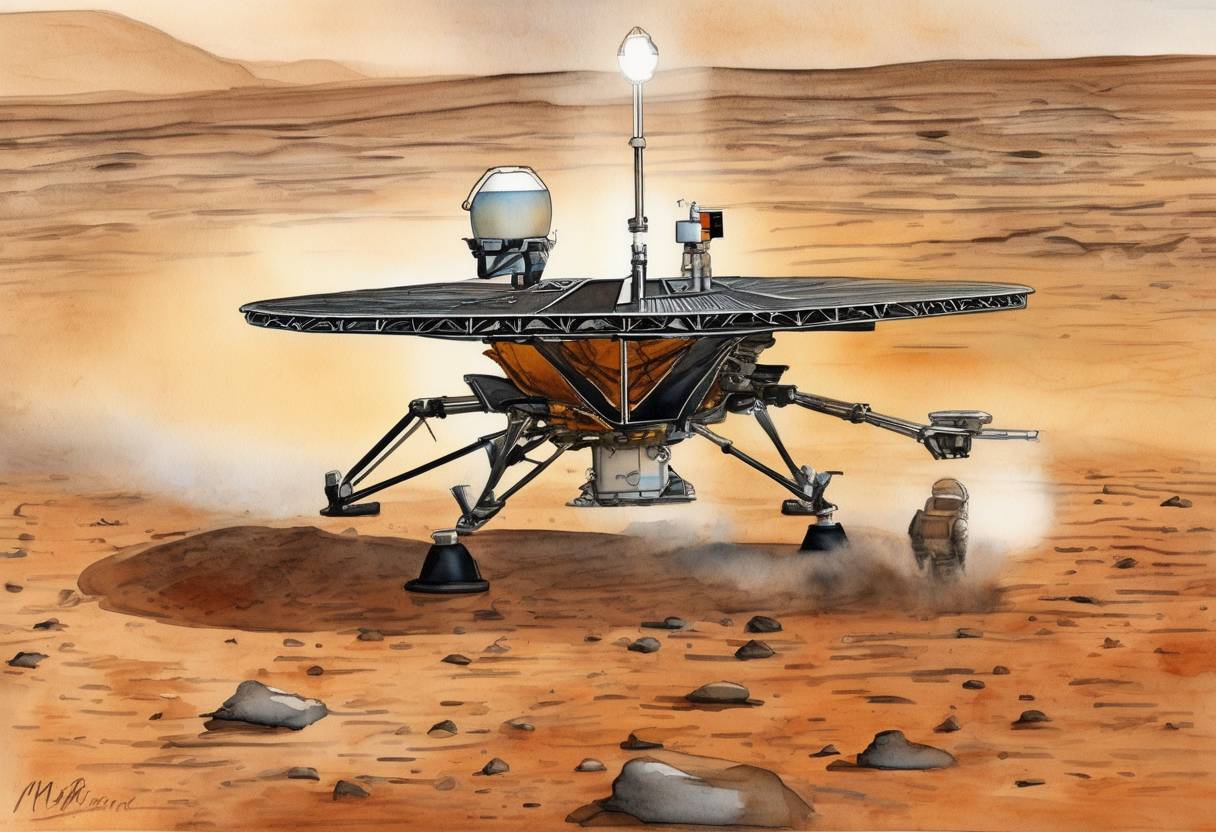
On May 25, 2008, NASA’s Phoenix spacecraft successfully landed on the surface of Mars, marking a significant milestone in the exploration of the Red Planet. The mission was designed to study the Martian arctic soil and search for signs of past or present life, as well as to assess the planet’s habitability.
The Phoenix mission was part of NASA’s Mars Scout Program, which aimed to explore the Martian environment with relatively low-cost missions. The spacecraft was launched on August 4, 2007, from Cape Canaveral Air Force Station in Florida. It was named “Phoenix” to symbolize the rebirth of the Mars Polar Lander mission, which failed in 1999.
The primary objectives of the Phoenix mission included:
Phoenix landed in the Vastitas Borealis, a flat region in the northern hemisphere of Mars, using a combination of parachutes and thrusters to slow its descent. The successful landing was a critical achievement, as it was the first successful soft landing on Mars since the Viking missions in the 1970s.
Once on the surface, Phoenix began its three-month primary mission, which was later extended due to its success. The lander transmitted a wealth of data back to Earth, including the first images of Martian ice and evidence of the planet’s wet history.
The Phoenix mission concluded on November 2, 2008, when the lander lost contact with Earth due to reduced sunlight and power. Despite its relatively short operational period, Phoenix provided invaluable insights into the Martian environment and laid the groundwork for future missions, such as the Mars Science Laboratory and the Mars 2020 rover.
The success of Phoenix demonstrated the feasibility of landing and operating in the Martian polar regions, expanding the scope of future exploration efforts on Mars.
Source: www.nasa.gov