The Fall of the Later Liang Dynasty and the Rise of the Later Zhou
947 · Kaifeng, China
The Liang dynasty in China formally concludes with the abdication of its last emperor, Zhu Youzhen, leading to the consolidation of the Later Zhou dynasty.
February 9, 0951
Guo Wei, a military general, declares himself emperor and establishes the Later Zhou dynasty in China.
Kaifeng, China | Later Zhou dynasty
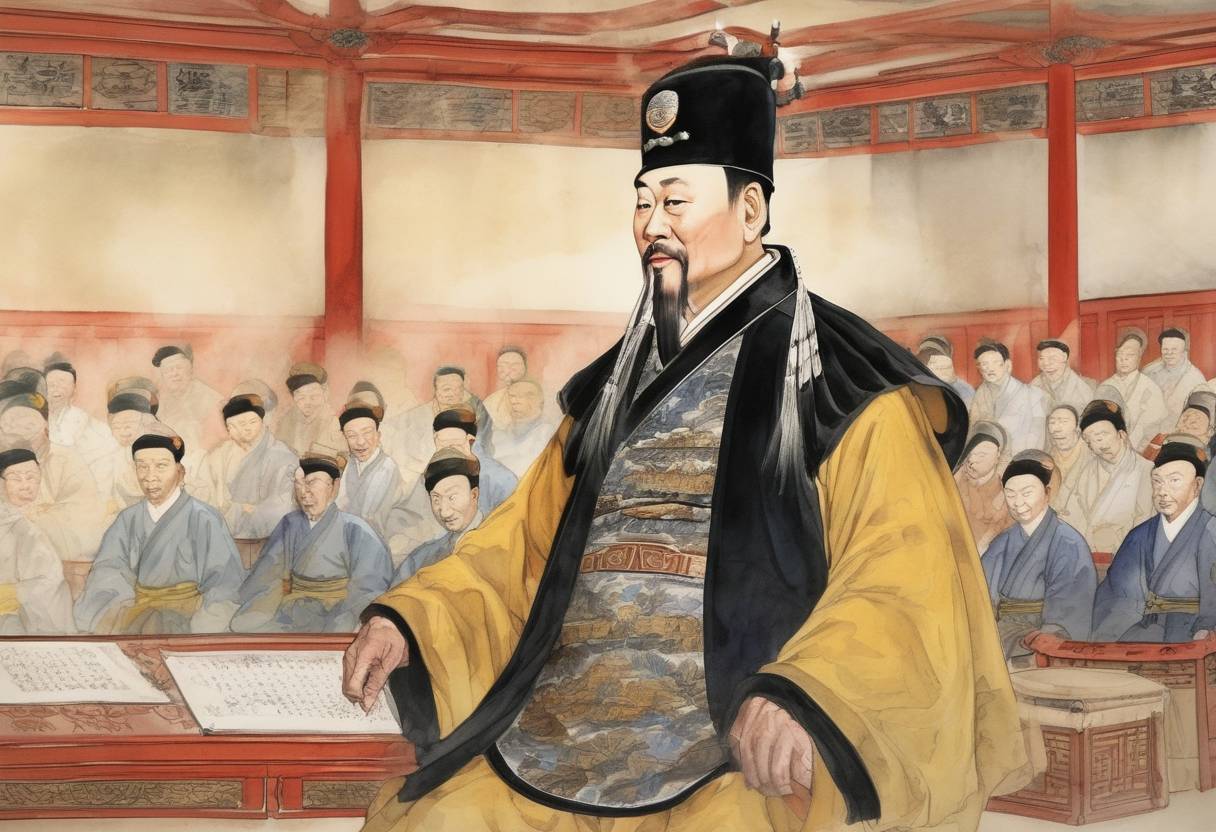
On February 9, 951, a significant event unfolded in Chinese history when Guo Wei, a prominent military general, declared himself emperor and established the Later Zhou dynasty. This marked a pivotal moment during the tumultuous Five Dynasties and Ten Kingdoms period, a time characterized by rapid succession and fragmentation following the fall of the Tang Dynasty.
The Five Dynasties and Ten Kingdoms period (907–960) was a time of political upheaval and fragmentation in China. After the collapse of the Tang Dynasty in 907, a series of short-lived dynasties rose and fell in the north, while several independent kingdoms emerged in the south. The Later Zhou was the last of the Five Dynasties, and its establishment was a crucial step towards the eventual reunification of China under the Song Dynasty.
Guo Wei (904–954) was born into a humble family in present-day Hebei province. He rose through the military ranks due to his strategic acumen and leadership skills. By the mid-10th century, he had become a key military leader under the Later Han dynasty, the fourth of the Five Dynasties.
In 950, the Later Han emperor, Liu Chengyou, became increasingly unpopular due to his ineffective rule and reliance on corrupt officials. Guo Wei, commanding considerable respect and loyalty from the military, seized the opportunity to challenge the emperor’s authority. In a decisive move, Guo Wei led a coup against the Later Han, culminating in his declaration as emperor on February 9, 951.
Upon declaring himself emperor, Guo Wei adopted the reign name Taizu and established the Later Zhou dynasty. His ascension marked a shift towards more stable governance compared to his predecessors. Guo Wei implemented several reforms aimed at consolidating power and stabilizing the region:
Military Reforms: Guo Wei reorganized the military to ensure loyalty and efficiency, reducing the influence of powerful warlords who had previously destabilized the region.
Administrative Reforms: He worked to centralize authority, streamline the bureaucracy, and reduce corruption, laying the groundwork for a more effective government.
Economic Policies: Guo Wei promoted agricultural development and trade, which helped to stabilize the economy and improve the livelihoods of his subjects.
Guo Wei’s reign was relatively short, as he died in 954. However, his efforts to stabilize the region and reform the government had lasting impacts. The Later Zhou dynasty, though brief, was instrumental in setting the stage for the reunification of China under the Song Dynasty in 960.
The establishment of the Later Zhou is significant as it represents a moment of consolidation during a period of fragmentation. Guo Wei’s leadership and reforms contributed to the eventual end of the Five Dynasties and Ten Kingdoms period, paving the way for a more unified and prosperous China under the Song.
In summary, Guo Wei’s declaration as emperor and the founding of the Later Zhou dynasty on February 9, 951, was a crucial turning point in Chinese history, marking the beginning of the end of a chaotic era and the dawn of a more stable and centralized imperial rule.
Source: en.wikipedia.org