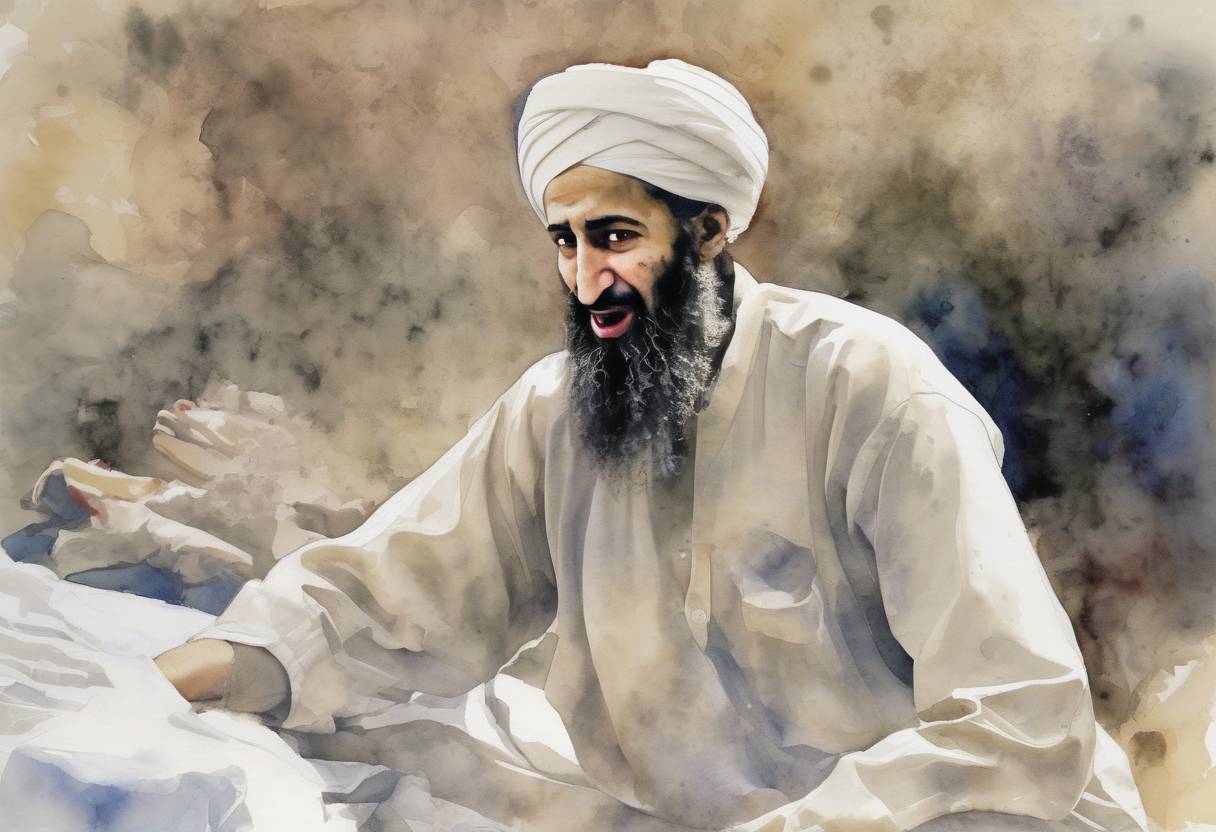
The Death of Osama bin Laden: May 2, 2011
On May 2, 2011, Osama bin Laden, the founder and leader of the militant Islamist group al-Qaeda, was killed by United States Navy SEALs in a covert operation in Abbottabad, Pakistan. This event marked a significant moment in the global fight against terrorism, particularly in the context of the United States’ response to the September 11, 2001, terrorist attacks.
Background
Osama bin Laden was born in 1957 in Riyadh, Saudi Arabia, into a wealthy family. He became involved in the Afghan resistance against the Soviet Union in the 1980s, where he gained experience and influence. In 1988, he founded al-Qaeda, a militant organization aimed at promoting radical Islamist ideologies and opposing Western influence in Muslim countries.
Al-Qaeda was responsible for numerous terrorist attacks, most notably the September 11 attacks on the United States, which resulted in nearly 3,000 deaths. These attacks led to the U.S.-led invasion of Afghanistan in 2001, as the Taliban regime in Afghanistan had provided sanctuary to bin Laden and his followers.
Operation Neptune Spear
The operation to capture or kill Osama bin Laden was codenamed “Operation Neptune Spear.” It was authorized by U.S. President Barack Obama and carried out by a team of Navy SEALs from the United States Naval Special Warfare Development Group, commonly known as SEAL Team Six.
Key Details of the Operation:
- Location: The operation took place in Abbottabad, a city in Pakistan, where bin Laden was hiding in a fortified compound.
- Execution: The SEALs flew into Pakistan via helicopters, landing in the compound under the cover of darkness. The operation lasted approximately 40 minutes.
- Outcome: Osama bin Laden was killed in a firefight, along with several others in the compound. The SEALs collected valuable intelligence materials before departing.
- Aftermath: Bin Laden’s body was buried at sea, in accordance with Islamic tradition, to prevent any burial site from becoming a shrine.
Significance and Aftermath
The death of Osama bin Laden was a pivotal moment in the War on Terror. It was seen as a major victory for the United States and its allies, providing a sense of justice for the victims of al-Qaeda’s attacks. However, it also raised questions about U.S.-Pakistan relations, as bin Laden had been living in Pakistan for several years, allegedly without the knowledge of Pakistani authorities.
The operation demonstrated the capabilities of U.S. special forces and intelligence agencies, but it also highlighted the ongoing challenges in combating global terrorism. Al-Qaeda, while weakened, continued to inspire and support terrorist activities worldwide.
In the years following bin Laden’s death, the U.S. and its allies have continued efforts to dismantle al-Qaeda and other terrorist organizations, adapting strategies to address the evolving nature of global terrorism.