Publication of "Mein Kampf" - July 18, 1925
1925 · Munich, Germany
Adolf Hitler published his autobiographical manifesto 'Mein Kampf', outlining his political ideology and future plans for Germany.
June 14, 1158
Munich is founded by Henry the Lion on the banks of the river Isar.
Munich, Germany
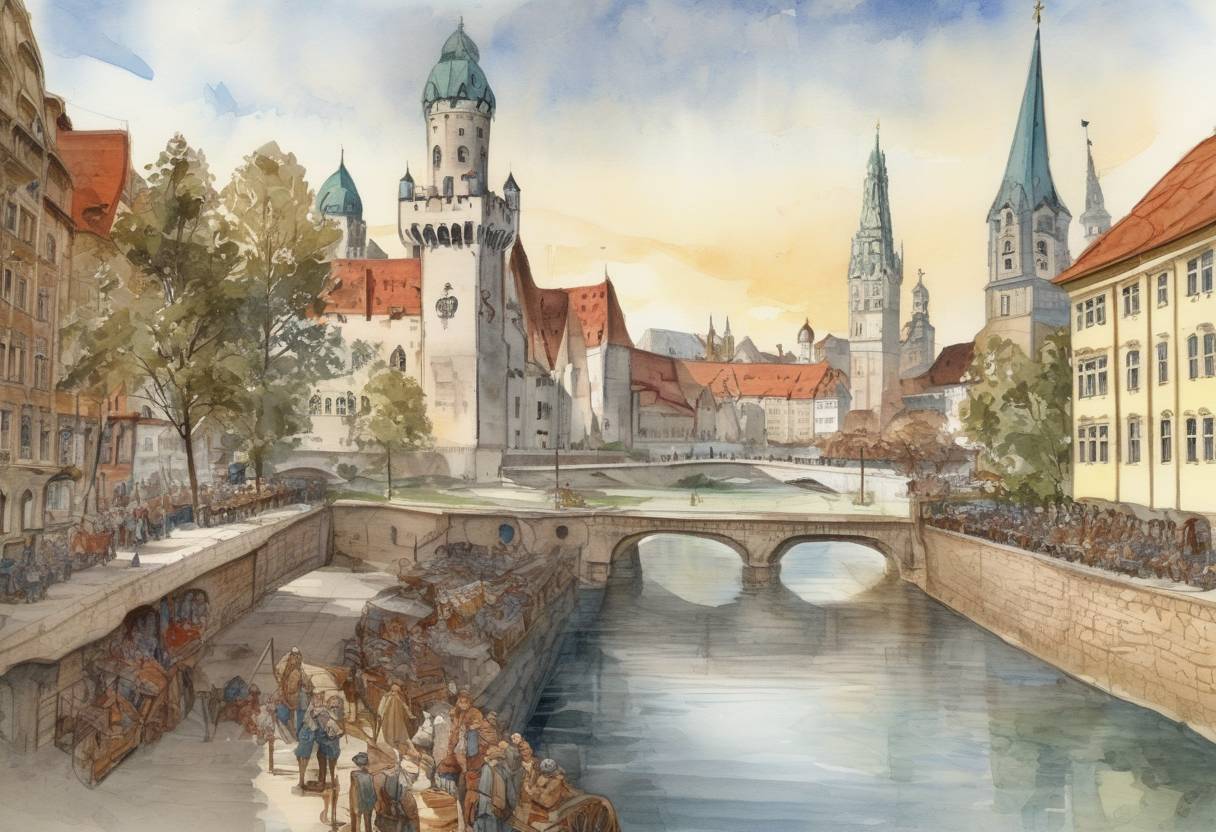
On June 14, 1158, the city of Munich was officially founded by Henry the Lion, Duke of Saxony and Bavaria, marking a significant moment in the history of what would become one of Germany’s major cities. This event is rooted in the strategic and economic ambitions of Henry the Lion, a powerful and influential noble of the 12th century.
Henry the Lion: As a member of the Welf dynasty, Henry the Lion was one of the most prominent and ambitious rulers of his time. He held vast territories in northern and southern Germany and sought to expand his influence through strategic urban development and trade.
Geopolitical Landscape: During the 12th century, the Holy Roman Empire was a patchwork of territories ruled by various dukes, bishops, and other nobles. The region that would become Munich was part of the Duchy of Bavaria, an area of significant political and economic importance.
Location: Munich was founded on the banks of the River Isar, a strategic location that facilitated trade and transportation. The site was chosen for its proximity to a salt trade route, which was a lucrative source of income at the time.
Conflict with the Bishop of Freising: The founding of Munich was not without controversy. The Bishop of Freising, who controlled the existing salt trade route, opposed Henry’s plans. In response, Henry established a new bridge over the Isar and redirected the trade route through his new settlement, effectively bypassing Freising’s control.
Imperial Support: To legitimize his actions, Henry the Lion sought and received the support of Emperor Frederick Barbarossa. On June 14, 1158, a diet held at Augsburg confirmed Henry’s rights to establish the market, mint coins, and collect tolls in Munich, solidifying its status as a burgeoning trade center.
Economic Growth: The founding of Munich marked the beginning of its rise as a significant economic hub in the region. The city’s strategic location and control over trade routes facilitated its growth and prosperity.
Cultural Development: Over the centuries, Munich evolved into a center of culture, art, and education. It became the capital of Bavaria and played a crucial role in the region’s history.
Legacy of Henry the Lion: Despite his eventual downfall and exile in 1180, Henry the Lion’s legacy endured through the cities he founded and developed, including Munich. His vision for urban development and trade left a lasting impact on the region.
In summary, the founding of Munich by Henry the Lion on June 14, 1158, was a pivotal event that laid the groundwork for the city’s future growth and significance in German history. The strategic decisions made by Henry during this period exemplify the complex interplay of power, trade, and politics in medieval Europe.
Source: en.wikipedia.org