May 7, 1915

The British ocean liner RMS Lusitania was sunk by a German U-boat off the coast of Ireland, contributing to the United States' eventual entry into World War I.


off the coast of Ireland, United Kingdom | German Navy
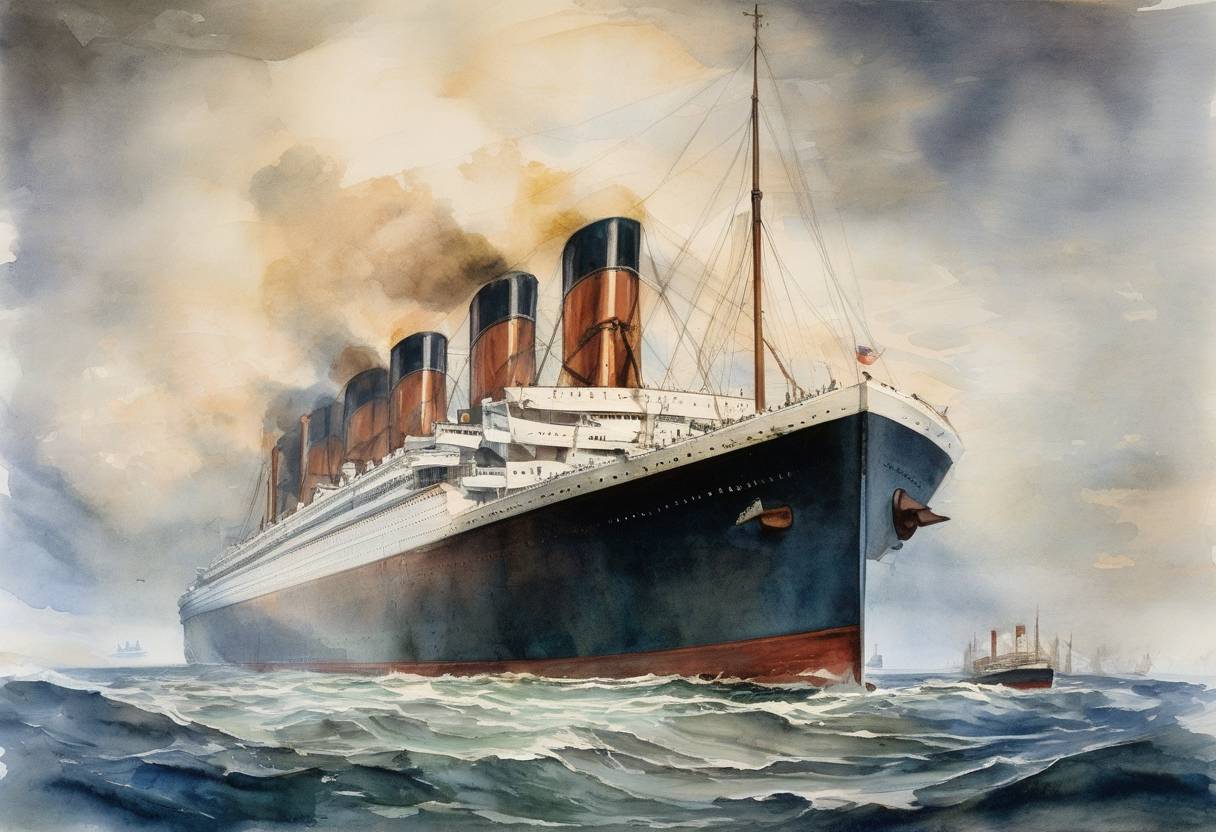
Watercolor painting based depiction of The British ocean liner RMS Lusitania was sunk by a German U-boat off the coast of Ireland, contributing to the United States' eventual entry into World War I. (1915)

Sinking of the RMS Lusitania

On May 7, 1915, the British ocean liner RMS Lusitania was sunk by a German U-boat, U-20, off the coast of Ireland. This tragic event played a significant role in shaping public opinion and contributed to the United States’ eventual entry into World War I.

Background

The RMS Lusitania was a British ocean liner owned by the Cunard Line, renowned for its speed and luxury. At the time of its sinking, it was en route from New York City to Liverpool, carrying 1,959 passengers and crew. The ship was one of the largest and fastest in the world, capable of speeds up to 25 knots.

Context of the War

  • World War I had been raging since 1914, with the Central Powers, led by Germany and Austria-Hungary, fighting against the Allied Powers, including the United Kingdom, France, and Russia.
  • Germany had declared the waters around the British Isles a war zone, warning that ships, including those of neutral countries, could be attacked by their submarines.

The Sinking

  • On May 7, 1915, the Lusitania was nearing the end of its journey, traveling along the southern coast of Ireland.
  • At approximately 2:10 PM, the German U-boat U-20, commanded by Captain Walther Schwieger, fired a torpedo that struck the Lusitania on its starboard side.
  • A second, more powerful explosion followed, likely caused by the ignition of munitions or coal dust, leading to the rapid sinking of the ship within 18 minutes.

Casualties and Impact

  • Of the 1,959 people on board, 1,198 perished, including 128 Americans.
  • The loss of civilian lives, particularly Americans, sparked outrage and shifted public opinion in the United States against Germany.

Aftermath and Significance

  • The sinking of the Lusitania was a pivotal moment in World War I, influencing the United States’ stance on the conflict.
  • Initially, President Woodrow Wilson maintained a policy of neutrality, but the event intensified anti-German sentiment and increased calls for the U.S. to join the war.
  • The incident highlighted the dangers of unrestricted submarine warfare, leading to diplomatic tensions between the United States and Germany.
  • Germany eventually agreed to restrict its submarine warfare tactics, but the resumption of such tactics in 1917 was a key factor in the U.S. decision to enter the war.

Broader Historical Significance

The sinking of the Lusitania is often cited as a catalyst for the United States’ involvement in World War I, marking a turning point in the conflict. It underscored the vulnerability of civilian ships in wartime and the global implications of naval warfare strategies. The event remains a poignant reminder of the human cost of war and the complexities of international diplomacy.