Winston Churchill Becomes Prime Minister of the United Kingdom
1940 · London, United Kingdom
Winston Churchill becomes Prime Minister of the United Kingdom, succeeding Neville Chamberlain.
June 4, 1940
Winston Churchill delivers his famous 'We shall fight on the beaches' speech to the House of Commons, rallying British resolve during World War II.
London, United Kingdom | British Government
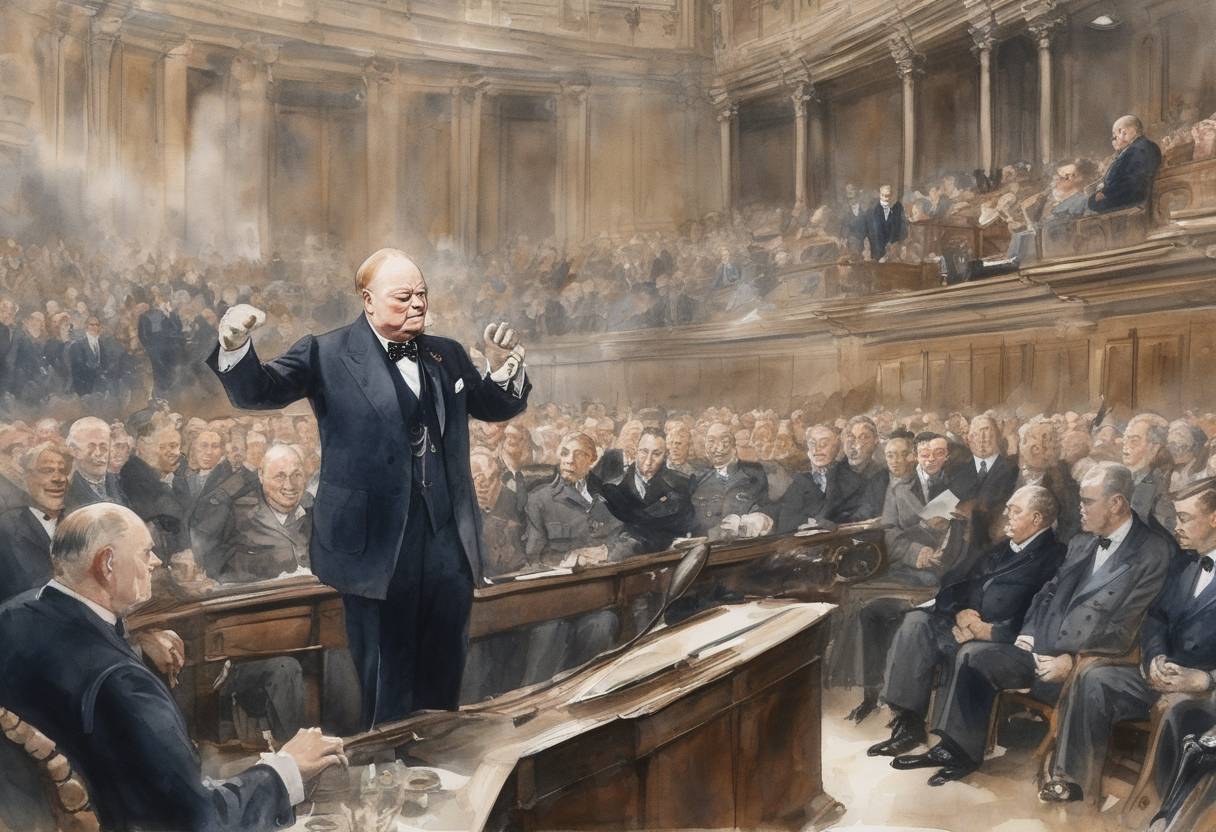
On June 4, 1940, British Prime Minister Winston Churchill delivered one of his most famous speeches to the House of Commons, known as the “We Shall Fight on the Beaches” speech. This address was a pivotal moment in World War II, as it aimed to bolster British morale following the Dunkirk evacuation and to prepare the nation for the challenges ahead.
The Fall of France: By May 1940, Nazi Germany had launched a rapid and devastating invasion of Western Europe, leading to the fall of France. The German Blitzkrieg tactics overwhelmed Allied forces, causing a dire situation for Britain and its allies.
Dunkirk Evacuation: Between May 26 and June 4, 1940, the British Expeditionary Force, along with French and Belgian troops, were trapped on the beaches of Dunkirk, France. Operation Dynamo, the evacuation effort, successfully rescued over 338,000 Allied soldiers, but it was considered a strategic retreat rather than a victory.
Acknowledgment of the Situation: Churchill candidly addressed the dire military situation, acknowledging the loss of equipment and the precarious position of the Allied forces.
Defiant Resolve: The speech is renowned for its defiant tone, emphasizing Britain’s determination to continue fighting against Nazi Germany. Churchill’s rhetoric was designed to inspire confidence and resilience among the British people.
Famous Passage: The most memorable section of the speech includes the repeated phrase “we shall fight,” underscoring the commitment to resist invasion and defend Britain at all costs. Churchill declared:
“We shall fight on the beaches, we shall fight on the landing grounds, we shall fight in the fields and in the streets, we shall fight in the hills; we shall never surrender.”
Call for Support: Churchill also appealed to the United States and other allies for support, recognizing the need for a united front against the Axis powers.
Boost in Morale: The speech played a crucial role in boosting British morale during a time of uncertainty and fear. It reinforced the resolve of the British public and military to continue the fight against Germany.
Symbol of Resistance: Churchill’s words became a symbol of British resistance and determination throughout the war, embodying the spirit of defiance that characterized Britain’s wartime leadership.
Impact on Allied Relations: The speech helped solidify Churchill’s reputation as a wartime leader and strengthened ties with the United States, which would later become a critical ally in the war effort.
In summary, Churchill’s “We Shall Fight on the Beaches” speech was a masterful blend of realism and inspiration, serving as a rallying cry for Britain during one of its darkest hours in World War II.
Source: en.wikipedia.org