June 19, 2009

The War in North-West Pakistan continued with the Pakistani military launching an offensive against Taliban militants in the Swat Valley.


Swat Valley, Pakistan | Pakistani military
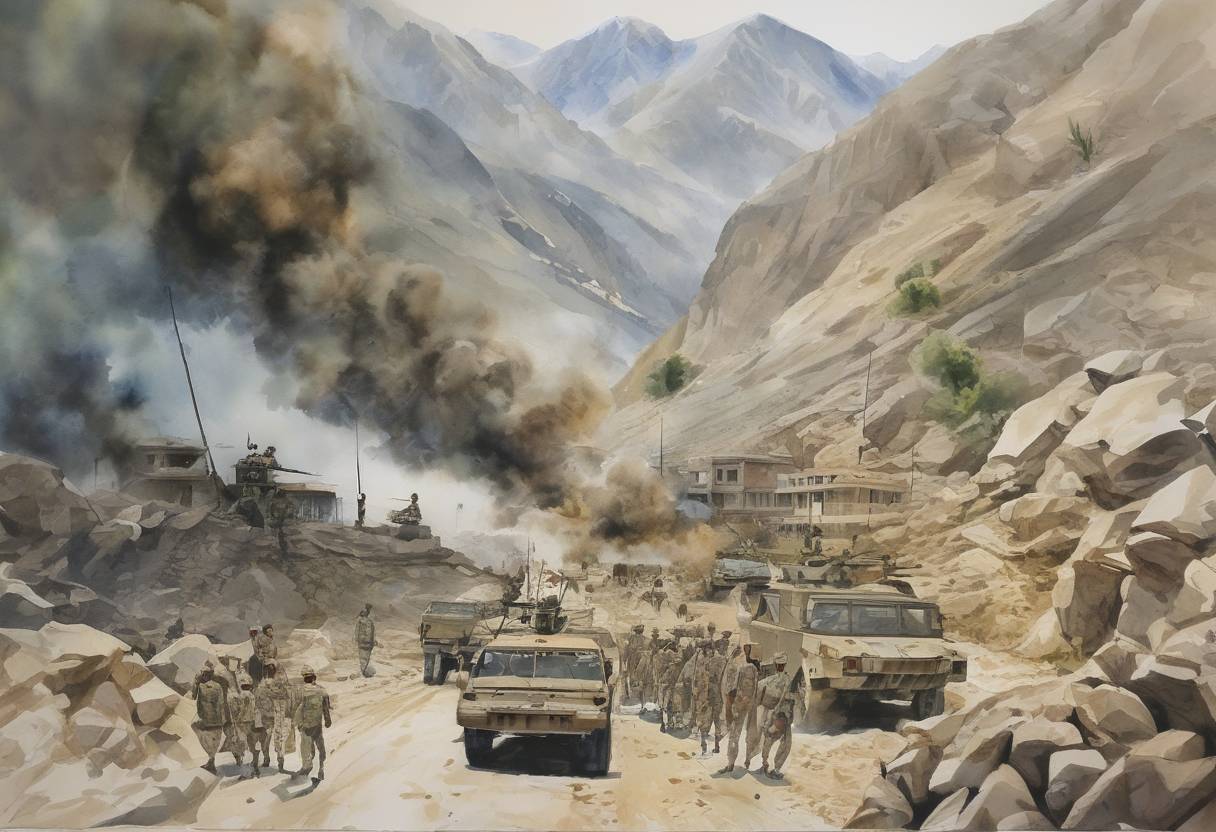
Watercolor painting based depiction of The War in North-West Pakistan continued with the Pakistani military launching an offensive against Taliban militants in the Swat Valley. (2009)

The Swat Valley Offensive: June 19, 2009

Background

The War in North-West Pakistan, part of the broader conflict against terrorism in the region, saw significant military operations in 2009. The Swat Valley, located in the Khyber Pakhtunkhwa province, became a focal point due to the increasing influence and control of Taliban militants. The Taliban had imposed strict Sharia law, leading to severe human rights abuses and displacing thousands of civilians.

The Offensive

On June 19, 2009, the Pakistani military intensified its offensive against Taliban militants in the Swat Valley. This operation was part of a larger military campaign known as Operation Rah-e-Rast, which began in May 2009. The goal was to reclaim control of the region from the Taliban, restore government authority, and enable the return of displaced civilians.

Key Events Leading Up to the Offensive

  • Taliban Control: By early 2009, the Taliban had established significant control over the Swat Valley, enforcing their rule through violence and intimidation.
  • Peace Agreement Collapse: A peace deal in February 2009 between the Pakistani government and the Taliban, which allowed for the implementation of Sharia law in exchange for peace, collapsed as the Taliban expanded their influence beyond Swat.
  • Military Mobilization: In response to the Taliban’s aggression and the breakdown of the peace agreement, the Pakistani government decided to launch a full-scale military operation.

The Offensive’s Progress

  • Military Strategy: The Pakistani military employed a combination of ground assaults and aerial bombardments to target Taliban strongholds.
  • Civilians Displaced: The offensive led to a humanitarian crisis, with over two million people displaced from the Swat Valley and surrounding areas.
  • International Support: The operation received backing from international allies, including the United States, which provided logistical and financial support.

Aftermath and Consequences

  • Restoration of Control: By the end of July 2009, the Pakistani military had regained significant control over the Swat Valley, pushing the Taliban out of key areas.
  • Return of Civilians: Efforts were made to facilitate the return of displaced civilians, although challenges remained in terms of rebuilding infrastructure and ensuring security.
  • Continued Conflict: Despite the success in Swat, the broader conflict in North-West Pakistan continued, with ongoing military operations against Taliban and other militant groups in the region.

Broader Historical Significance

The Swat Valley offensive was a critical moment in Pakistan’s fight against militancy. It demonstrated the government’s resolve to combat extremist elements and restore state authority in volatile regions. The operation also highlighted the complex interplay between military action and humanitarian concerns, as well as the importance of international cooperation in addressing terrorism.

Overall, the events of June 19, 2009, marked a turning point in the War in North-West Pakistan, setting the stage for subsequent military and political developments in the region.

Source: www.bbc.com