Battle of the Gates of Trajan - August 17, 986
986 · Trajan's Gate, Bulgaria
Byzantine–Bulgarian Wars: The Byzantine army under Emperor Basil II is defeated in the Battle of the Gates of Trajan by the forces of Tsar Samuel of Bulgaria.
September 10, 1167
The Battle of Myriokephalon was fought between the Byzantine Empire, led by Emperor Manuel I Komnenos, and the Seljuk Turks of the Sultanate of Rum, under Kılıç Arslan II.
Myriokephalon, Byzantine Empire (modern-day Turkey) | Byzantine Empire
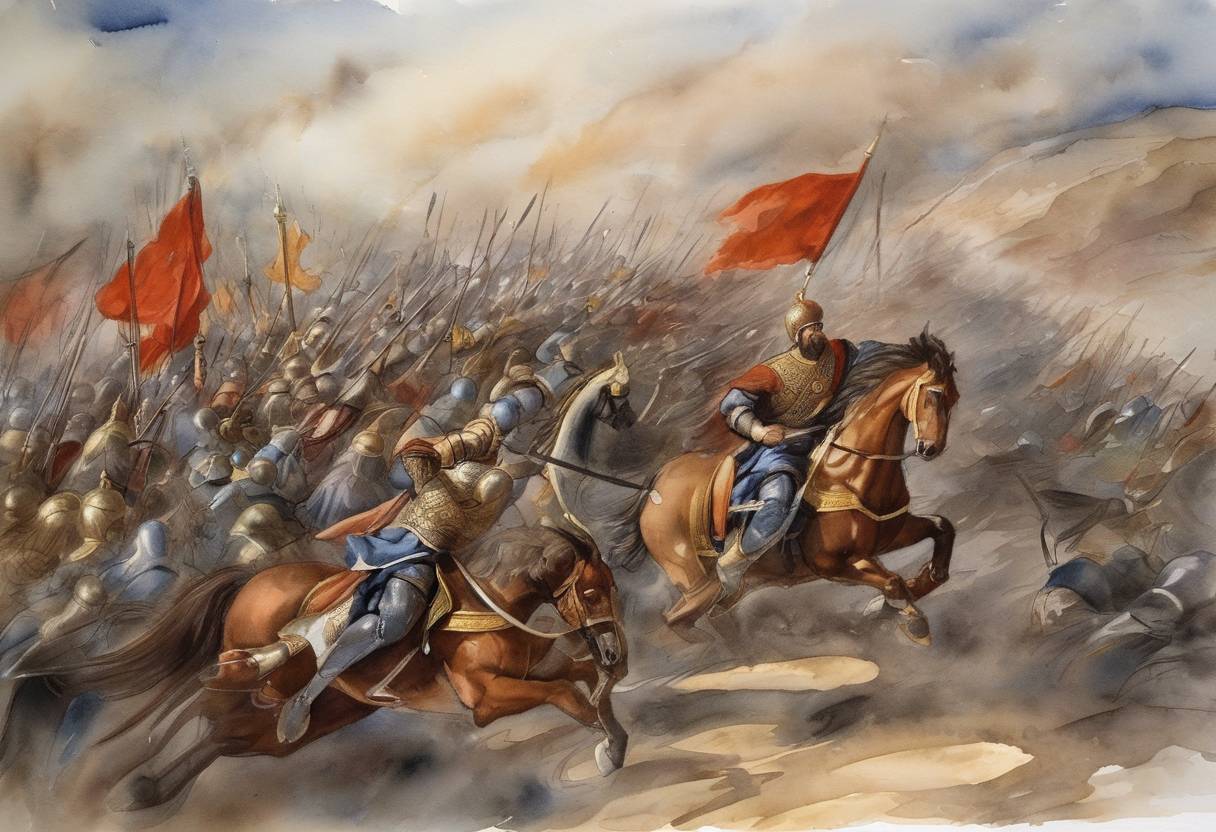
The Battle of Myriokephalon was a pivotal conflict fought between the Byzantine Empire and the Seljuk Turks. It occurred against the backdrop of a resurgence of Byzantine power during the reign of Emperor Manuel I Komnenos, who sought to reclaim territories lost in Asia Minor after the catastrophic defeat at the Battle of Manzikert in 1071.
Manuel I’s reign featured an active military and diplomatic campaign to restore the Byzantine Empire’s eastern borders, threatened by the Seljuk Turks of the Sultanate of Rum, led by Sultan Kılıç Arslan II. The battle was an outcome of Manuel’s campaign to secure Byzantine dominance by capturing the strategic stronghold at Iconium, the Seljuk capital.
The Byzantine forces advanced into the narrow and rugged Myriokephalon Pass, neglecting the Sultan’s peace offer. Manuel I opted for a direct assault rather than more cautious maneuvering, influenced by confidence in his numerical and organizational superiority.
As the Byzantine army entered the pass, the Seljuk forces executed a well-planned ambush. The Seljuks utilized their intimate knowledge of the terrain to launch surprise attacks, targeting the Byzantine columns in transit through the confined pass, causing chaos and heavy casualties among the Byzantine troops.
The Battle of Myriokephalon ended in a decisive victory for the Seljuk Turks. The defeat shattered Byzantine efforts to retake central Anatolia and marked a significant halt to Manuel I’s military campaigns in the region.
The battle demonstrated the continued effectiveness of Seljuk military strategies, such as ambush tactics and utilizing geographical advantages. For the Byzantines, it underscored the limitations of direct conquest and emphasized the need for strategic flexibility in military engagements.
Myriokephalon is often compared to the earlier Battle of Manzikert, symbolizing similar themes of over-ambition and strategic miscalculations in Byzantine military campaigns. It further entrenched the Seljuk hold over Anatolia and marked a turning point that foreshadowed the further decline of Byzantine influence in the region, contributing indirectly to the empire’s long-term decline.
Source: en.wikipedia.org