Massachusetts Enacts First Punitive Law Against Quakers - October 14, 1656
1656 · Boston, Colonial America
Massachusetts enacts the first punitive law against the Quakers, fining the residents for harboring them.
December 27, 1657
The Flushing Remonstrance was signed by a group of English citizens in the Dutch colony of New Netherland, advocating for freedom of religion after the Quakers were banned by the order of Peter Stuyvesant.
Flushing, New Netherland (present-day USA)
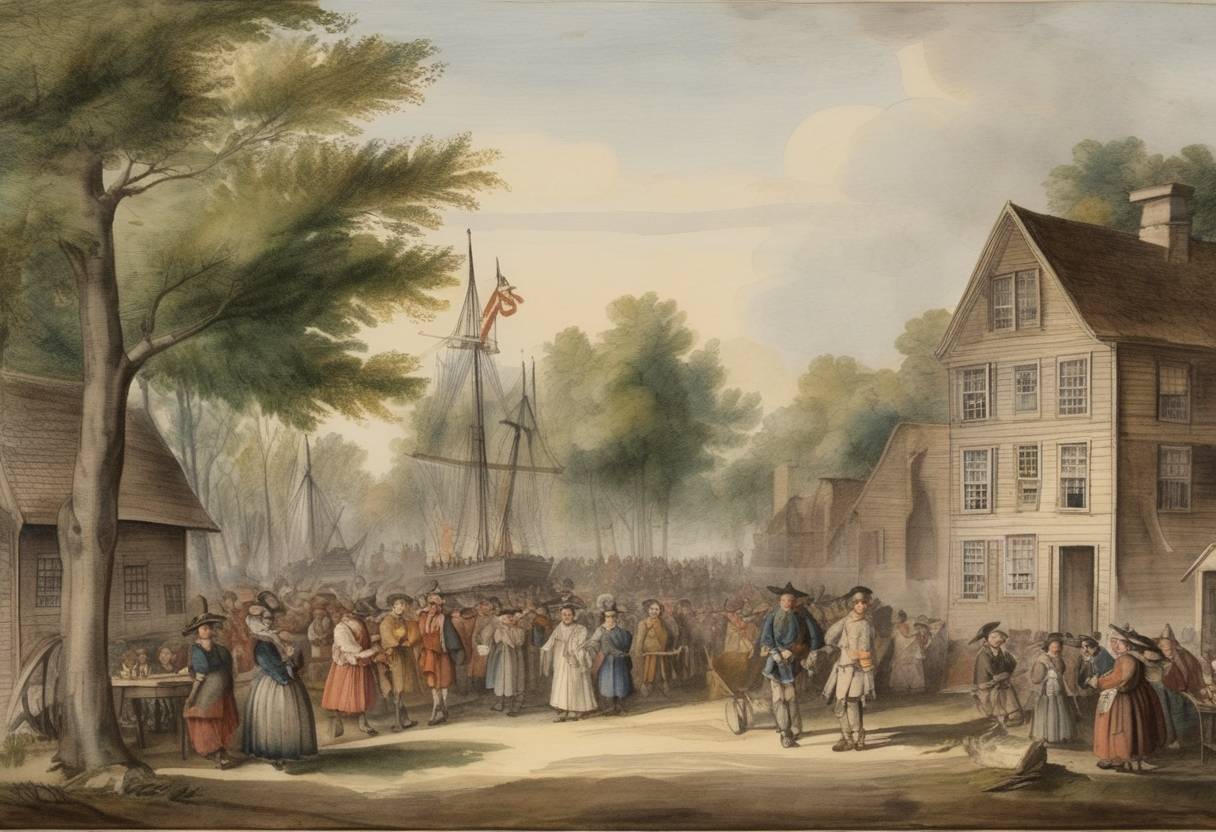
The Flushing Remonstrance is an important document in the history of religious freedom in America, signed on December 27, 1657, by a group of English citizens in the Dutch colony of New Netherland. This document is a key early assertion of the principle of religious tolerance in the United States, directly challenging the religious policies of the colonial government.
During the mid-17th century, the Governor of New Netherland, Peter Stuyvesant, was a staunch adherent of the Dutch Reformed Church. Under Stuyvesant’s administration, religious practices that deviated from the official denomination, particularly those of the Quakers, were harshly suppressed. The Quakers, known for their pacifist beliefs and religious meetings that rejected formal clergy, were seen as threatening to the religious uniformity desired by the colonial government.
In 1656, Stuyvesant issued an ordinance forbidding Quaker worship and the harboring of Quakers. Such measures were part of broader efforts to maintain religious control and uniformity in the colony. Residents of Flushing, a town in New Netherland, found these restrictions to be in violation of their freedoms. The town was notable for its diverse population which included various dissenting religious groups, resulting in a more tolerable approach to religious differences.
The Flushing Remonstrance was a petition signed by 30 residents of the town of Flushing, New Netherland, addressing the Governor. The document articulated a strong stand against religious intolerance, defending the right to freedom of worship. It argued that freedom of religion is a fundamental right that should be extended to everyone, regardless of their faith, citing principles from the Dutch Republic and asserting that “love, peace and liberty” should prevail.
The petition is notable for its eloquent language and principled stance. Key points included the assertion that coercion in religious matters contradicted Christian values and that religious freedom should be as universal as due process. The signatories emphasized a profound belief in the protection of individual rights to worship according to their conviction.
Although initially, Stuyvesant responded by arresting and fining some of the signatories, the document’s principles were eventually vindicated. The pressure from home authorities in the Netherlands, who were more tolerant religiously, led to the relaxation of enforcement on religious restrictions in the colony.
The Flushing Remonstrance stands as an early and influential statement of religious tolerance in America. Its commitment to individual rights anticipated the broader civil liberties enshrined in the U.S. Constitution over a century later, marking it as a precursor to the principles of religious liberty and freedom of conscience.
Source: en.wikipedia.org