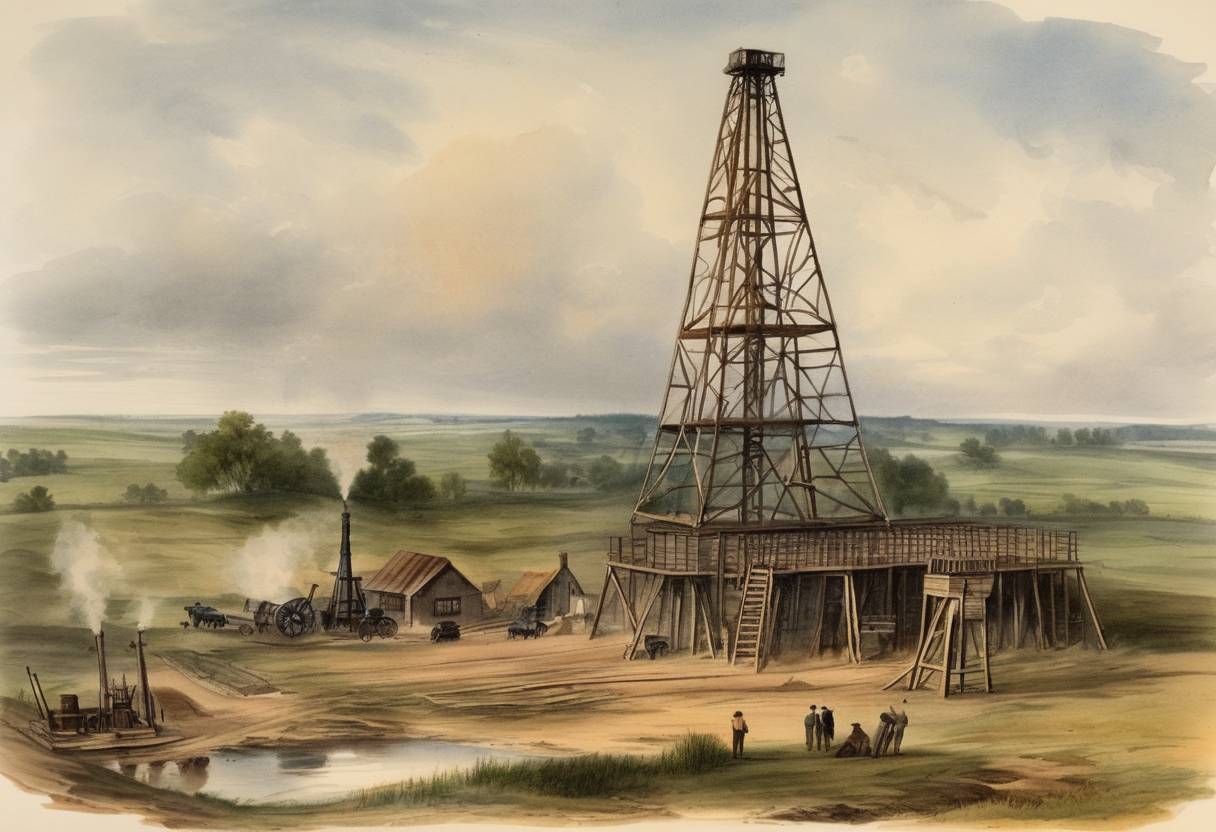
The First Successful American Oil Well
On August 28, 1859, Edwin Drake successfully drilled the first commercial oil well in Titusville, Pennsylvania, marking the inception of the U.S. petroleum industry.
Background
- Location: Titusville, a small town in Crawford County, Pennsylvania, became the focal point due to the presence of natural oil seeps and “Seneca Oil,” which was known and used by Native Americans and early settlers for medicinal purposes.
- Early Interest: Prior to Drake’s success, oil was primarily harvested by skimming off natural seepages or digging shallow pits. The pressing need for alternative fuel sources, particularly for lamps—traditionally reliant on whale oil—spurred further interest in finding more efficient means to extract oil.
Key Events
- Drake’s Appointment: In 1857, the Pennsylvania Rock Oil Company, later known as the Seneca Oil Company, appointed Edwin Drake, a former railroad conductor, to oversee the exploration for oil in Titusville.
- Drilling Process: Equipped with a steam-powered drill, Drake adopted techniques used in drilling salt wells. Overcoming numerous setbacks, including financial constraints and technical challenges, Drake persevered.
- Success on August 28, 1859: Drake’s well, eventually known as “Drake’s Folly” due to skepticism from locals, struck oil at a depth of 69.5 feet (21.2 meters). The well produced about 10 barrels of oil per day, a significant commercial promise.
Impact and Significance
- Rapid Industry Growth: Drake’s success spurred an immediate oil rush in northwestern Pennsylvania. Speculators, drillers, and investors flocked to the region, establishing a burgeoning petroleum industry.
- Economic Transformation: The success of Drake’s well provided an inexpensive and abundant source of petroleum, leading to significant changes in energy consumption and marking a shift from whale oil to kerosene for lighting.
- Legacy: Edwin Drake, despite his pivotal role, did not patent his drilling method and failed to profit substantially. However, his breakthrough laid the foundation for the oil industry, which would become a cornerstone of the global economy.
Drake’s pioneering efforts in Titusville are celebrated as a transformative moment in industrial history, heralding an era that would see oil become a critical resource influencing domestic growth and geopolitics worldwide.