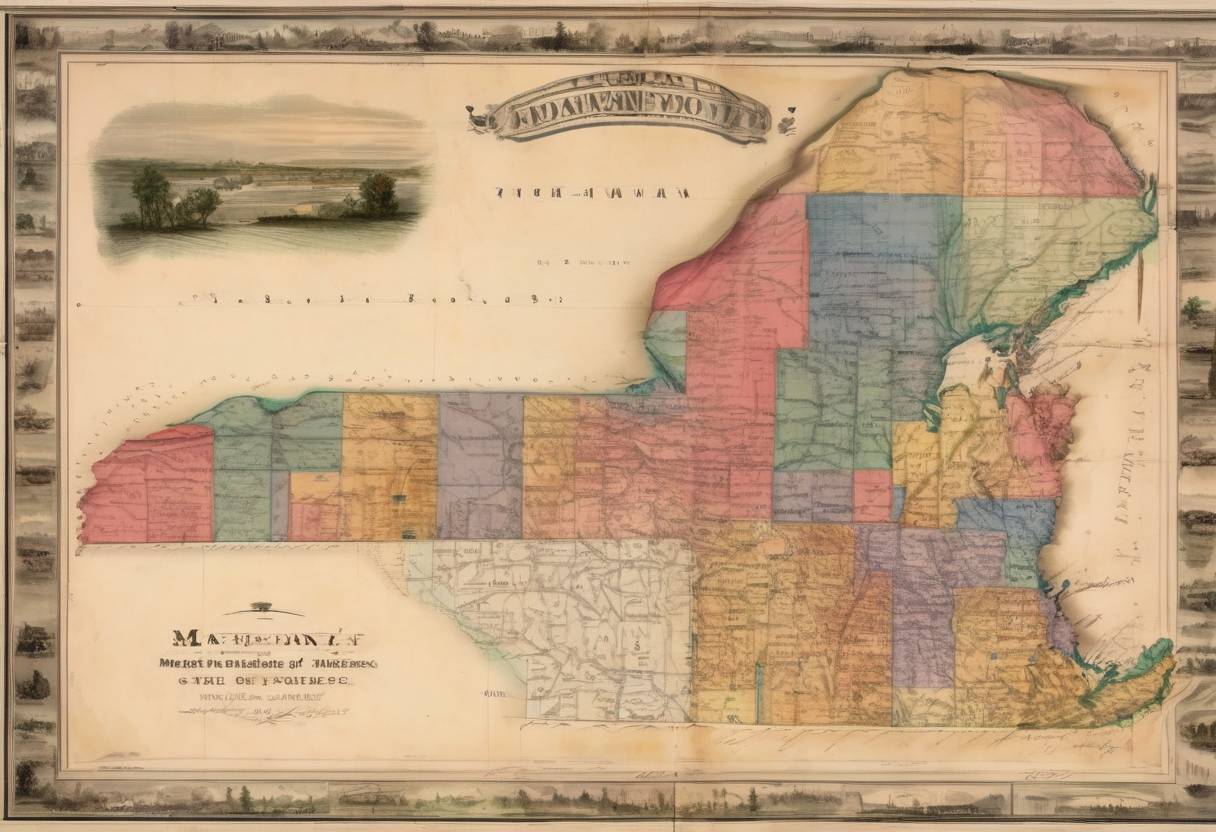
Michigan’s Admission as the 26th State of the United States
On January 26, 1837, Michigan was officially admitted to the United States as the 26th state. This event marked the culmination of a complex process involving territorial disputes, political negotiations, and the expansionist policies of the United States during the 19th century.
Background
- Territorial Beginnings: Michigan was originally part of the Northwest Territory, established by the Northwest Ordinance of 1787. It became a separate territory in 1805.
- Population Growth: The early 19th century saw significant population growth in Michigan, driven by settlers attracted to its fertile land and economic opportunities, particularly in agriculture and the burgeoning timber industry.
The Toledo War
- Dispute with Ohio: A significant obstacle to Michigan’s statehood was the Toledo War, a boundary dispute with Ohio over a strip of land known as the Toledo Strip. Both Michigan and Ohio claimed this area, which was strategically important due to its location along the Maumee River.
- Resolution: The conflict was resolved through a compromise brokered by Congress. Ohio retained the Toledo Strip, while Michigan was compensated with the western part of the Upper Peninsula, a region rich in natural resources.
Path to Statehood
- Constitutional Convention: Michigan held a constitutional convention in 1835 and drafted a state constitution, which was a critical step toward statehood.
- Congressional Approval: Despite initial resistance due to the Toledo dispute, Congress eventually approved Michigan’s admission to the Union after the compromise was reached.
Significance
- Economic Development: Statehood facilitated Michigan’s economic development, allowing it to fully participate in the national economy and benefit from federal infrastructure projects.
- Political Influence: As a state, Michigan gained representation in Congress, contributing to the political landscape of the growing United States.
- Territorial Expansion: Michigan’s admission reflected the broader trend of westward expansion and the incorporation of new territories into the Union, a hallmark of American growth during this period.
Aftermath
- Upper Peninsula: Initially seen as a poor trade for the Toledo Strip, the Upper Peninsula later proved to be a valuable asset due to its rich deposits of iron ore and copper.
- Legacy: Michigan’s journey to statehood is a testament to the complexities of American territorial expansion and the negotiation processes that shaped the nation’s borders.
Michigan’s admission as the 26th state was a pivotal moment in its history, setting the stage for its development into a key player in America’s industrial and economic landscape.