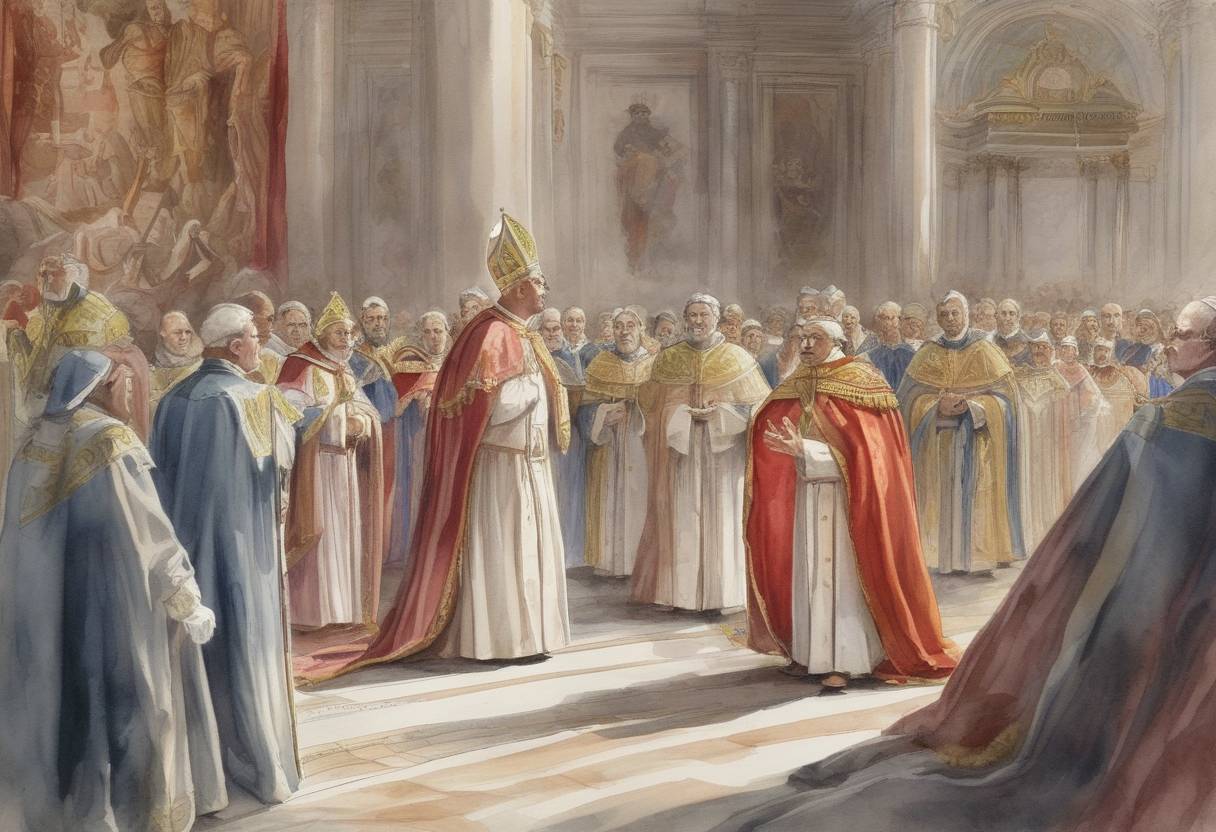
Deposition of Pope John XII by a Synod Convened by Emperor Otto I
On December 8, 963, a pivotal event unfolded in the history of the papacy and the Holy Roman Empire: the deposition of Pope John XII by a synod convened by Emperor Otto I. This event is often considered a significant precursor to the Investiture Controversy, which would later dominate medieval European politics.
Background
Pope John XII, born Octavianus, ascended to the papacy in 955 at a young age, inheriting the position from his father, Alberic II of Spoleto, who had been the ruler of Rome. His papacy was marked by controversy and allegations of immoral behavior, which tarnished the reputation of the papal office.
During this period, the relationship between the papacy and the Holy Roman Empire was complex and often contentious. The papacy sought to assert its spiritual authority, while the emperors aimed to exert influence over the appointment of popes to ensure political stability and control over the Church.
Key Events Leading to the Deposition
Alliance with Otto I: Initially, Pope John XII sought the protection of Otto I, the King of Germany, against the threats posed by local Roman nobility and external adversaries. In 962, Otto I was crowned Holy Roman Emperor by John XII, solidifying their alliance.
Breach of Trust: The relationship between John XII and Otto I deteriorated rapidly. The pope’s alleged misconduct and political maneuvers against Otto’s interests led to tensions. John XII reportedly engaged in conspiracies with Otto’s enemies, undermining the emperor’s authority.
Synod Convened: In response to these provocations, Otto I convened a synod in Rome in November 963. The synod, attended by bishops and clergy loyal to Otto, examined the charges against John XII, which included accusations of simony, perjury, and immoral conduct.
The Deposition
On December 8, 963, the synod declared Pope John XII deposed. This marked a rare and dramatic intervention by a secular ruler in papal affairs. The synod elected Leo VIII as the new pope, although John XII refused to accept his deposition and continued to assert his claim to the papacy.
Aftermath and Significance
Continued Conflict: The deposition did not resolve the conflict. John XII briefly regained control of Rome in 964, only to die under mysterious circumstances later that year. The papal succession remained contested, leading to further instability.
Prelude to the Investiture Controversy: The events surrounding John XII’s deposition highlighted the growing tensions between secular and ecclesiastical powers. These tensions would eventually culminate in the Investiture Controversy of the late 11th and early 12th centuries, a major conflict over the appointment of church officials and the balance of power between the papacy and the Holy Roman Empire.
Impact on Papal Authority: The deposition underscored the vulnerability of the papacy to external political forces and set a precedent for future imperial interventions in papal elections.
In summary, the deposition of Pope John XII by a synod convened by Emperor Otto I was a significant event that foreshadowed the larger struggle for authority between the Church and secular rulers, shaping the course of medieval European history.