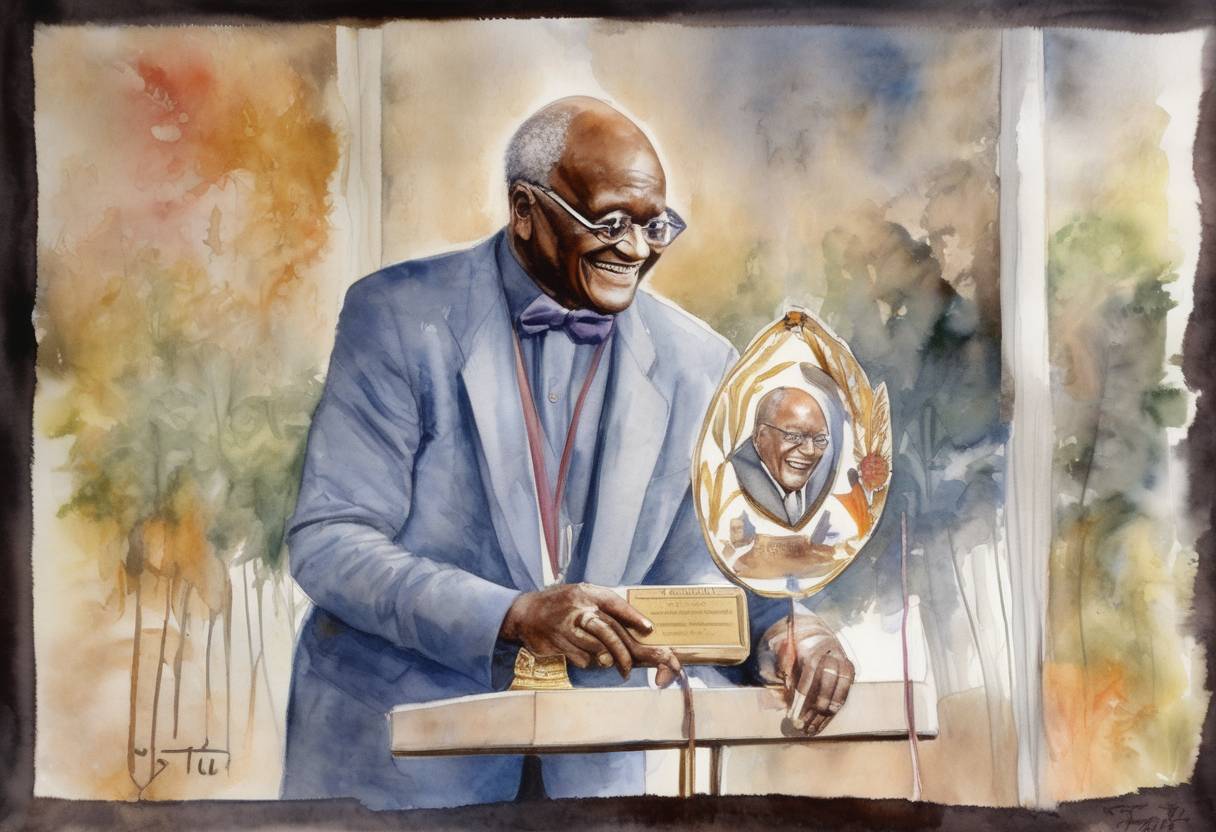
Desmond Tutu Awarded the Nobel Peace Prize
On October 16, 1984, Desmond Tutu, a prominent South African Anglican bishop and social rights activist, was awarded the Nobel Peace Prize for his courageous and nonviolent opposition to apartheid, the institutionalized racial segregation and discrimination enforced by the South African government.
Background
- Apartheid in South Africa: Implemented in 1948, apartheid was a system of institutionalized racial segregation and discrimination in South Africa. It was designed to maintain white minority rule and suppress the rights of the non-white population.
- Desmond Tutu’s Role: As a leading figure in the struggle against apartheid, Tutu used his position as the General Secretary of the South African Council of Churches to advocate for peaceful resistance. He was known for his powerful oratory and moral leadership, which galvanized both national and international support against apartheid.
The Nobel Peace Prize
- Recognition: The Nobel Committee awarded Tutu the Peace Prize in recognition of his role as a unifying leader in the campaign to resolve the apartheid conflict through nonviolent means.
- Significance: Tutu’s award highlighted the global condemnation of apartheid and increased international pressure on the South African government to reform its policies.
Impact and Legacy
- Increased International Attention: The award brought significant international attention to the anti-apartheid movement, encouraging further global activism and sanctions against the South African regime.
- Moral Leadership: Tutu’s recognition as a Nobel laureate underscored the importance of moral and ethical leadership in the fight for justice and equality.
- Post-Apartheid Role: After the end of apartheid, Tutu continued to play a significant role in South Africa’s transition to democracy, notably chairing the Truth and Reconciliation Commission, which aimed to address the injustices of the past.
Desmond Tutu’s receipt of the Nobel Peace Prize in 1984 remains a pivotal moment in the history of South Africa’s struggle for equality and justice, symbolizing the power of peaceful resistance and the enduring fight against oppression.