Peggy Whitson's Record-Breaking Space Mission
2016 · Baikonur, Kazakhstan
Astronaut Peggy Whitson broke the record for the oldest woman in space at age 56, and she launched on her third mission to the International Space Station.
October 11, 2018
NASA astronaut Nick Hague and Russian cosmonaut Alexey Ovchinin survived an emergency landing after a Soyuz rocket carrying them to the International Space Station failed mid-flight.
Baikonur, Kazakhstan | NASA
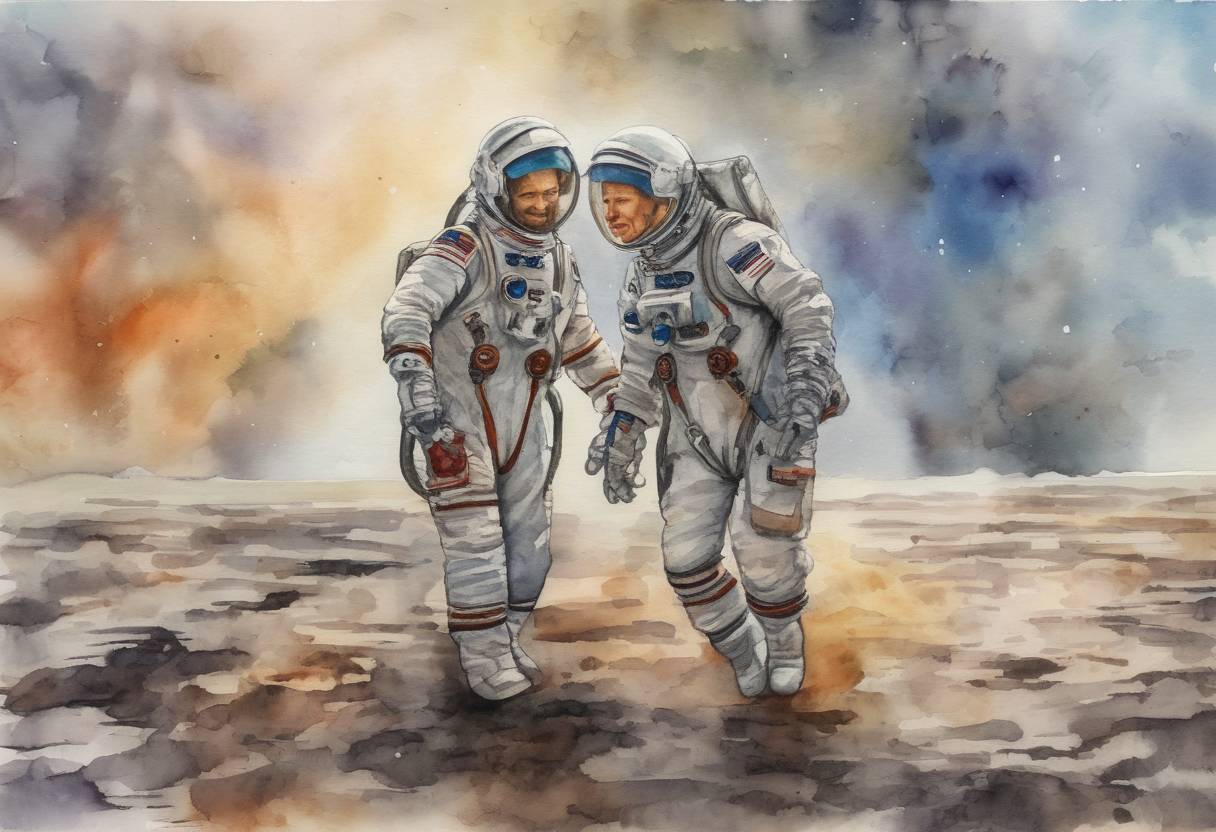
On October 11, 2018, NASA astronaut Nick Hague and Russian cosmonaut Alexey Ovchinin experienced a dramatic and life-threatening event when their Soyuz MS-10 spacecraft suffered a launch failure. This incident occurred during their mission to the International Space Station (ISS).
The Soyuz MS-10 mission was part of the ongoing collaboration between NASA and Roscosmos, the Russian space agency, to transport crew members to the ISS. The Soyuz rocket, a reliable workhorse of space travel since the 1960s, was tasked with carrying Hague and Ovchinin to the space station for a six-month mission.
Launch and Failure: The Soyuz rocket launched from the Baikonur Cosmodrome in Kazakhstan at 4:40 PM local time. Approximately two minutes into the flight, a malfunction occurred during the separation of the rocket’s first and second stages.
Abort System Activation: The onboard launch abort system was automatically triggered due to the anomaly. This system is designed to safely separate the crew capsule from the failing rocket and return it to Earth.
Descent and Landing: The capsule entered a ballistic descent, subjecting the crew to intense gravitational forces. Despite the harrowing conditions, the descent system functioned as intended, and the capsule landed safely about 400 kilometers from the launch site.
Rescue and Recovery: Rescue teams quickly reached the landing site, and both Hague and Ovchinin were found to be in good health. They were transported back to Baikonur for medical evaluation and debriefing.
Investigation and Response: An investigation was launched by Roscosmos to determine the cause of the failure. The issue was traced to a sensor that was damaged during the rocket’s assembly, leading to the improper separation of the rocket stages.
Impact on ISS Operations: The incident temporarily suspended crewed flights to the ISS, as safety assessments and corrective measures were implemented. This highlighted the importance of international cooperation and the robustness of safety protocols in human spaceflight.
Resumption of Flights: Soyuz flights resumed in December 2018, after thorough investigations and corrective actions were taken to prevent similar incidents in the future.
The successful emergency landing of Soyuz MS-10 underscored the effectiveness of safety systems in modern space travel. It also reinforced the resilience and preparedness of astronauts and cosmonauts, who undergo rigorous training for such contingencies. The incident served as a reminder of the inherent risks of space exploration and the continuous need for vigilance and innovation in ensuring crew safety.
Source: www.nasa.gov