Fidel Castro Announces His Resignation as President of Cuba
2008 · Havana, Cuba
Fidel Castro announces his resignation as President of Cuba, ending nearly 50 years of rule.
November 25, 2016
Fidel Castro, the former President of Cuba and revolutionary leader, dies at the age of 90, marking the end of an era in Cuban history.
Havana, Cuba | Cuban Government
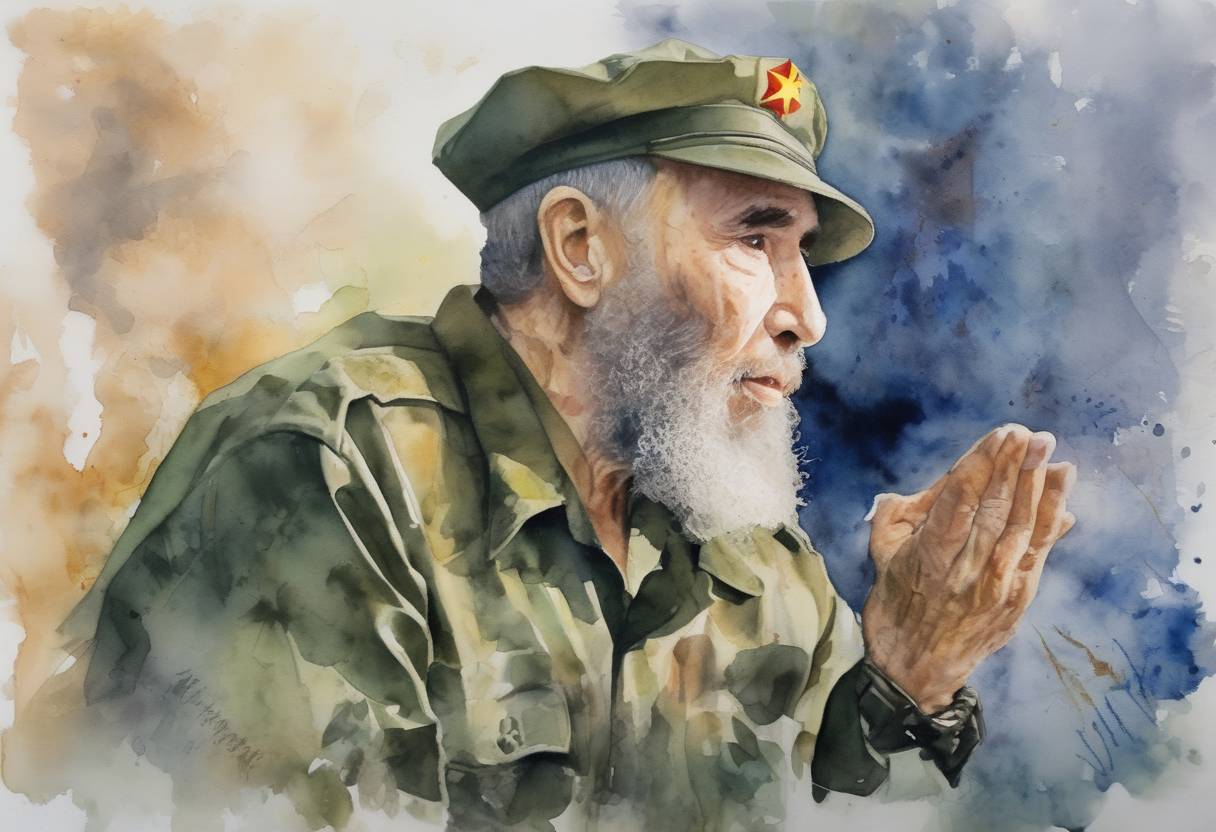
On November 25, 2016, Fidel Castro, the former President of Cuba and a prominent revolutionary leader, passed away at the age of 90. His death marked the end of an era for Cuba, a nation profoundly shaped by his leadership and policies for over half a century.
Fidel Alejandro Castro Ruz was born on August 13, 1926, in Birán, Cuba. He rose to prominence as a revolutionary leader who played a pivotal role in the Cuban Revolution, which culminated in the overthrow of the Batista regime in 1959. Castro’s ascent to power marked the beginning of a communist government in Cuba, aligning the country with the Soviet Union during the Cold War.
Under Castro’s leadership, Cuba underwent significant transformations:
Fidel Castro’s legacy is complex and polarizing. To some, he is a symbol of anti-imperialism and social justice, while to others, he represents authoritarianism and repression. His impact on Cuba and the broader geopolitical landscape of the 20th century remains significant, influencing revolutionary movements and Cold War dynamics.
Castro’s leadership not only reshaped Cuba but also had a lasting impact on Latin America and global politics. His defiance against U.S. influence inspired leftist movements worldwide, while his alignment with the Soviet Union played a crucial role in Cold War tensions, most notably during the Cuban Missile Crisis of 1962.
Fidel Castro’s death marked the end of a significant chapter in Cuban history, leaving behind a legacy that continues to be debated and studied by historians and political analysts worldwide.
Source: www.bbc.com