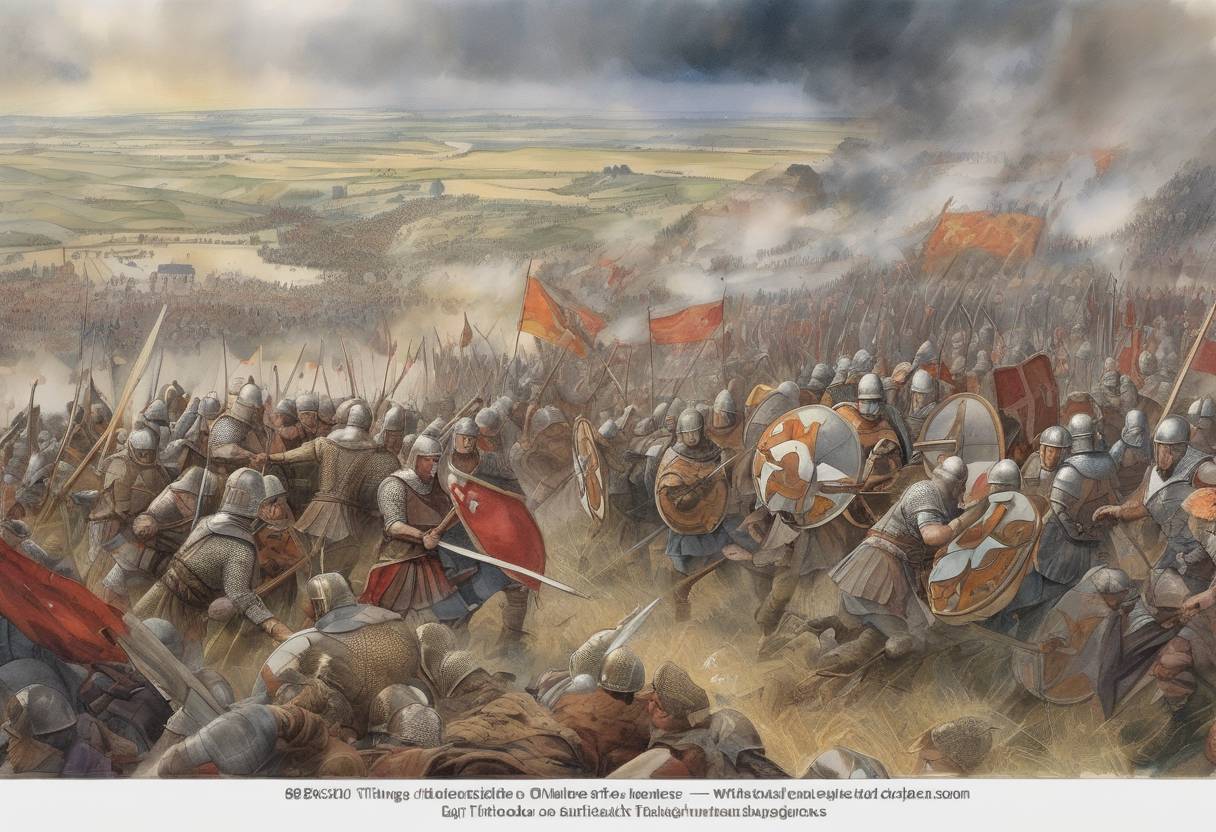
The Battle of Thimeon: September 17, 880
The Battle of Thimeon, fought on September 17, 880, was a significant military engagement during the Carolingian efforts to repel Viking invasions in Western Europe. This battle saw the Frankish forces, led by Charles the Fat, achieve a decisive victory over Viking raiders, marking an important moment in the ongoing struggle against Norse incursions.
Historical Context
During the late 9th century, Europe was frequently subjected to Viking raids. These Norse warriors, known for their seafaring prowess, targeted the Frankish territories, exploiting the region’s political fragmentation following the division of the Carolingian Empire. The Frankish rulers, descendants of Charlemagne, faced the daunting task of defending their lands against these persistent threats.
Charles the Fat, a Carolingian emperor, ruled over a significant portion of the Frankish Empire, including East Francia, West Francia, and Italy. His reign was marked by efforts to consolidate power and defend his territories from external threats, particularly the Vikings.
The Battle
The Battle of Thimeon took place near the village of Thimeon, in present-day Belgium. The Viking forces, emboldened by previous successes, launched raids deep into Frankish territory. Charles the Fat, recognizing the need to confront these incursions decisively, mobilized his forces to meet the Viking threat.
The Frankish army, under Charles’s command, engaged the Viking raiders in a pitched battle. The details of the battle tactics remain sparse, but historical accounts suggest that the Frankish forces were able to leverage their superior numbers and strategic positioning to overwhelm the Viking warriors. The victory at Thimeon was a testament to Charles the Fat’s leadership and the effectiveness of the Frankish military response.
Aftermath and Significance
The victory at Thimeon was a crucial moment in the Carolingian defense against Viking invasions. It demonstrated the ability of the Frankish forces to effectively counter the Viking threat and provided a temporary respite from the relentless raids. This battle also bolstered Charles the Fat’s reputation as a capable military leader, although his overall reign would later be marred by political challenges and further Viking incursions.
In the broader historical context, the Battle of Thimeon highlighted the ongoing struggle between the Carolingian rulers and the Viking invaders, a conflict that would continue to shape the political and cultural landscape of medieval Europe. The battle underscored the importance of military readiness and strategic leadership in defending against external threats during this tumultuous period.
Overall, the Battle of Thimeon remains a significant event in the history of the Carolingian Empire, illustrating the challenges faced by European rulers in the face of Viking aggression and the resilience required to maintain their dominions.