The Russo-Georgian War: August 8, 2008
2008 · Tskhinvali, Georgia
The Russo-Georgian War began as Georgia launched a military operation to regain control over the breakaway region of South Ossetia, leading to a conflict with Russia.
April 24, 1877
Russo-Turkish War (1877–1878) began as Russia declared war on the Ottoman Empire.
, Russia
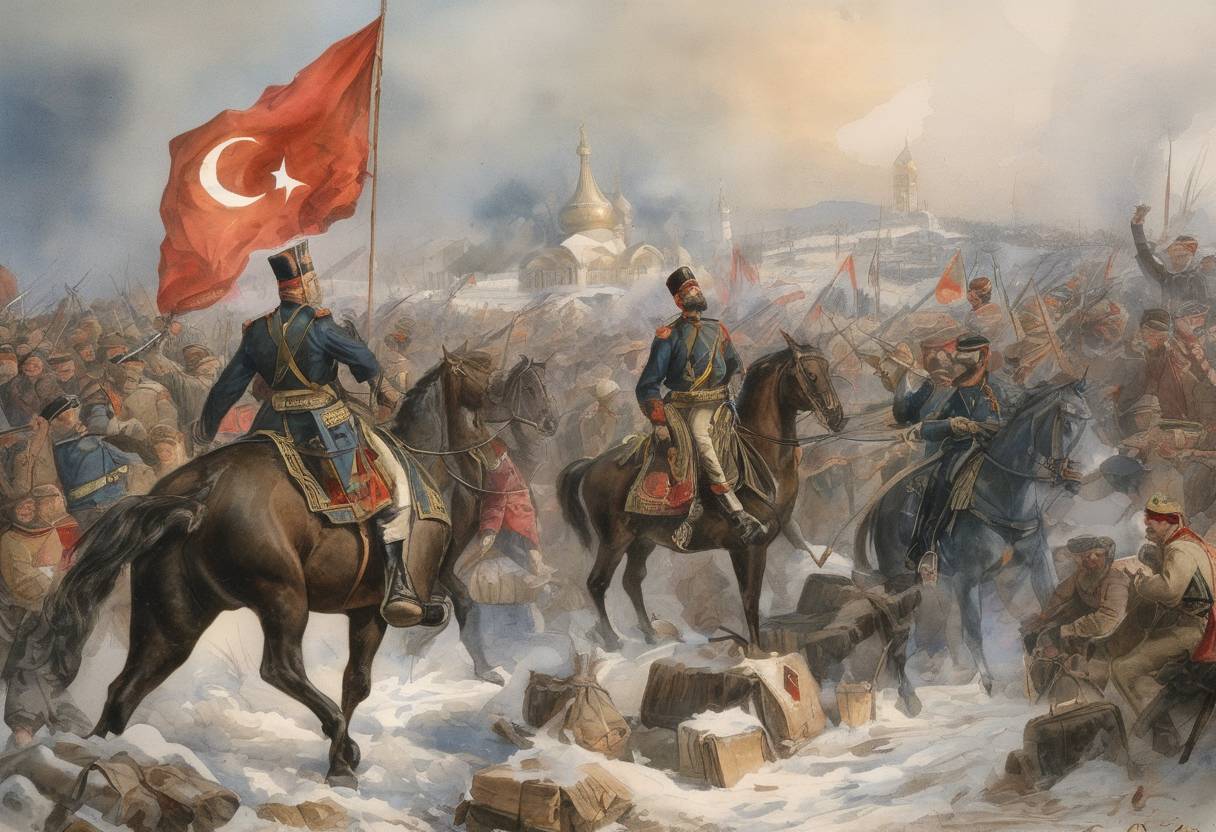
On April 24, 1877, the Russian Empire declared war on the Ottoman Empire, marking the beginning of the Russo-Turkish War of 1877–1878. This conflict was a pivotal moment in the late 19th century, driven by a combination of geopolitical interests, nationalistic movements, and humanitarian concerns.
Pan-Slavism and Nationalism: The war was significantly influenced by the rise of Pan-Slavism, a movement advocating the unity of Slavic peoples. Russia positioned itself as the protector of Slavic and Orthodox Christian populations in the Balkans, many of whom were under Ottoman rule.
Decline of the Ottoman Empire: By the late 19th century, the Ottoman Empire was often referred to as the “Sick Man of Europe,” struggling with internal strife and external pressures. This decline encouraged Balkan states to seek independence or autonomy, often with Russian support.
The Eastern Question: European powers were deeply concerned about the fate of the Ottoman territories, particularly in the Balkans. The “Eastern Question” referred to the strategic interest in these lands, with Russia seeking access to warm-water ports and influence in the region.
Humanitarian Concerns: Reports of Ottoman atrocities against Christian populations, particularly during the Bulgarian April Uprising of 1876, galvanized public opinion in Russia and other European countries, providing a moral pretext for intervention.
Treaty of San Stefano (March 1878): The war concluded with the Treaty of San Stefano, which granted independence or autonomy to several Balkan states and expanded Russian influence. However, the treaty was later revised by the Congress of Berlin due to concerns from other European powers.
Congress of Berlin (June-July 1878): This congress redrew the map of the Balkans, reducing Russian gains and establishing a more balanced power structure to prevent further conflicts.
Long-term Impact: The war significantly weakened the Ottoman Empire, accelerated the decline of its European territories, and set the stage for future Balkan conflicts. It also heightened tensions among European powers, contributing to the complex web of alliances that would later play a role in the lead-up to World War I.
The Russo-Turkish War of 1877–1878 was a crucial event in the history of Eastern Europe and the Balkans, reshaping the political landscape and influencing the course of European diplomacy in the years that followed.
Source: en.wikipedia.org