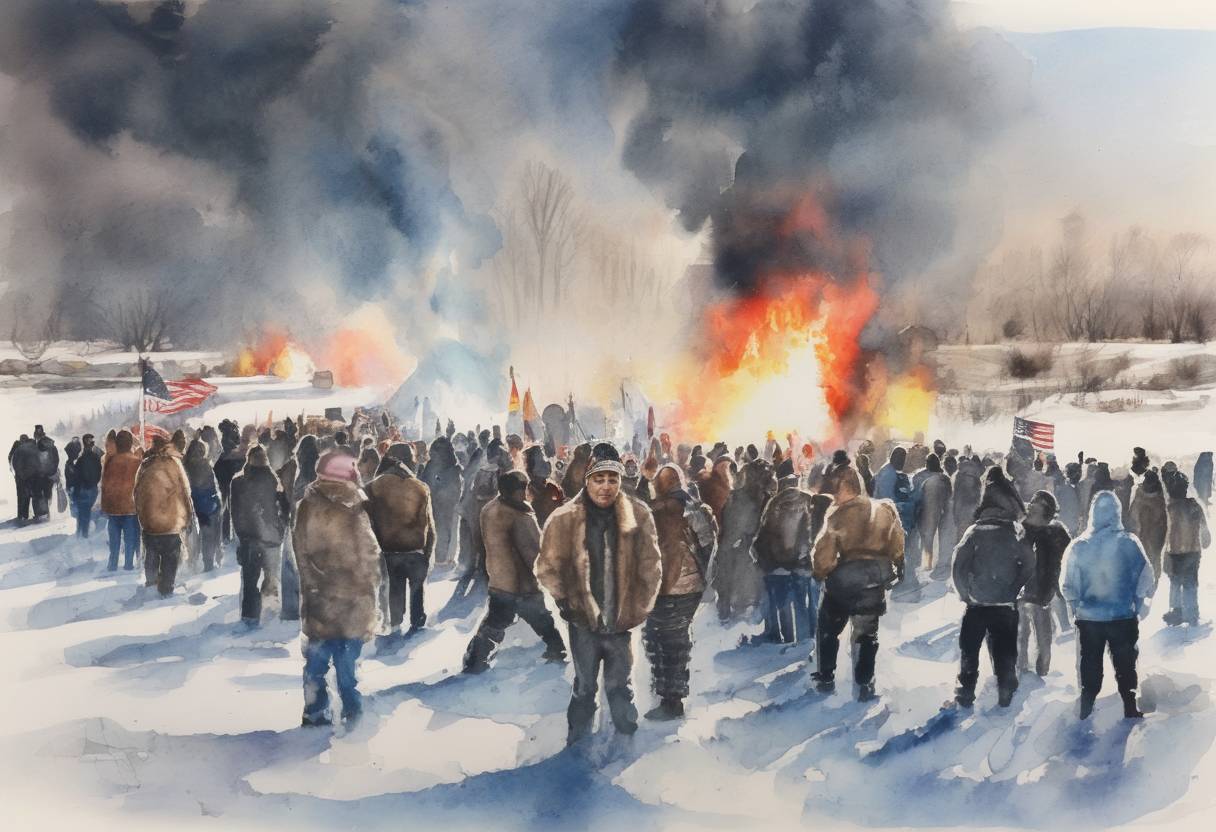
Dakota Access Pipeline Protests Intensify - November 20, 2016
On November 20, 2016, the Dakota Access Pipeline (DAPL) protests reached a critical and controversial point at the Standing Rock Indian Reservation in North Dakota. This day is marked by the intensified confrontation between law enforcement and protesters, who were primarily composed of Native American tribes, environmental activists, and allies. The use of water cannons by law enforcement on protesters in freezing temperatures became a focal point of national and international attention.
Background
The Dakota Access Pipeline is a 1,172-mile-long underground oil pipeline project in the United States, intended to transport crude oil from the Bakken oil fields in North Dakota to a terminal in Illinois. The Standing Rock Sioux Tribe and other indigenous groups opposed the pipeline, arguing that it threatened their water supply from the Missouri River and encroached on sacred lands.
The protests began in early 2016 and grew over the months, drawing thousands of supporters to the Standing Rock Sioux Reservation. The movement, often referred to as #NoDAPL, highlighted broader issues of indigenous rights and environmental protection.
Events of November 20, 2016
On the night of November 20, tensions escalated at the Backwater Bridge near the Standing Rock camp. Protesters attempted to remove a barricade set up by law enforcement, which led to a standoff. In response, law enforcement used water cannons, rubber bullets, tear gas, and concussion grenades against the protesters.
- Weather Conditions: The use of water cannons was particularly controversial due to the freezing temperatures, which posed significant risks of hypothermia and injury to those exposed.
- Injuries: Reports indicated that hundreds of protesters were injured, with some requiring hospitalization. The incident drew widespread condemnation from human rights organizations and activists.
Aftermath and Significance
The events of November 20, 2016, intensified the national debate over the DAPL and the treatment of Native American protesters. The use of force by law enforcement was criticized by various human rights groups and sparked further protests and solidarity actions across the United States and globally.
- Media Attention: The incident brought increased media attention to the protests, leading to greater public awareness and support for the Standing Rock Sioux Tribe.
- Political Response: In December 2016, the U.S. Army Corps of Engineers announced that it would not grant an easement for the pipeline to cross under Lake Oahe and would explore alternative routes. However, this decision was later reversed in early 2017 under the Trump administration, allowing the pipeline to be completed.
Broader Impact
The Dakota Access Pipeline protests became a symbol of indigenous resistance and environmental activism. They highlighted ongoing issues related to indigenous sovereignty, environmental justice, and the rights of marginalized communities in the face of large-scale industrial projects. The events at Standing Rock continue to influence discussions on energy policy, indigenous rights, and environmental protection in the United States and beyond.