Assassination of Mahatma Gandhi
1948 · New Delhi, India
Mahatma Gandhi was assassinated by Nathuram Godse in New Delhi.
August 9, 1942
Mahatma Gandhi is arrested in Bombay by British forces, marking the beginning of the Quit India Movement, a mass protest demanding an end to British rule in India.
Bombay, India | British Raj
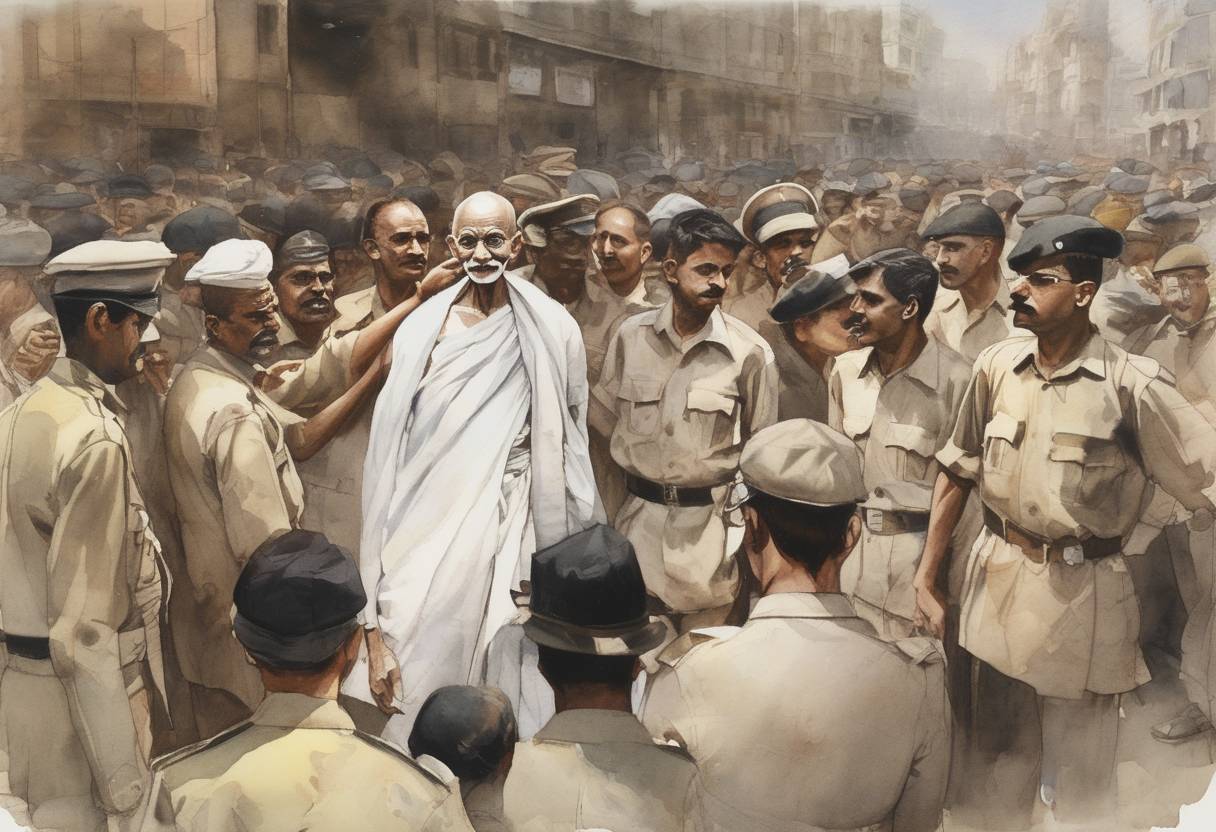
On August 9, 1942, Mahatma Gandhi was arrested by British forces in Bombay (now Mumbai), marking a pivotal moment in India’s struggle for independence. This event was a significant catalyst in the Quit India Movement, a mass protest demanding an end to British colonial rule in India.
World War II and Indian Nationalism: During World War II, the British government had involved India in the war effort without consulting Indian leaders. This unilateral decision fueled resentment and intensified the demand for independence.
Cripps Mission: In March 1942, the British government sent Sir Stafford Cripps to negotiate with Indian leaders, offering limited self-governance after the war. The proposal was rejected by Indian leaders, including Gandhi, as it did not meet the demand for complete independence.
Gandhi’s Call for Action: On August 8, 1942, at the All India Congress Committee session in Bombay, Gandhi delivered his famous “Do or Die” speech, urging Indians to engage in nonviolent resistance against British rule. This marked the official launch of the Quit India Movement.
Date and Location: Gandhi was arrested in the early hours of August 9, 1942, at the Aga Khan Palace in Pune, where he was staying at the time.
British Response: The British authorities swiftly arrested Gandhi and other prominent leaders of the Indian National Congress, including Jawaharlal Nehru and Sardar Vallabhbhai Patel, to suppress the movement before it could gain momentum.
Mass Protests: Despite the arrest of its leaders, the Quit India Movement sparked widespread protests across India. Demonstrations, strikes, and acts of civil disobedience erupted in various parts of the country.
Repression: The British government responded with severe repression, including mass detentions, censorship, and violence against protesters. Thousands were arrested, and many lost their lives in the ensuing crackdown.
Impact on British Rule: The Quit India Movement, although suppressed, significantly weakened British authority in India. It demonstrated the Indian populace’s resolve for independence and highlighted the unsustainable nature of British colonial rule.
Path to Independence: The movement set the stage for India’s eventual independence. It united Indians across different regions and communities in the common cause of freedom, and it intensified international pressure on Britain to decolonize.
Legacy of Nonviolence: Gandhi’s emphasis on nonviolent resistance continued to inspire global movements for civil rights and freedom, reinforcing his legacy as a proponent of peaceful protest.
The arrest of Mahatma Gandhi on August 9, 1942, and the subsequent Quit India Movement were crucial in the final phase of India’s struggle for independence, underscoring the power of collective action and nonviolent resistance in challenging colonial rule.
Source: en.wikipedia.org