The First Use of Tanks in Warfare: Battle of the Somme, September 15, 1916
1916 · Somme, France
The first use of tanks in warfare occurred during the Battle of the Somme in World War I, marking a significant development in military technology.
June 24, 1916
The Battle of the Somme began with a week-long artillery bombardment by British and French forces against German positions, leading to one of the largest battles of World War I.
Somme, France | Allied Forces
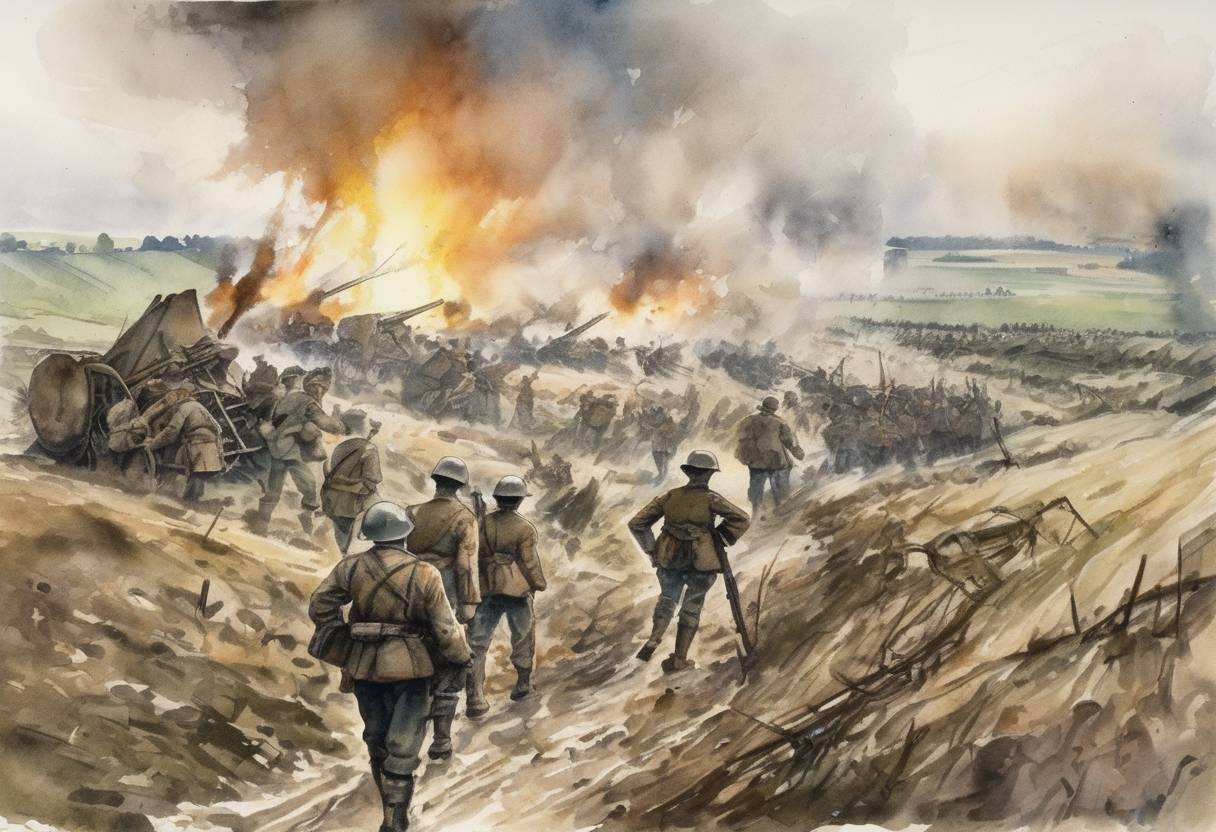
The Battle of the Somme, one of the largest and bloodiest battles of World War I, began with a week-long artillery bombardment on June 24, 1916. This battle was a joint operation between British and French forces against the German Empire, taking place on the Western Front in the Somme region of France. The battle was part of a broader Allied strategy to relieve pressure on the French forces at Verdun and to weaken the German army by inflicting heavy casualties.
The bombardment involved over 1,500 British and French guns, which fired more than 1.5 million shells over the course of the week. The sheer scale of the bombardment was unprecedented and was intended to demoralize and decimate the German forces entrenched along the front lines.
Strategic Planning: The decision to launch the Somme offensive was made at the Chantilly Conference in December 1915, where Allied leaders agreed on a coordinated strategy to launch simultaneous offensives on multiple fronts.
Verdun Offensive: The German attack on Verdun in February 1916 placed immense pressure on French forces, prompting the need for a diversionary attack to draw German troops away from Verdun.
Preparation and Logistics: The British and French armies spent months preparing for the offensive, amassing troops, artillery, and supplies in the Somme region.
Initial Outcome: Despite the intensity of the bombardment, many German defenses remained intact, and the subsequent infantry assault on July 1, 1916, resulted in catastrophic losses for the British, with nearly 60,000 casualties on the first day alone.
Prolonged Battle: The Battle of the Somme continued until November 1916, with both sides suffering heavy casualties. The Allies gained some territory, but the strategic objectives were not fully achieved.
Historical Significance: The battle highlighted the brutal realities of trench warfare and the limitations of artillery bombardment. It also marked the first use of the tank in warfare, signaling a shift in military tactics.
The Battle of the Somme remains a poignant symbol of the futility and devastation of World War I, underscoring the immense human cost of the conflict and the challenges of breaking the stalemate on the Western Front.
Source: en.wikipedia.org