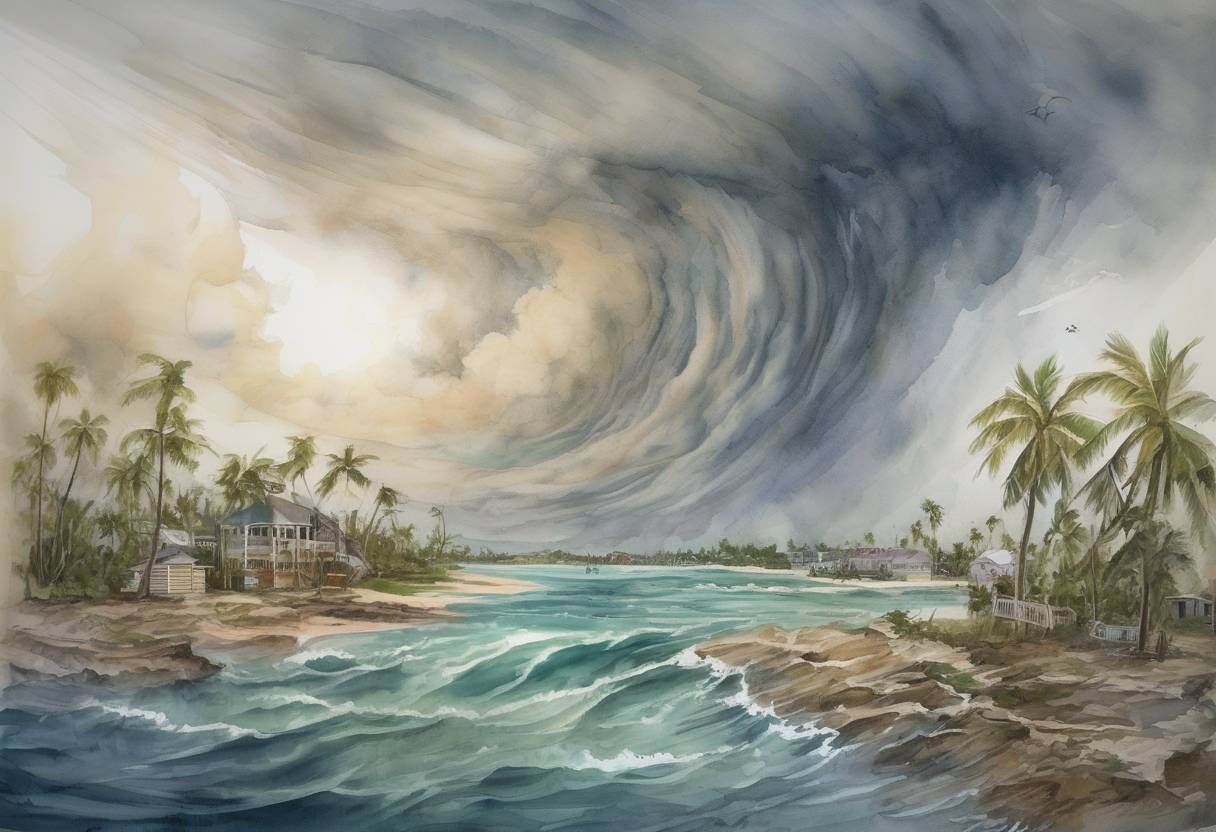
On August 23, 2005, Hurricane Katrina formed as a tropical depression over the southeastern Bahamas. This marked the beginning of what would become one of the deadliest and most destructive hurricanes in U.S. history. The storm quickly intensified, becoming a tropical storm by August 24 and receiving the name “Katrina.”
Development and Intensification
Katrina moved northwest, crossing southern Florida as a Category 1 hurricane on August 25, causing initial damage and power outages. Once it entered the warm waters of the Gulf of Mexico, it rapidly intensified. By August 28, Katrina had reached Category 5 status, with sustained winds exceeding 175 mph (280 km/h). This intensification was fueled by the warm Gulf waters and favorable atmospheric conditions.
Impact on the Gulf Coast
On August 29, 2005, Hurricane Katrina made landfall near Buras, Louisiana, as a Category 3 hurricane with winds of 125 mph (200 km/h). The storm surge and heavy rains led to catastrophic flooding, particularly in New Orleans, where levee failures resulted in approximately 80% of the city being submerged.
Key Affected Areas
- New Orleans, Louisiana: The city’s levee system, designed to protect against flooding, was overwhelmed. The Lower Ninth Ward and St. Bernard Parish were among the hardest-hit areas.
- Mississippi Gulf Coast: Cities like Gulfport and Biloxi experienced severe damage from the storm surge, which reached up to 28 feet in some areas.
- Alabama and Florida: These states also experienced significant impacts, including flooding and wind damage.
Human and Economic Toll
Hurricane Katrina resulted in over 1,800 fatalities and displaced hundreds of thousands of residents. The economic impact was staggering, with damages estimated at over $125 billion, making it one of the costliest natural disasters in U.S. history.
Aftermath and Legacy
The aftermath of Hurricane Katrina exposed significant shortcomings in disaster preparedness and response at local, state, and federal levels. The Federal Emergency Management Agency (FEMA) faced criticism for its handling of the crisis. The disaster prompted widespread discussions on emergency management, urban planning, and climate change resilience.
Reconstruction efforts in the affected areas took years, with many communities still recovering a decade later. The storm also led to significant policy changes, including improvements in levee systems and emergency response protocols.
Hurricane Katrina remains a pivotal event in American history, highlighting the vulnerabilities of coastal cities to natural disasters and the importance of effective disaster management strategies.