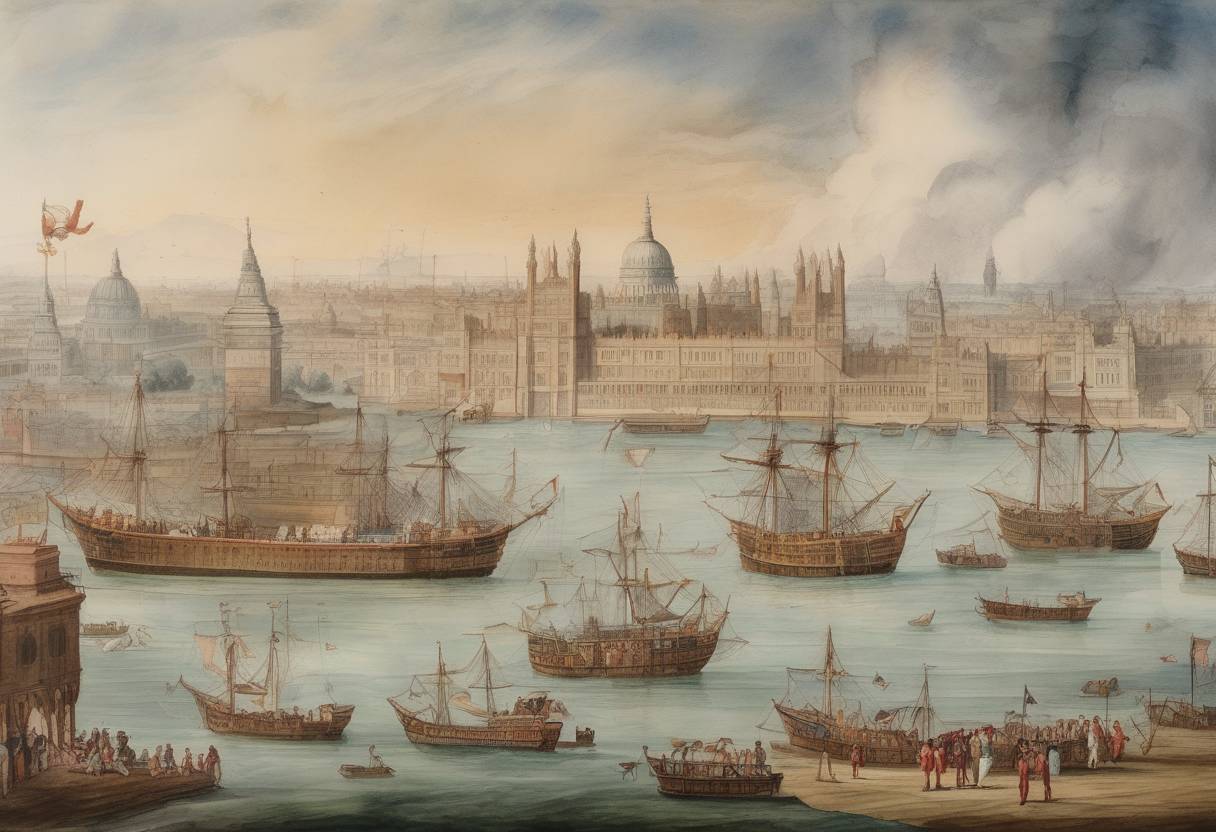
The Chartering of the British East India Company
On December 31, 1600, Queen Elizabeth I of England granted a royal charter to the “Governor and Company of Merchants of London trading into the East Indies,” marking the inception of the British East India Company. This event laid the foundation for what would become a significant force in global trade and the eventual establishment of British colonial influence in India.
Context and Background
- Age of Exploration: The late 16th century was a period characterized by European exploration and expansion. Nations like Spain and Portugal had already established lucrative trade routes and colonies in Asia, Africa, and the Americas.
- English Ambitions: England sought to compete with these powers by establishing its own trade routes and colonies. The East Indies, rich in spices, textiles, and other valuable goods, were particularly attractive.
The Charter
- Royal Charter: The charter granted by Queen Elizabeth I provided the company with a monopoly on English trade in the East Indies for 15 years. It allowed the company to trade, build factories, and even wage war if necessary to protect its interests.
- Initial Objectives: The primary aim was to break into the spice trade, which was dominated by the Dutch and Portuguese at the time.
Key Events Leading Up to the Charter
- Failed Attempts: Prior to the charter, English merchants had made several unsuccessful attempts to establish trade with the East Indies.
- Formation of the Company: A group of London merchants, recognizing the potential profits, petitioned the Queen for exclusive trading rights, leading to the formation of the company.
Impact and Significance
- Trade Expansion: The company quickly expanded its operations, establishing trading posts and factories in key locations across the Indian subcontinent and Southeast Asia.
- Economic Influence: Over time, the British East India Company became one of the most powerful commercial enterprises in the world, significantly influencing global trade patterns.
- Colonial Rule: The company’s influence extended beyond trade. It played a crucial role in the establishment of British colonial rule in India, with its private armies and administrative structures eventually leading to direct British governance in 1858.
Aftermath and Consequences
- Decline and Dissolution: The company’s power waned in the 19th century due to mismanagement, corruption, and increasing British governmental control. It was formally dissolved in 1874.
- Legacy: The British East India Company’s legacy is complex, marked by both economic development and exploitation. It set the stage for the British Empire’s expansion in Asia and left a lasting impact on the regions it touched.
The chartering of the British East India Company was a pivotal moment in history, initiating a period of significant economic and political change that would shape the future of India and the British Empire.