Henry Hudson's Exploration of the Hudson River on September 12, 1609
1609 · New York, United States
Henry Hudson began his exploration of the river that would later be named after him, the Hudson River, during his search for a Northwest Passage.
August 28, 1609
Henry Hudson discovers Delaware Bay during his exploration of the New World.
Delaware Bay, United States | Dutch East India Company
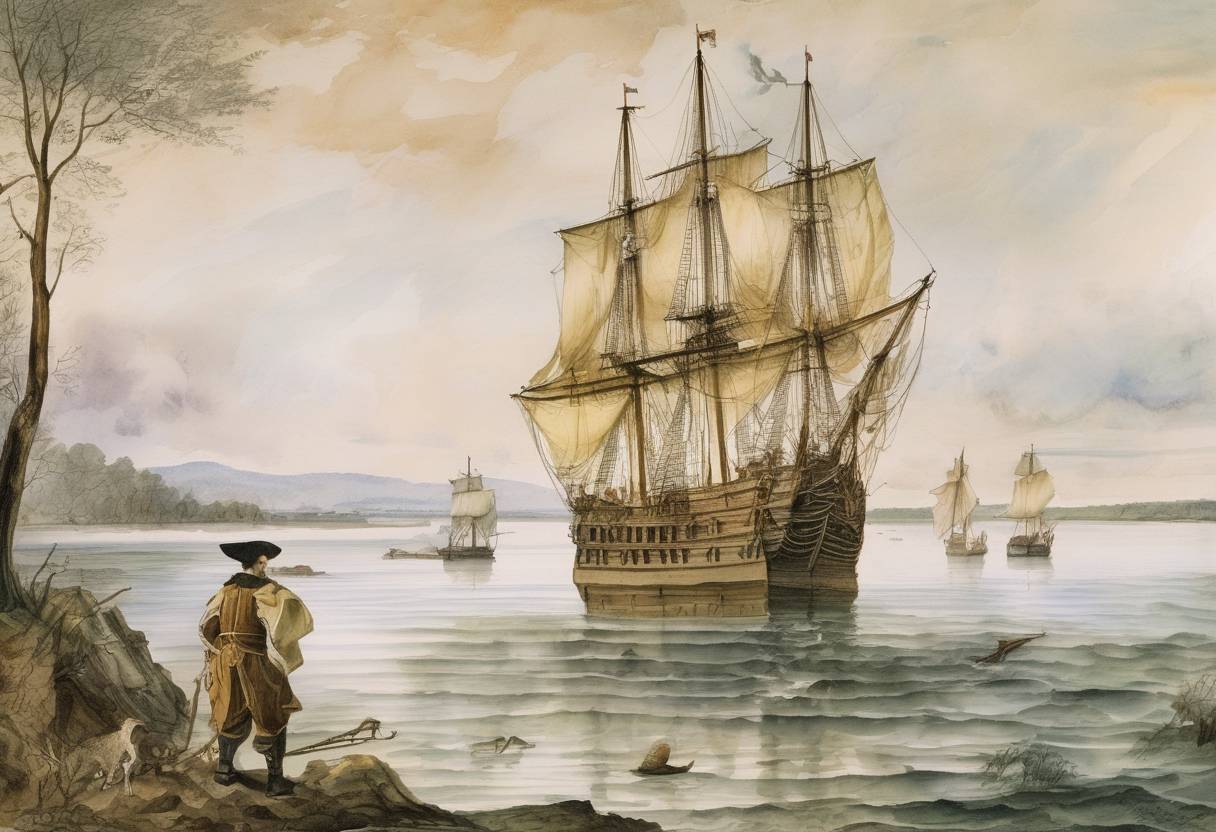
On August 28, 1609, the English explorer Henry Hudson, sailing under the Dutch flag aboard the ship Halve Maen (Half Moon), discovered Delaware Bay during his exploration of the New World. This event marked a significant moment in the Age of Exploration, as European powers were actively seeking new trade routes and territories.
Henry Hudson: An experienced navigator and explorer, Hudson was initially commissioned by the Dutch East India Company to find a northeast passage to Asia. However, due to ice-blocked routes, he redirected his mission towards the west, exploring the North American coast.
The *Halve Maen*: A Dutch vessel, the Halve Maen was a small, nimble ship suited for exploration. Hudson’s journey in 1609 was part of a broader effort by the Dutch to establish a foothold in the lucrative trade networks of the New World.
Exploration Route: After abandoning the northeast passage, Hudson sailed across the Atlantic and explored the eastern coast of North America. Prior to reaching Delaware Bay, he had already navigated the Chesapeake Bay and the coastline of what is now New Jersey.
August 28, 1609: On this date, Hudson and his crew entered Delaware Bay. Although he did not explore it extensively, the discovery was significant as it opened up further exploration and eventual settlement by Europeans in the region.
Impact on European Exploration: Hudson’s discovery of Delaware Bay contributed to the growing European interest in North America. It paved the way for future Dutch and later English colonization efforts in the region.
Hudson’s Legacy: While Hudson did not find a passage to Asia, his explorations significantly enhanced European maps of the New World. His voyages laid the groundwork for Dutch claims in North America, particularly in the Hudson River area, which he explored shortly after Delaware Bay.
Cultural and Historical Impact: The discovery of Delaware Bay was part of the broader narrative of European exploration and colonization, which had profound effects on indigenous populations and the geopolitical landscape of the Americas.
Hudson’s exploration efforts, including the discovery of Delaware Bay, are remembered as pivotal moments in the history of exploration, highlighting the era’s spirit of discovery and the complex interactions between European powers and the New World.
Source: en.wikipedia.org