Tennessee Secedes from the Union
1861 · Nashville, United States
Tennessee becomes the 11th and last state to secede from the Union during the American Civil War.
December 20, 1860
South Carolina became the first state to secede from the Union, an event that led to the American Civil War.
Charleston, United States | South Carolina State Government
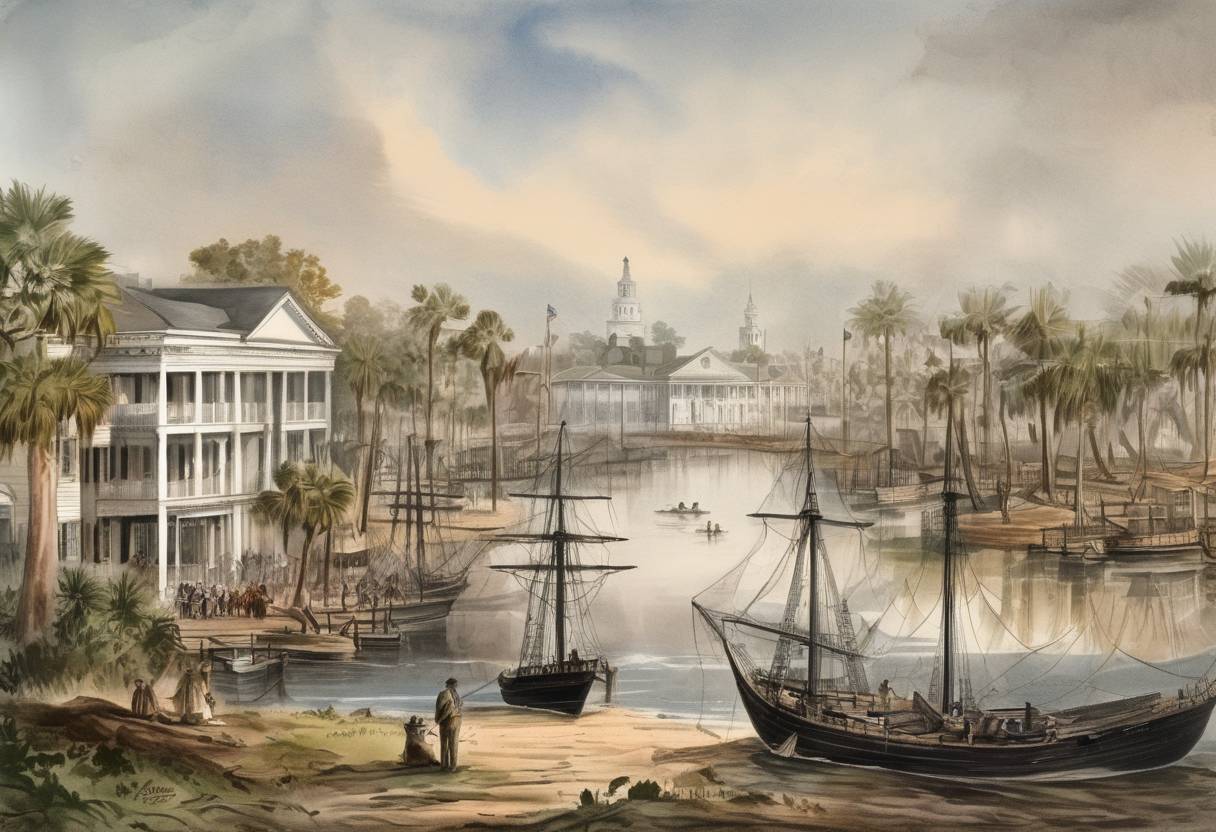
On December 20, 1860, South Carolina became the first state to secede from the United States, marking a pivotal moment in American history that would lead to the outbreak of the Civil War. This decision was the culmination of decades of growing sectional tensions between the Northern and Southern states, primarily over issues of states’ rights and slavery.
Economic and Social Differences: The Northern and Southern states had developed along different economic lines. The North was more industrialized, while the South remained largely agrarian, relying heavily on slave labor for its economy.
Slavery: The moral and political debates over slavery had intensified, particularly following events such as the publication of Harriet Beecher Stowe’s “Uncle Tom’s Cabin” in 1852 and the Dred Scott decision in 1857, which denied citizenship to African Americans and declared the Missouri Compromise unconstitutional.
Political Tensions: The election of Abraham Lincoln as President in November 1860 was seen as a direct threat to the institution of slavery. Lincoln, representing the Republican Party, had campaigned on a platform that opposed the expansion of slavery into the new territories, though he had promised not to interfere with slavery where it already existed.
Charleston Convention: In response to Lincoln’s election, South Carolina called for a state convention to consider secession. The convention met in Charleston, a city with strong pro-secession sentiment.
Ordinance of Secession: On December 20, 1860, the convention unanimously adopted the Ordinance of Secession, declaring that South Carolina was dissolving its union with the other states and resuming its status as a separate and independent nation.
Formation of the Confederacy: Following South Carolina’s lead, six more Southern states seceded by February 1861—Mississippi, Florida, Alabama, Georgia, Louisiana, and Texas. These states formed the Confederate States of America in February 1861, with Jefferson Davis as its president.
Fort Sumter: Tensions escalated further when Confederate forces fired on Fort Sumter in Charleston Harbor on April 12, 1861, effectively starting the Civil War.
Catalyst for War: South Carolina’s secession was the catalyst for the Civil War, a conflict that would last four years and become one of the most defining events in American history.
Legacy: The Civil War ultimately led to the abolition of slavery and significant changes in the United States’ political and social landscape, including the passage of the 13th, 14th, and 15th Amendments to the Constitution.
South Carolina’s decision to secede on December 20, 1860, thus stands as a critical juncture in the nation’s history, setting the stage for a conflict that would determine the future of the United States.
Source: www.history.com