The Women's March on January 21, 2017
2017 · Washington, D.C., United States
The Women's March took place in Washington, D.C., and around the world, with millions of people protesting for women's rights and other civil rights issues.
April 25, 2004
The March for Women's Lives takes place in Washington, D.C., drawing over a million participants advocating for reproductive rights and women's health issues.
Washington, D.C., United States | Planned Parenthood
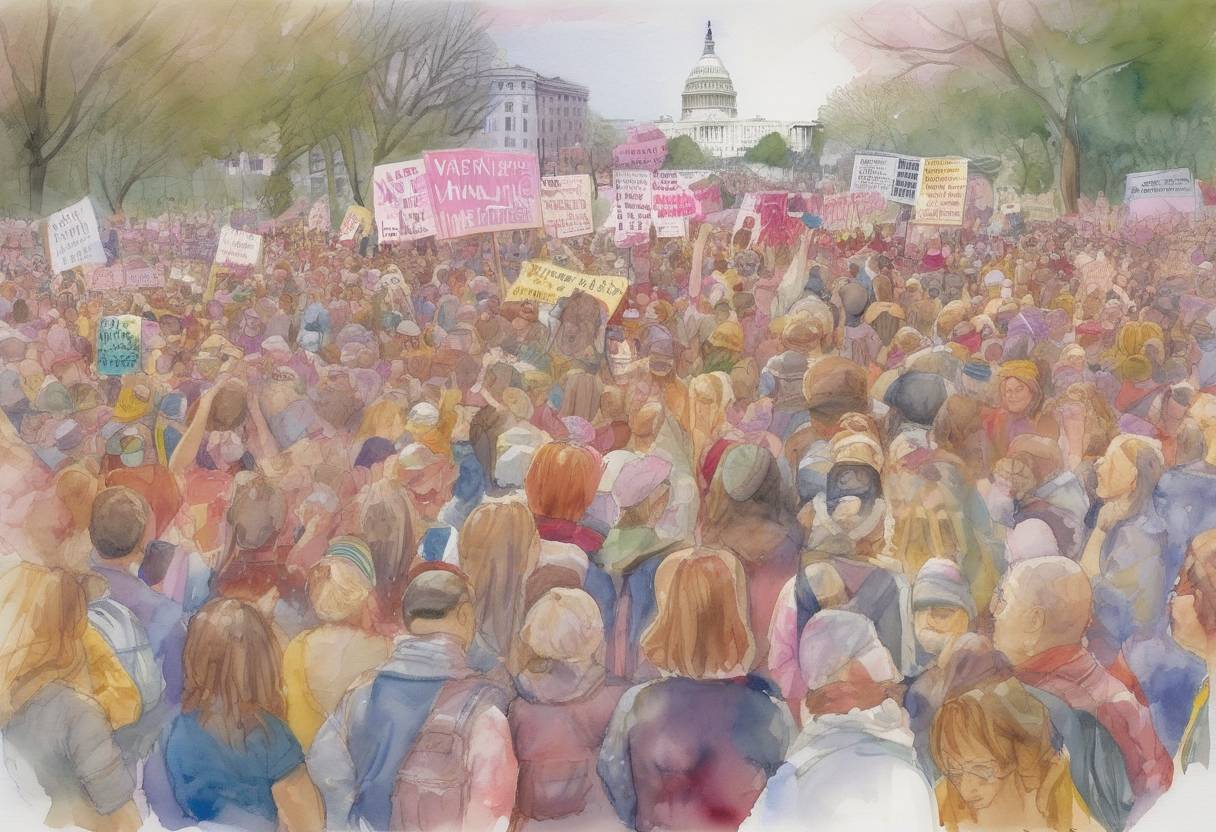
On April 25, 2004, Washington, D.C. witnessed one of the largest demonstrations in U.S. history, known as the March for Women’s Lives. This significant event drew over a million participants, all advocating for reproductive rights and women’s health issues. The march underscored the ongoing struggle for women’s rights and aimed to influence public policy and raise awareness about critical issues affecting women’s health.
The early 2000s were marked by increasing political and social debates over reproductive rights in the United States. The march was organized in response to growing concerns about potential threats to the landmark 1973 Supreme Court decision in Roe v. Wade, which legalized abortion nationwide. Activists feared that the political climate and judicial appointments could lead to a rollback of reproductive rights.
Several organizations came together to organize the march, including:
These groups, among others, sought to mobilize a broad coalition of individuals and organizations to advocate for women’s health and reproductive freedom.
Massive Turnout: The march attracted a diverse group of participants, including women, men, and children from various backgrounds. Estimates suggest that over a million people attended, making it one of the largest protests in U.S. history at the time.
Prominent Figures: The event featured speeches from notable figures such as Gloria Steinem, Whoopi Goldberg, and Hillary Clinton, who emphasized the importance of protecting reproductive rights and access to healthcare.
Unified Message: Participants carried signs and banners with messages advocating for women’s autonomy over their bodies, access to safe and legal abortions, and broader healthcare rights. The march highlighted the intersectionality of women’s rights, addressing issues such as race, economic status, and access to healthcare.
The March for Women’s Lives had a lasting impact on the discourse surrounding reproductive rights in the United States. It served as a powerful demonstration of public support for women’s health issues and helped to galvanize further activism and advocacy.
Political Influence: The march aimed to influence lawmakers and policymakers by demonstrating widespread public support for reproductive rights. It also sought to energize voters ahead of the 2004 presidential election.
Continued Advocacy: The event reinforced the importance of continued advocacy for women’s rights and inspired subsequent generations of activists to engage in political and social movements.
In conclusion, the March for Women’s Lives on April 25, 2004, was a pivotal moment in the history of women’s rights advocacy in the United States. It underscored the ongoing struggle for reproductive freedom and highlighted the power of collective action in shaping public policy and societal attitudes.
Source: www.plannedparenthood.org