Jacques Cartier's First Voyage to the New World
1534 · Saint-Malo, France
Jacques Cartier sets sail on his first voyage to the New World, commissioned by King Francis I of France to explore the northern lands, which would later become Canada.
October 18, 1000
Leif Erikson, the Norse explorer, is believed to have landed in North America, establishing a settlement at Vinland, which is thought to be in the area of modern-day Newfoundland, Canada.
Vinland, North America (modern-day Canada) | Norse explorers
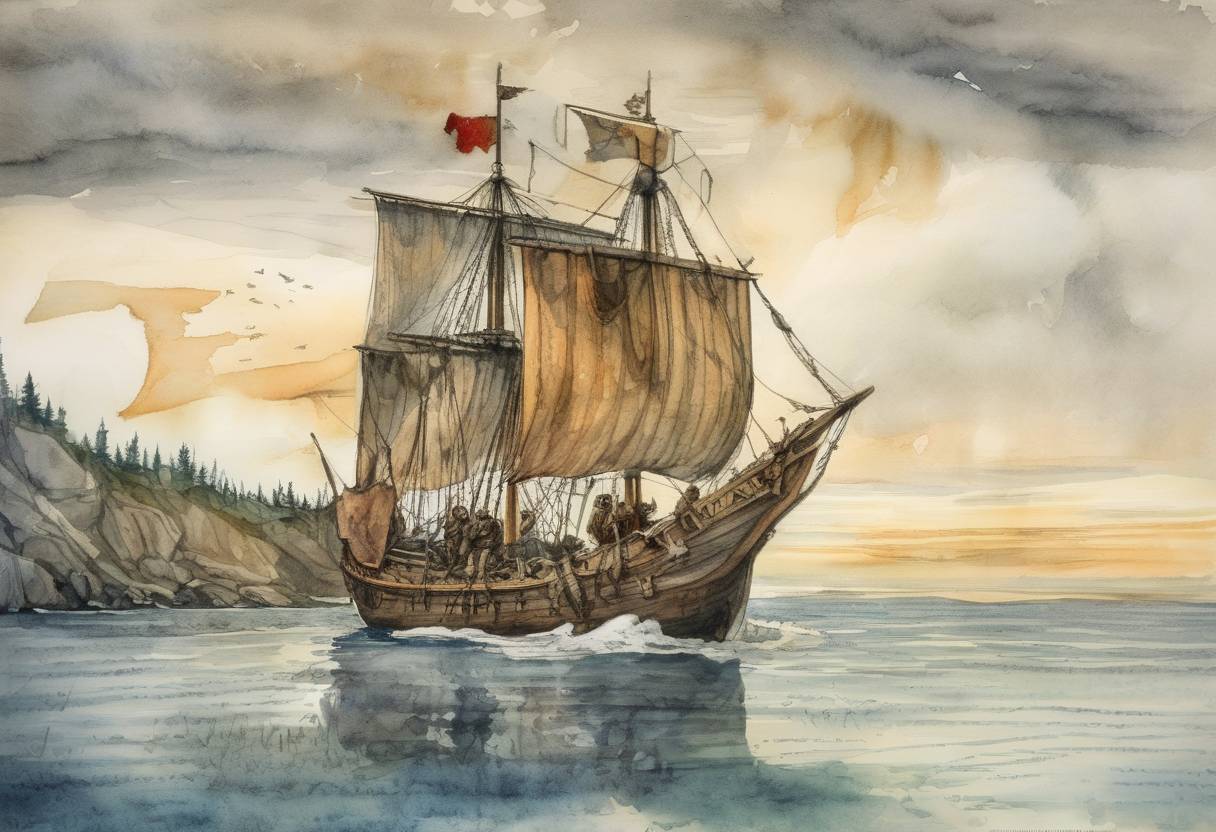
Leif Erikson, a Norse explorer from Iceland, is credited with being one of the first Europeans to set foot on North American soil, long before Christopher Columbus. His journey is believed to have taken place around the year 1000 AD, with October 18 often cited as a commemorative date, though the exact date of his landing is not definitively known.
Leif Erikson was the son of Erik the Red, the founder of the first Norse settlements in Greenland. Growing up in a family of explorers, Leif was well-versed in navigation and seafaring. His journey to North America is thought to have been inspired by tales of a land to the west, possibly recounted by another Norse explorer, Bjarni Herjólfsson, who had sighted the coast of North America but did not land.
Leif set sail from Greenland with a crew of about 35 men. His expedition led him to a land he named “Vinland,” which is often identified with the area of modern-day Newfoundland, Canada. The name “Vinland” suggests a land of meadows or possibly a place where wild grapes grew, indicating a more temperate climate than Greenland.
Leif Erikson’s exploration marks a significant moment in the history of transatlantic exploration. It represents the first known European attempt to establish a presence in North America, predating Columbus by nearly 500 years.
Leif Erikson’s voyage to North America is a testament to the adventurous spirit of the Norse explorers and their remarkable seafaring capabilities. While the settlements in Vinland did not endure, the legacy of Erikson’s exploration continues to be a subject of fascination and pride, highlighting the rich history of early transatlantic exploration.