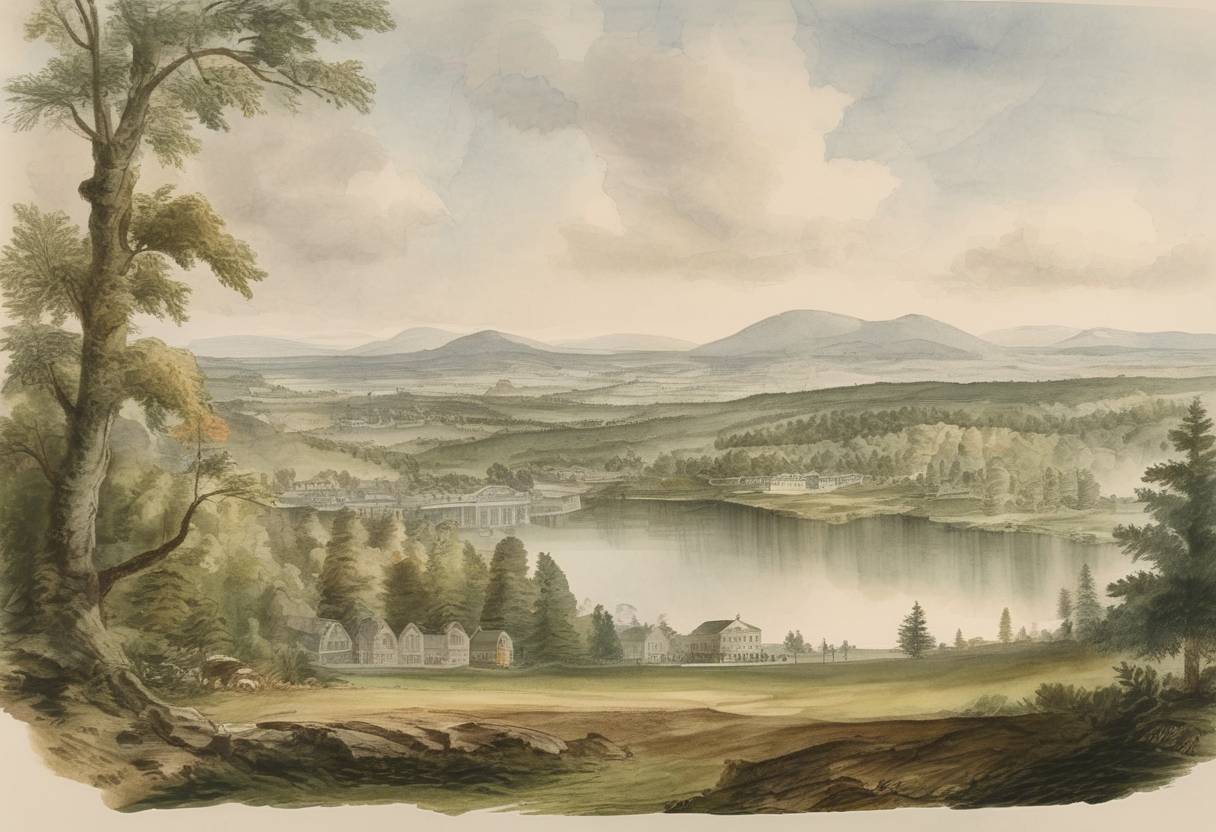
Vermont’s Admission as the 14th State of the United States
On March 4, 1791, Vermont was admitted to the United States as the 14th state, marking a significant expansion of the young nation. This event was the culmination of a complex history involving territorial disputes, independence movements, and negotiations.
Historical Context
Pre-Statehood
Geographical and Political Background: Vermont is located in the northeastern region of the United States, bordered by New York to the west, New Hampshire to the east, Massachusetts to the south, and Canada to the north. Before its statehood, the area was claimed by both New York and New Hampshire, leading to disputes over land grants and governance.
The Vermont Republic: In 1777, amidst the American Revolutionary War, Vermont declared itself an independent republic, known as the Vermont Republic. It operated independently for 14 years, establishing its own constitution, currency, and postal service. The constitution of Vermont was notable for being one of the first to abolish adult slavery and grant universal male suffrage.
Path to Statehood
Negotiations and Disputes: The path to statehood involved resolving territorial disputes, particularly with New York. The New York-Vermont land dispute was a significant barrier, as New York claimed jurisdiction over Vermont based on colonial charters. However, Vermont’s leaders negotiated a settlement with New York, agreeing to pay $30,000 to New York land claimants to resolve these disputes.
Federal Considerations: The admission of Vermont was also influenced by national politics. The balance of power between free and slave states was a critical issue. Vermont’s admission as a free state was balanced by the admission of Kentucky as a slave state in 1792, maintaining the delicate balance between free and slave states in the Union.
Admission and Significance
Formal Admission: On March 4, 1791, Vermont was formally admitted to the Union as the 14th state. This was the first state to join the original 13 colonies, setting a precedent for the expansion of the United States.
Significance: Vermont’s admission was significant for several reasons:
- It demonstrated the ability of the United States to resolve internal disputes and expand its territory peacefully.
- It reinforced the principles of self-governance and statehood as Vermont transitioned from an independent republic to a state within the Union.
- Vermont’s entry as a free state contributed to the ongoing national dialogue and tension regarding slavery.
Aftermath
Economic and Social Development: Following its admission, Vermont continued to develop economically and socially. It became known for its agriculture, particularly dairy farming, and later for its manufacturing industries.
Role in National Politics: Vermont played an active role in national politics, often aligning with abolitionist movements and contributing to the discourse on civil rights and liberties.
In summary, Vermont’s admission as the 14th state was a pivotal moment in American history, reflecting the complexities of statehood, territorial negotiations, and the evolving political landscape of the United States.