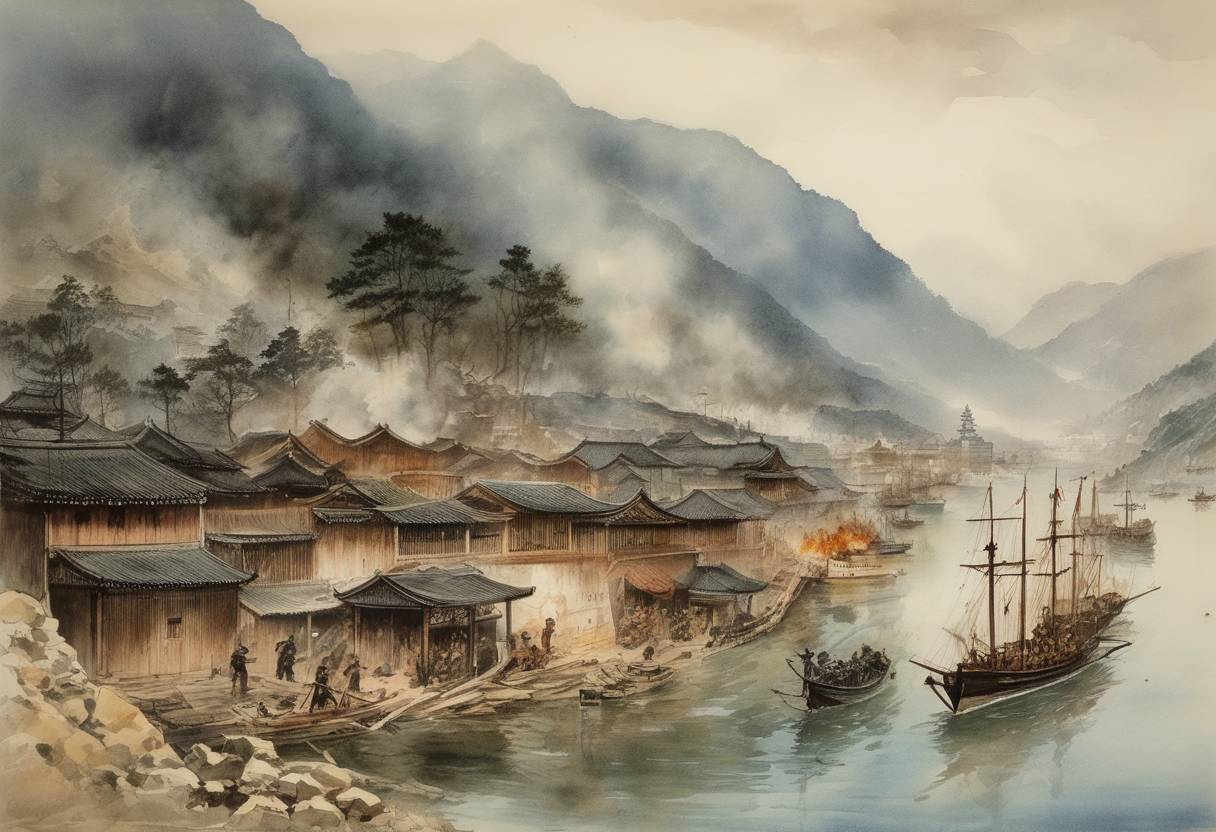
Capture of Port Arthur: November 21, 1894
The capture of Port Arthur on November 21, 1894, marked a pivotal moment during the First Sino-Japanese War (1894-1895), a conflict fought primarily over control and influence in Korea. Port Arthur, now known as Lüshun, is located on the Liaodong Peninsula and was a strategic military and naval base for the Qing Dynasty of China.
Background
The First Sino-Japanese War arose from competing interests between Japan and China over Korea. Japan, seeking to expand its influence and position itself as a major imperial power in Asia, declared war on China on August 1, 1894, after several months of escalating tensions. The Japanese military sought to swiftly defeat Chinese forces to establish dominance in the region.
The Attack on Port Arthur
By the time Japanese forces reached Port Arthur, they had already secured several victories elsewhere, weakening Chinese defenses. On November 21, 1894, the Japanese launched a coordinated assault on the heavily fortified city. The battle lasted just a day due to the superior organization, training, and weaponry of the Japanese troops, resulting in overwhelming success.
Outcomes and Significance
Japanese Control of Port Arthur: The capture allowed Japan to control a crucial naval stronghold, thereby asserting its dominance in the region.
Impact on Qing Dynasty: The loss highlighted the inefficacy and vulnerability of the Qing military, contributing to internal dissent and external criticism of the dynasty’s handling of the war.
Strategic Advantage: With Port Arthur under Japanese control, subsequent military operations allowed further advances into Chinese territory and contributed significantly to Japan’s overall victory in the war.
Diplomatic Repercussions: The fall of Port Arthur was a significant factor leading to the Treaty of Shimonoseki in 1895, which ended the war. The treaty granted Japan significant territorial gains and marked the emergence of Japan as a dominant force in East Asia.
The capture of Port Arthur underscored the shifting power dynamics in the region and exemplified the rise of Japan as an imperial power at the end of the 19th century. It also set the stage for future geopolitical tensions in the region, impacting Sino-Japanese relations for years to come.