Last Execution for Witchcraft in Germany
1775 · Kempten, Germany
Last execution for witchcraft in Germany takes place in Kempten.
March 12, 1496
Jewish people were expelled from Carintha, Austria.
Carintha, Austria | Local authorities
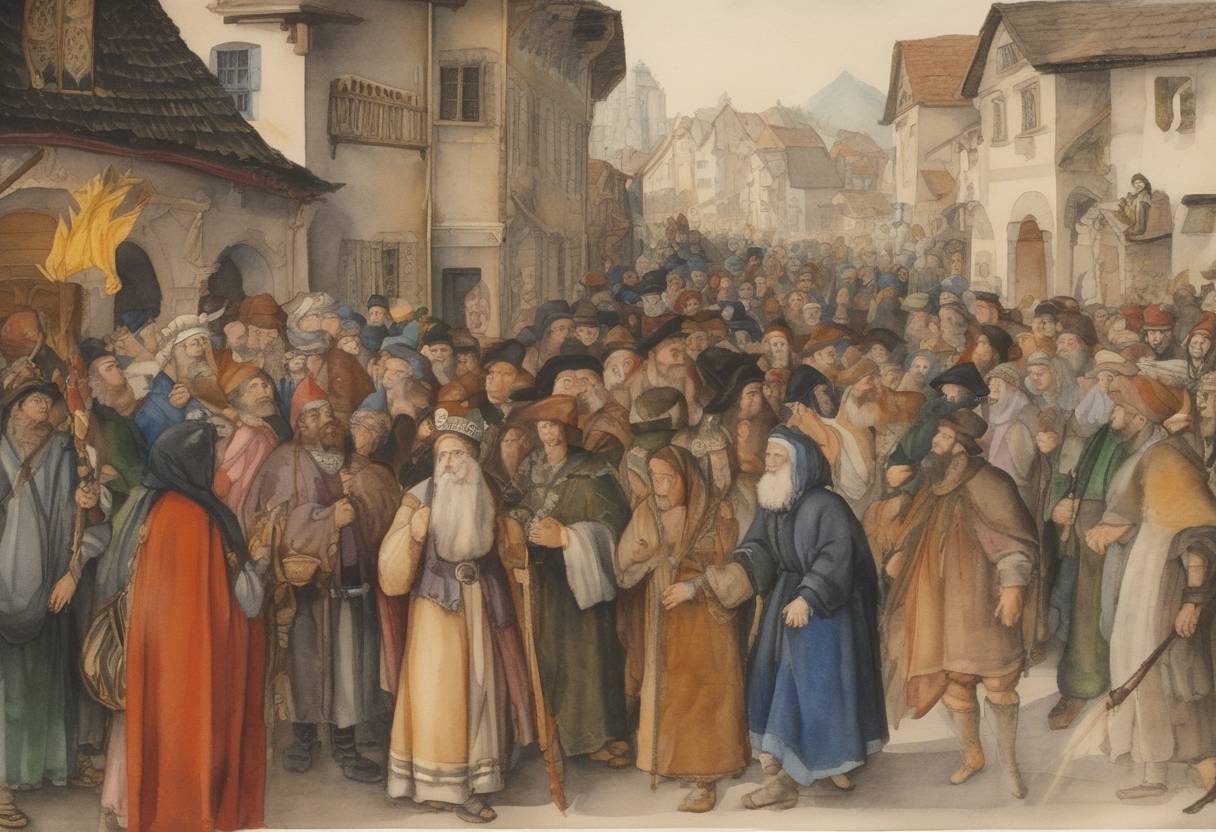
On March 12, 1496, the Jewish population faced expulsion from Carinthia, a duchy located within modern-day Austria. This event was part of a broader trend of expulsions that affected Jewish communities throughout Europe during the late Middle Ages. The expulsion from Carinthia was influenced by multiple socio-political factors and had significant implications for the Jewish community in the region.
The 15th century in Europe was a period of increasing intolerance toward Jewish communities, often driven by religious, economic, and social motives. Jews were subjected to discriminatory laws, forced conversions, and periodic violence. The Catholic Church’s influence and the consolidation of territorial states often resulted in policies that forced Jews into isolation or led to their expulsion.
Several factors led to the expulsion of Jews from Carinthia:
Religious Intolerance: The Catholic Church played a critical role in fostering anti-Jewish sentiment, promoting the belief that Jews were responsible for the crucifixion of Jesus Christ and were thus perpetual outsiders.
Economic Envy and Debt: Jews often occupied niches in money lending and trade, which were areas restricted from Christians by ecclesiastical law. This sometimes led to resentment among the Christian population and governing authorities who were indebted to Jewish lenders.
Political Factors: Rulers could levy special taxes against Jewish communities, and expulsion sometimes followed when Jewish financial accommodations were no longer deemed necessary or politically convenient.
The expulsion from Carinthia forced the Jewish population to relocate, often to regions more tolerant of Jewish presence or where rulers were more interested in their economic contributions, such as the Ottoman Empire or parts of Poland and Lithuania. The loss of Jewish communities also meant the loss of cultural and economic contributions they provided.
The expulsion from Carinthia was part of a wider pattern of expulsions during the late 15th and early 16th centuries. These events contributed to the dispersion of Jewish populations throughout Europe and beyond, significantly influencing the demographic and cultural landscape of Jewish life. This period of expulsion was a precursor to the more widespread dispersion experienced during subsequent centuries, illustrating the recurring theme of persecution that has shaped Jewish history.
The historical trajectory following the expulsion highlighted the resilience of Jewish communities in the face of adversity. While expulsions brought immediate challenges, they also led to new opportunities for Jewish life and culture to flourish in various parts of the world, thereby contributing to the diverse tapestry of Jewish traditions and practices seen today.
Source: www.jewishhistory.org