The Battle of Osuchy: June 27, 1944
1944 · Osuchy, Poland
The Battle of Osuchy took place, one of the largest battles between Polish resistance and Nazi Germany during World War II.
May 27, 1831
The Battle of Ostrołęka takes place during the November Uprising, a Polish insurrection against the Russian Empire.
Ostrołęka, Poland | Polish National Government, Russian Empire
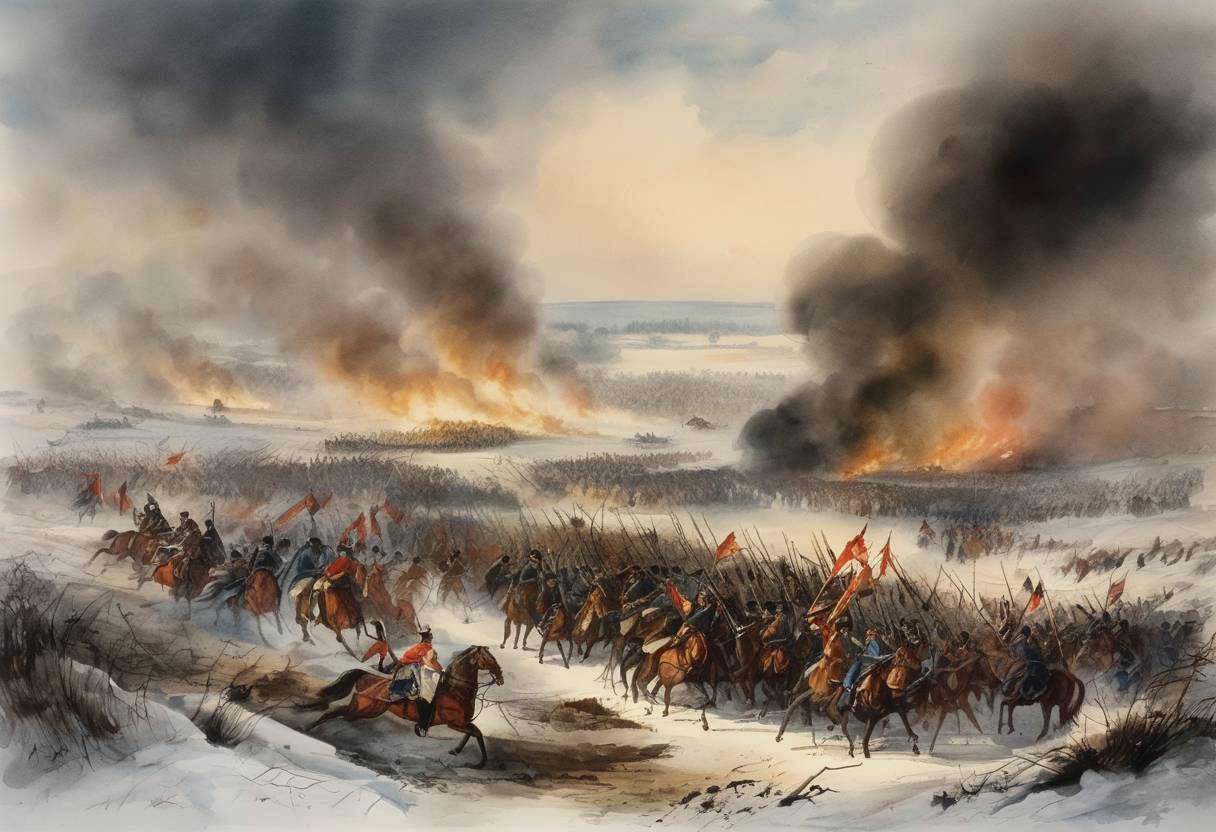
The Battle of Ostrołęka, fought on May 26, 1831, was a pivotal conflict during the November Uprising of 1830–1831, an insurrection aimed at liberating Poland from Russian domination. Occurring near the town of Ostrołęka in modern-day northeastern Poland, the battle was a significant but ultimately unsuccessful attempt by Polish forces to repel the advancing Russian army.
The November Uprising began on November 29, 1830, when Polish conspirators initiated a revolt against the Russian Empire’s control over the Kingdom of Poland, which had been subsumed into the empire after the Congress of Vienna in 1815. The Polish military initially found success, capturing Warsaw and holding major regions against Russian forces. However, the insurrection faced immense pressure as Russian reinforcements arrived to suppress the revolt.
The Polish army, under the command of General Skrzynecki, was positioned strategically at Ostrołęka. However, the Poles faced a disadvantage in numbers and equipment against Diebitsch’s well-supplied Russian troops.
The Battle of Ostrołęka resulted in a decisive Russian victory. Despite Polish bravery, the battle marked a turning point that foreshadowed the eventual downfall of the November Uprising.
While the uprising ended unsuccessfully, it played an essential role in nurturing Polish national identity and resistance movements. The events of the November Uprising, including the Battle of Ostrołęka, inspired future generations in Poland’s struggle for independence.
The battle remains a testament to the resilience of the Polish spirit, symbolizing a profound historical moment of resistance against imperial domination in Eastern Europe.
Source: en.wikipedia.org