Pokhran-II Nuclear Tests: May 11, 1998
1998 · Pokhran, India
India conducted nuclear tests in Pokhran, leading to international condemnation and a regional arms race with Pakistan.
November 2, 1984
The government of India announces that Indian troops are to invade the Golden Temple complex in Amritsar on account of insurgent activities.
Amritsar, India | Government of India
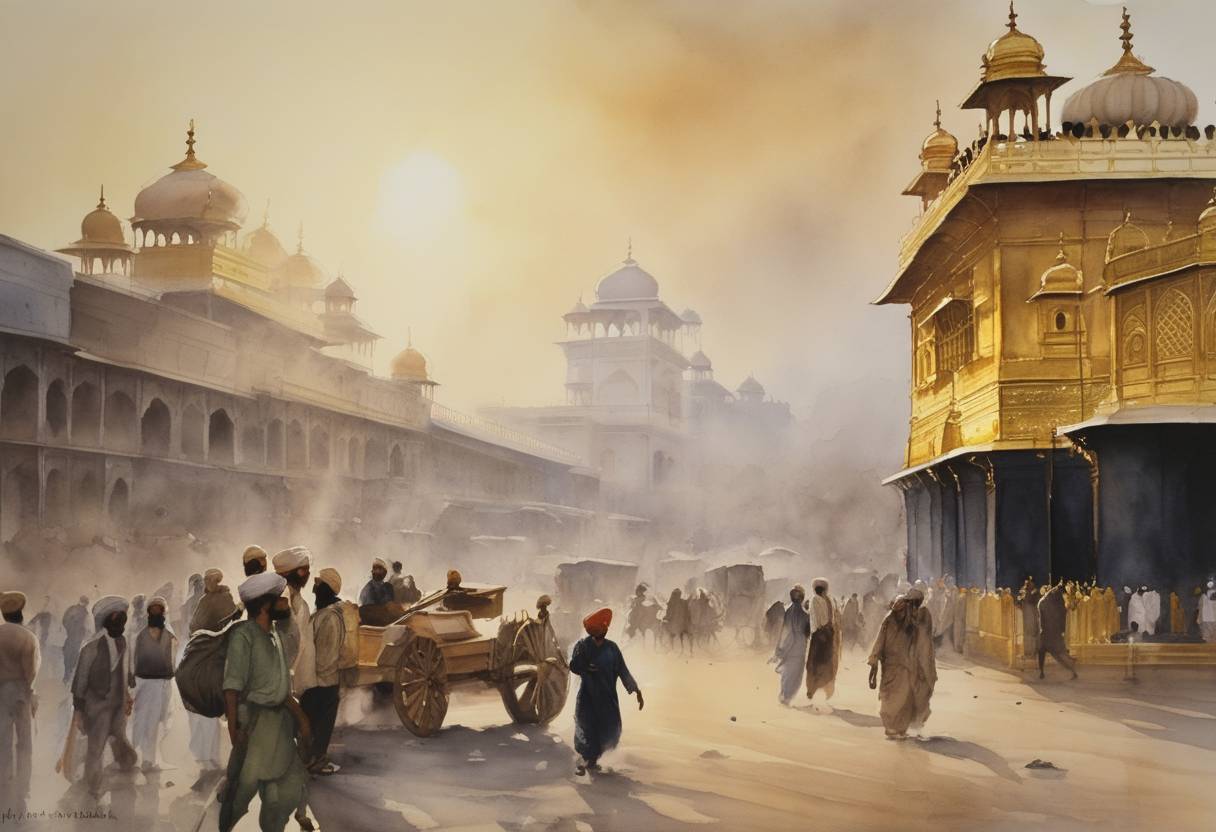
On February 11, 1984, the Government of India announced the decision to address the insurgent activities within the Golden Temple in Amritsar, marking the beginning of what would come to be known as Operation Blue Star. This announcement signaled the government’s intent to use military force to remove armed militants, including Jarnail Singh Bhindranwale, who had fortified the sacred Sikh temple complex.
Sikh Separatism and Militant Activity: The early 1980s witnessed increased tension in Punjab due to the rise of Sikh separatist movements. Jarnail Singh Bhindranwale emerged as a prominent leader advocating for Sikh rights and a separate Sikh state, Khalistan.
Occupation of the Golden Temple: Bhindranwale and his armed associates occupied the Golden Temple complex, a revered site for Sikhs. This occupation escalated tensions and was leveraged to project influence and assert demands against the Indian government.
Rationale: The announcement by the Indian government was primarily driven by the need to curb the escalating lawlessness and violent activities attributed to militants operating from the temple premises. The complex was seen as a bastion for these activities.
Plan of Action: While the full details of the operation were not disclosed at the time of the announcement, it indicated a significant military intervention to reclaim control over the Golden Temple and neutralize the militant threats.
Military Action: The announcement set the stage for Operation Blue Star, which was ultimately executed in June 1984. This military operation resulted in considerable casualties and had profound implications for the Sikh community and the Indian state.
Long-term Impact: The invasion of the Golden Temple was a catalyst for increased unrest and violence in Punjab, culminating in tragic events, including the assassination of Prime Minister Indira Gandhi later in 1984, which further fueled communal tensions and violence across India.
The announcement on February 11, 1984, marked a decisive moment in Indian history, underscoring the complexities of managing internal insurgencies and the delicate nature of religious and political dynamics within the country.
Source: en.wikipedia.org