United States Forces Land in Cuba - June 22, 1898
1898 · Daiquirí, Cuba
During the Spanish-American War, the United States forces land in Cuba.
January 28, 1909
United States troops leave Cuba with the exception of Guantanamo Bay Naval Base, ensuring the U.S. retained the right to intervene in Cuba's affairs to some degree following its occupation for several years after the Spanish-American War.
Havana, Cuba | United States Army
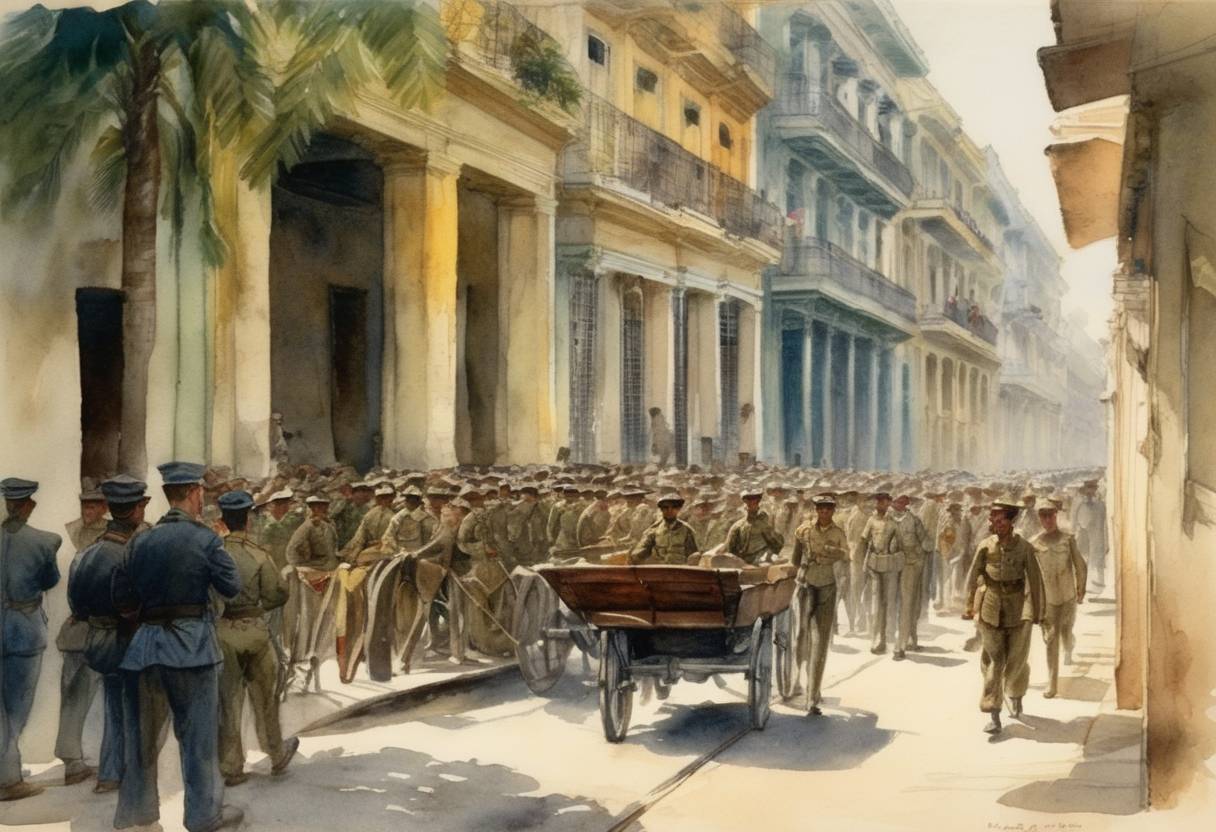
On January 28, 1909, the United States completed a significant military withdrawal from Cuba, leaving only the Guantanamo Bay Naval Base under American control. This event marked the end of the second occupation of Cuba by U.S. forces, which had been conducted under the auspices of the Platt Amendment.
Following the Spanish-American War of 1898, Spain ceded control of Cuba to the United States under the Treaty of Paris. The U.S. then established a military government on the island. In 1902, Cuba was granted nominal independence, although the Platt Amendment was included in the Cuban Constitution. This amendment effectively limited Cuba’s sovereignty by permitting U.S. intervention in Cuban affairs and mandated the lease of Guantanamo Bay to the United States for use as a naval base.
Despite achieving nominal independence, political instability in Cuba led to the U.S. re-occupying the island in 1906. This second military intervention aimed to stabilize the nascent Cuban government. The U.S. administration led by President Theodore Roosevelt and, later, President William Howard Taft, played a crucial role in political reform and infrastructure development during this period.
The formal withdrawal of U.S. troops on January 28, 1909, signified a closer step towards true independence for Cuba while retaining strategic U.S. interests on the island. However, the Guantanamo Bay Naval Base remained under U.S. control consistent with the Platt Amendment, ensuring continued American influence in the region.
The removal of American troops was instrumental in fostering a more autonomous Cuban governance, yet the legacy of the Platt Amendment meant that Cuba’s sovereignty was still restricted in important ways. The retention of Guantanamo Bay symbolized ongoing U.S. interest in projecting military power and influence in the Caribbean.
This withdrawal and the terms under which it occurred exemplify the complexities of American-Cuban relations and the broader imperial policies of the United States during the early 20th century. The control of Guantanamo Bay remains a contentious issue in U.S.-Cuba relations to this day, illustrating the long-lasting impact of decisions made during this period.
Source: www.loc.gov