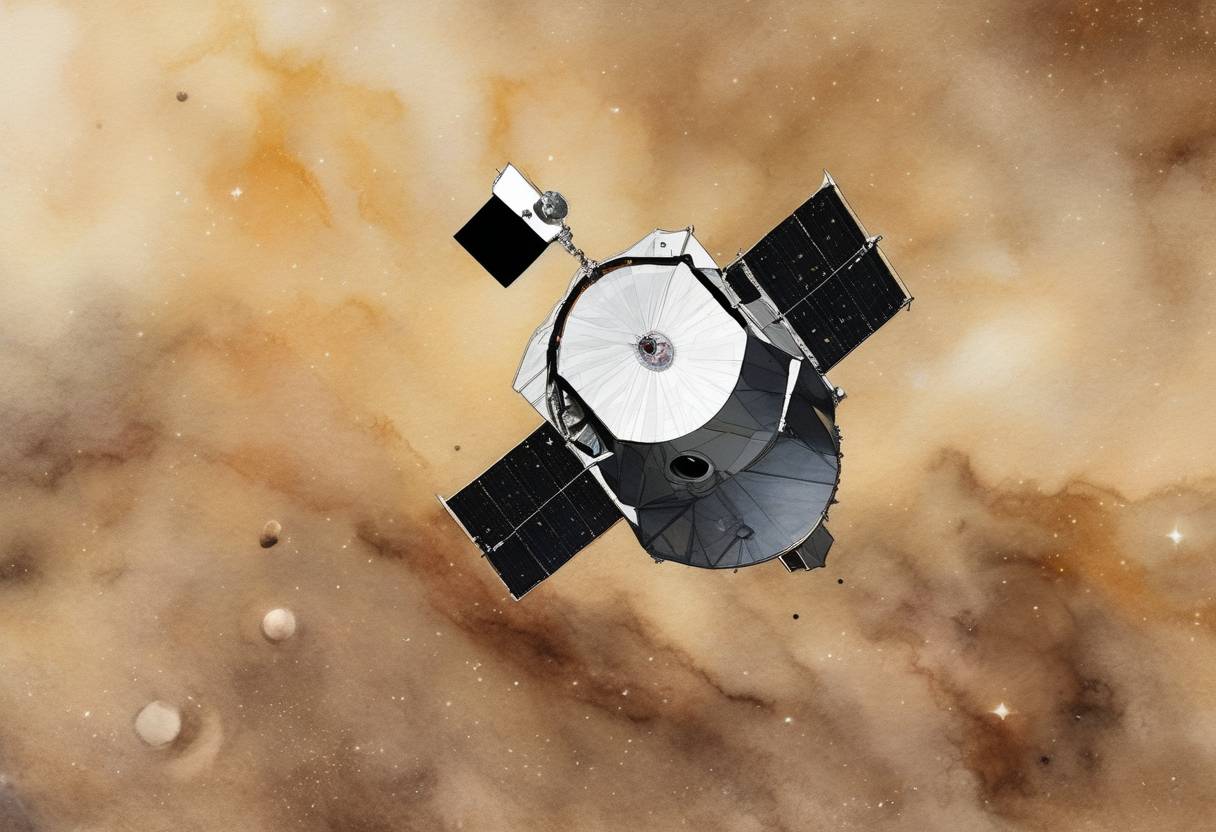
NASA’s Lucy Spacecraft First Images from Space on October 23, 2021
On October 23, 2021, NASA’s Lucy spacecraft marked a significant milestone only days after its launch by capturing its first images from space. This milestone was a crucial step in its twelve-year mission to study Jupiter’s Trojan asteroids, which are ancient remnants of the early solar system orbiting in tandem with Jupiter.
Background of the Lucy Mission
Named after the fossilized human ancestor “Lucy,” whose discovery provided key insights into human evolution, the Lucy mission aims to enhance understanding of planetary origins and the formation of the solar system. Set to be the first spacecraft to explore the Trojans, Lucy was launched on October 16, 2021, from Cape Canaveral Space Force Station in Florida aboard an Atlas V rocket.
The Milestone: First Images
The images captured on October 23, 2021, were acquired by the spacecraft’s onboard cameras as part of an initial checkout phase. This phase was crucial for validating the functionality and safety of its instruments. The successful capture of these images represents the spacecraft’s first look into the vast expanse it will explore over the coming decade, as it prepares to journey over 4 billion miles.
Mission Objectives and Future Course
Lucy is equipped with an array of scientific instruments designed to analyze the geology, composition, and physical properties of the Trojans. It will approach several target asteroids, aiming to provide insights into their surface compositions and structures. By studying these remnants of the early solar system, NASA hopes to understand better the processes that shaped our planetary system.
Broader Significance
The mission reflects NASA’s broader efforts to explore small celestial bodies, which serve as time capsules from the formation of the solar system. By achieving this milestone, Lucy is poised to contribute to a deeper understanding of planetary histories, which in turn can shed light on Earth’s own formation and evolution.
The success of Lucy could pave the way for future explorations of other primitive bodies in the solar system, offering a window into the past unparalleled by current astronomical observations.