Albania Declares Itself a Republic on January 20, 1925
1925 · Tirana, Albania
Albania declares itself a republic.
January 20, 2011
Protests began in Tirana, Albania, part of the broader wave of demonstrations and protests across the Middle East and Balkans in the early 2010s, demanding governmental transparency and an end to corruption.
Tirana, Albania | Albanian Government
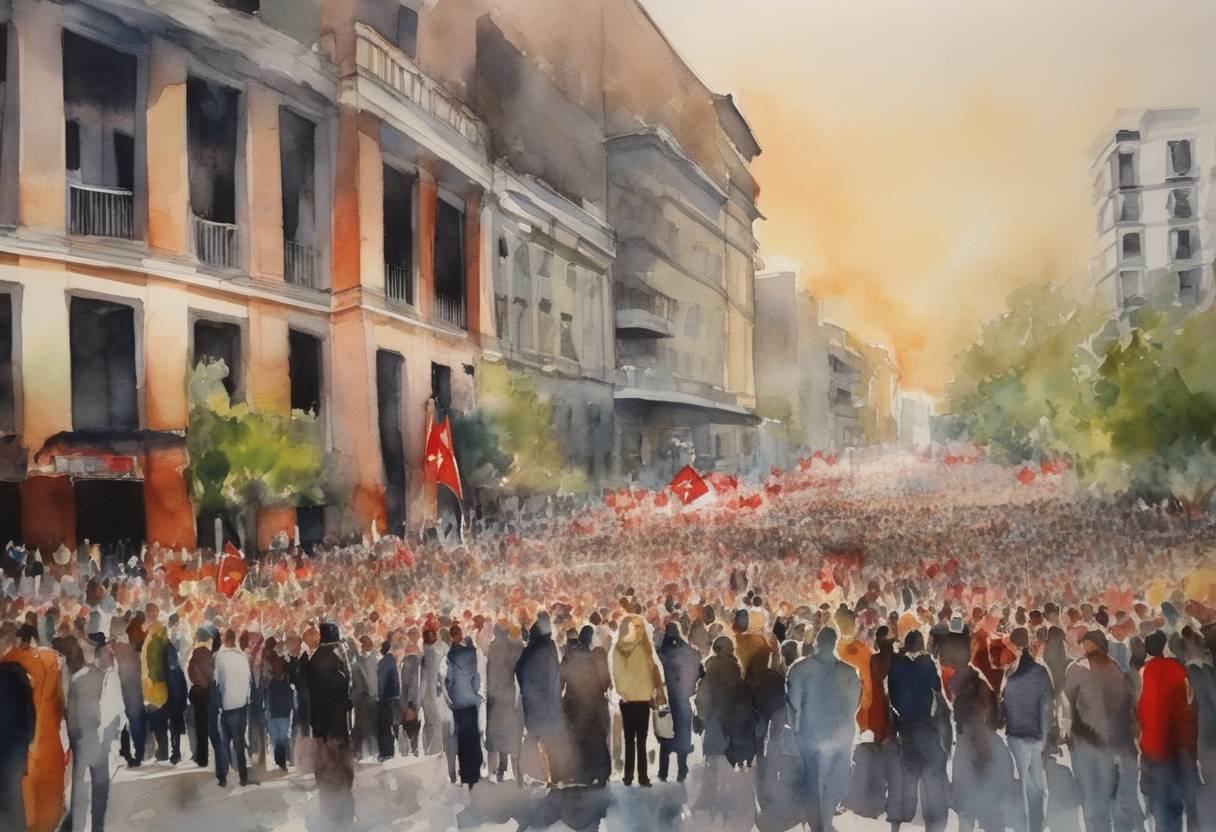
On January 20, 2011, Tirana, the capital city of Albania, became the epicenter of a significant protest as thousands of citizens gathered to demand greater governmental transparency and to decry rampant corruption. This protest was part of a broader wave of demonstrations occurring in the early 2010s, as public discontent was rising across various regions, including the Middle East and the Balkans.
The protests in Albania were ignited by long-standing grievances over corruption within the government, which many citizens believed was undermining democracy and economic progress. The tipping point for the demonstrations was a series of revelations about the misuse of power and corruption involving high-ranking officials, including then-Prime Minister Sali Berisha’s administration. Allegations included electoral fraud and the misuse of public funds, raising public dissatisfaction to boiling point.
The demonstration in Tirana on January 20 began largely as a peaceful assembly organized by opposition parties and civil society groups. However, as the protest progressed, tensions escalated. Clashes broke out between demonstrators and police forces, resulting in violence. Security forces employed tear gas and water cannons to disperse the crowd, while protestors responded by throwing stones and other objects. Tragically, the confrontation led to the death of three protestors and injuries to dozens of participants, including both civilians and police officers.
The events of January 20 drew international attention, with calls from foreign governments and international organizations for an impartial investigation into the violence and for Albania to address issues of corruption seriously. The European Union and the United States expressed concern over the political instability the protests revealed.
In the subsequent weeks, tensions remained high, with continued calls from opposition leaders for government reforms and accountability. These demonstrations highlighted the critical challenges facing the Albanian government in promoting transparency and combating corruption, issues that were essential to their aspirations for closer ties with the European Union.
The protests in Albania were contemporaneous with widespread demonstrations known as the Arab Spring, which engulfed the Middle East and North Africa during the same period. These regional movements underscored a collective demand for political reforms across nations affected by similar issues of corruption and authoritarian governance. In Albania, while the protests did not achieve immediate significant political changes, they underscored a persistent demand for accountability and better governance.
Source: www.bbc.com