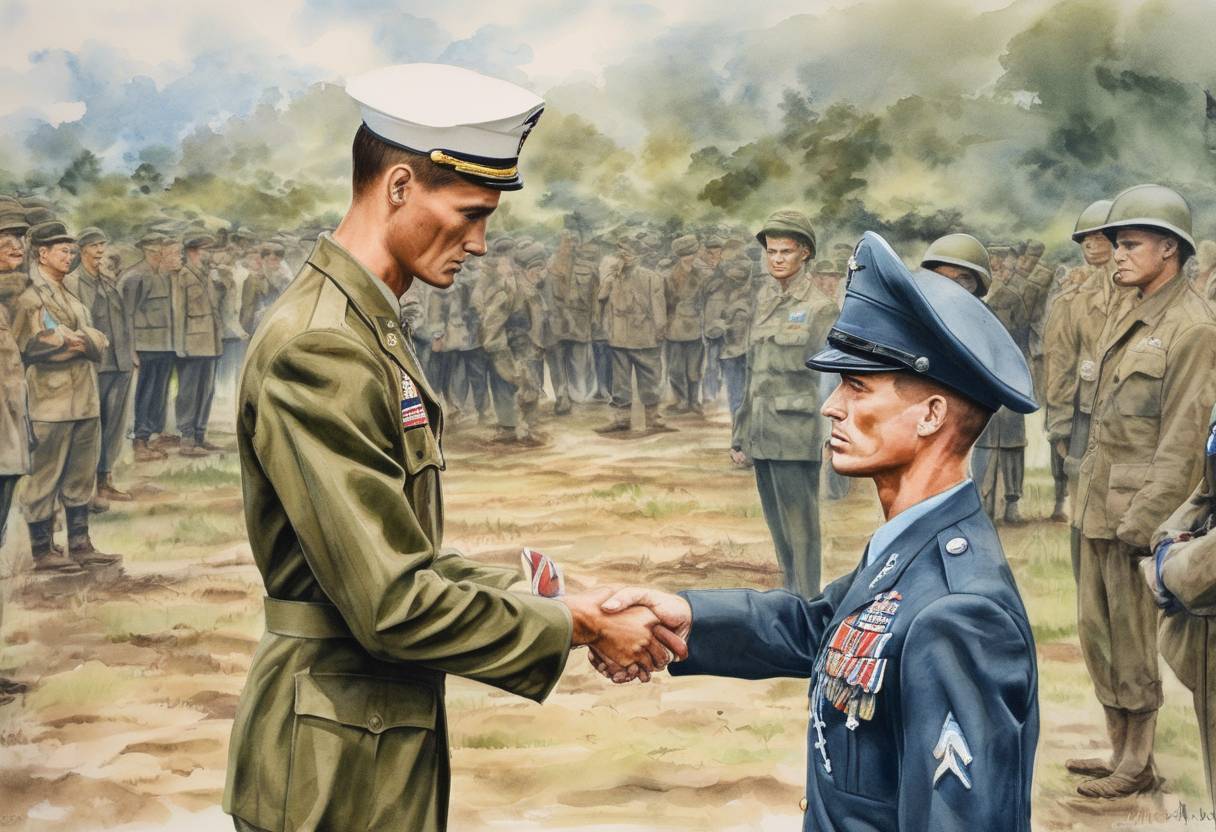
Desmond Doss Receives the Medal of Honor
On October 12, 1945, Desmond Doss, a conscientious objector and medic in the United States Army, was awarded the Medal of Honor by President Harry S. Truman for his extraordinary bravery during the Battle of Okinawa in World War II. Doss became the first conscientious objector to receive this highest military decoration in the United States, highlighting his exceptional courage and dedication to saving lives under fire.
Background
Desmond Doss was a devout Seventh-day Adventist who adhered strictly to his religious beliefs, which included nonviolence and observing the Sabbath. Despite these convictions, Doss felt compelled to serve his country during World War II. He enlisted in the Army as a medic, refusing to carry a weapon or kill enemy soldiers, which initially led to skepticism and hostility from his fellow soldiers.
The Battle of Okinawa
The Battle of Okinawa, fought from April to June 1945, was one of the bloodiest battles in the Pacific Theater. It was a crucial campaign aimed at securing a base of operations for the Allied forces to launch an invasion of the Japanese mainland. The battle was marked by fierce combat and significant casualties on both sides.
Doss’s Heroic Actions
During the battle, particularly on the Maeda Escarpment, also known as Hacksaw Ridge, Doss’s unit faced intense enemy fire. On May 5, 1945, when his battalion was ordered to retreat, Doss remained behind to aid the wounded. Over the course of several hours, he single-handedly rescued approximately 75 soldiers, lowering them one by one down the escarpment to safety using a makeshift rope sling. Despite the constant threat of enemy fire and his own injuries, Doss’s unwavering commitment to his fellow soldiers exemplified extraordinary valor.
Medal of Honor Citation
Doss’s Medal of Honor citation commends his “outstanding bravery and unflinching determination in the face of desperately dangerous conditions.” His actions not only saved numerous lives but also demonstrated the profound impact of individual courage and conviction.
Aftermath and Legacy
Desmond Doss’s receipt of the Medal of Honor was a significant moment in military history, challenging perceptions of conscientious objectors and highlighting the diverse ways individuals can contribute to military efforts. His story has been widely celebrated, including in the 2016 film “Hacksaw Ridge,” which brought his remarkable deeds to a broader audience.
Doss’s legacy continues to inspire, serving as a testament to the power of personal conviction and the profound impact one individual can have, even in the most harrowing circumstances.