The Battle of Rignano - October 30, 1137
1137 · Rignano Garganico, Italy
The Battle of Rignano takes place, where Roger II of Sicily defeats Ranulf II of Alife's forces.
February 26, 1154
Roger II, King of Sicily, died, leading to the succession of his son, William I, who became King of Sicily, marking a period of instability as he faced revolts from local barons and nobility.
Palermo, Sicily | Kingdom of Sicily
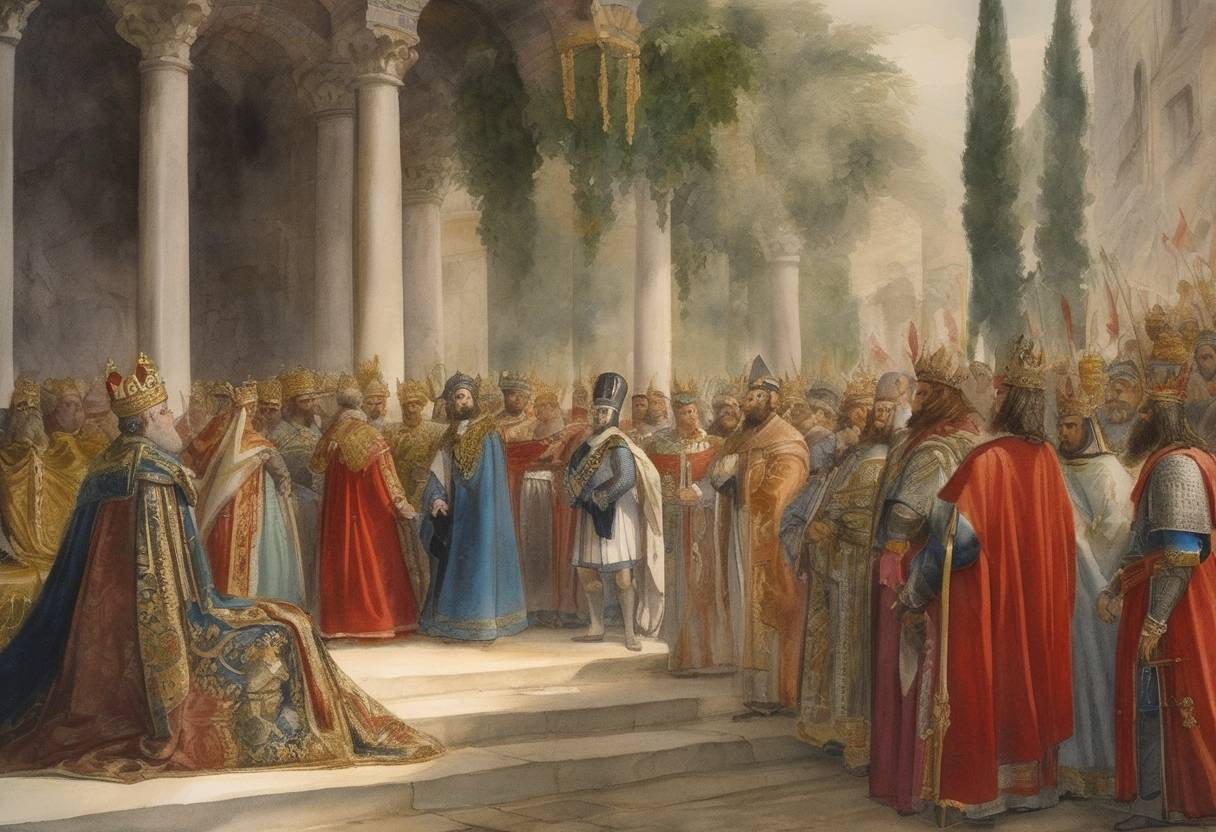
On February 26, 1154, Roger II, a central figure in medieval European history and the first King of Sicily, died in Palermo. Born in 1095, Roger was instrumental in the consolidation of the Norman territories in Southern Italy and Sicily. Under his reign, he established the Kingdom of Sicily in 1130, which unified the island of Sicily with the southern Italian peninsula, creating a powerful state that was both politically and culturally significant during the 12th century.
Following Roger II’s death, his son, William I, often known as “William the Bad,” ascended to the throne. William inherited a kingdom that was economically prosperous and artistically vibrant but soon faced significant challenges. Despite his father’s consolidation efforts, the kingdom was rife with political tensions. The barons and nobility of Sicily, who had enjoyed a degree of autonomy under Roger, were resistant to William’s attempts to centralize power.
William I’s reign, lasting from 1154 to 1166, was marked by instability and frequent revolts. The nobility’s dissatisfaction with his rule led to numerous insurrections and conspiracies. One of the most significant revolts occurred shortly after he became king, as various factions sought to capitalize on the transition period to reassert their influence. William’s efforts to quell these uprisings and strengthen the central authority often led to harsh reprisals, which only fueled further dissent among the aristocracy.
The period following Roger II’s death and the subsequent succession of William I is crucial in understanding the complex dynamics of authority and power in medieval Sicily. While Roger had laid the groundwork for a unified state, William’s reign highlighted the challenges of maintaining such a diverse and far-flung kingdom. Despite his nickname and the unrest during his rule, William I managed to maintain the territorial integrity of his father’s realm, which would continue to influence Sicilian and Southern Italian history for years to come.
Source: en.wikipedia.org