The Bonus Army Dispersal: July 28, 1932
1932 · Washington, D.C., United States
The Bonus Army, a group of World War I veterans, was forcibly dispersed by the U.S. Army in Washington, D.C., after protesting for early payment of a promised bonus.
July 29, 1932
The Bonus Army was forcibly dispersed by the U.S. Army in Washington D.C.
Washington D.C., United States | United States Army
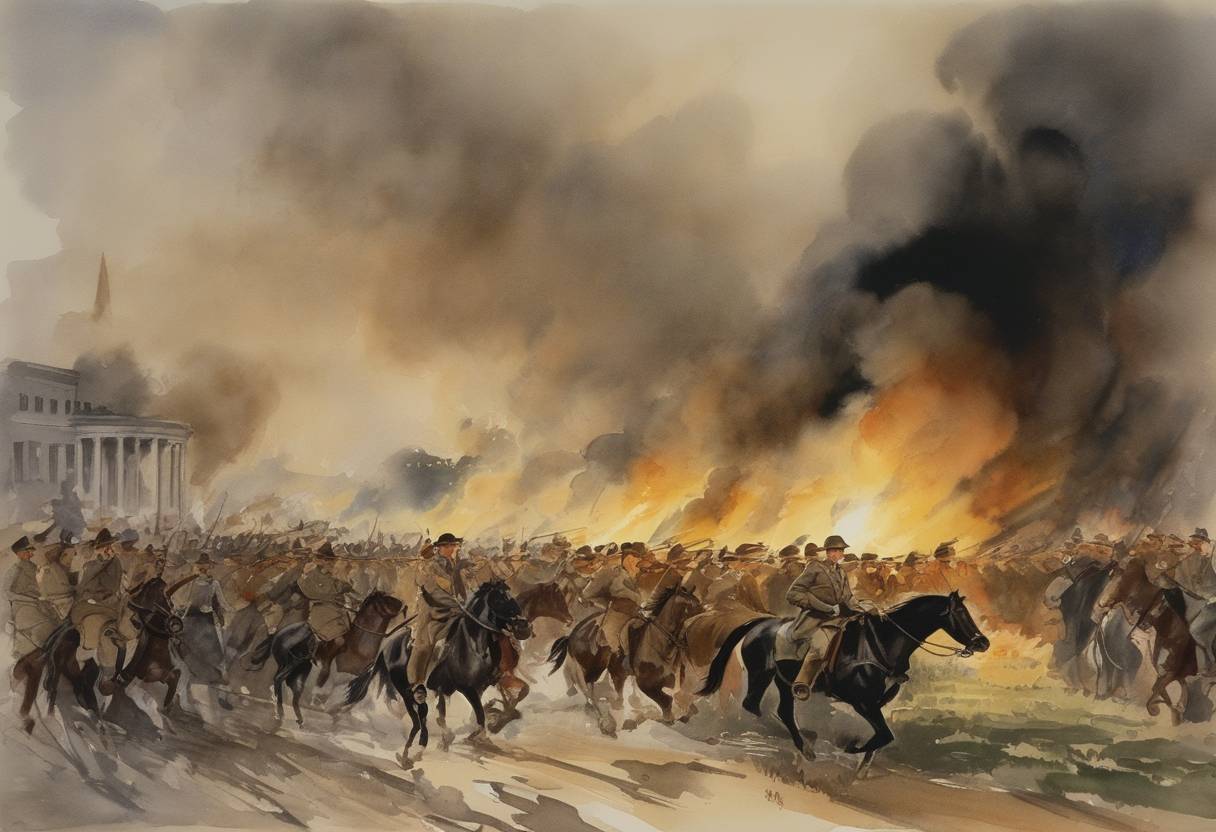
On July 29, 1932, the Bonus Army, comprised primarily of World War I veterans, was forcibly dispersed by the U.S. Army in Washington D.C. This event marked a significant moment in American history, highlighting the economic struggles during the Great Depression and raising concerns about the government’s handling of public dissent.
During World War I, American soldiers were promised bonus certificates that they could redeem in 1945 as a token of appreciation for their service. However, the onset of the Great Depression created dire financial situations for many veterans, prompting demands for early payment of their bonuses. This demand led to the formation of the Bonus Expeditionary Forces, commonly known as the Bonus Army, who converged on the capital in May 1932 to urge Congress for immediate payment.
The Bonus Army set up tents and improvised shelters along the Anacostia River and in other parts of the city, with numbers swelling to around 17,000. Although Congress rejected their requests, the veterans remained in the capital, demonstrating peacefully for months. Their presence in Washington symbolized the desperation and hardship faced by numerous Americans during this economic downturn.
The situation escalated when President Herbert Hoover authorized the U.S. Army to remove the veterans after fears of communism and public disorder were alleged, albeit without substantial evidence. Under the command of General Douglas MacArthur, along with Major George S. Patton and Dwight D. Eisenhower, the army was deployed to evict the veterans.
Military forces, equipped with tanks, cavalry, and infantry, initiated the operation on the morning of July 28, 1932. Using tear gas and bayonets, they cleared away the veterans and their families, forcibly evicting them from their encampments. By July 29, the authorities had completely dismantled the camp, arresting leaders and dispersing the remaining protestors. The aggressive and violent manner of the eviction, which resulted in several injuries and the destruction of personal property, was widely criticized.
The harsh crackdown on the Bonus Army was a public relations disaster for President Hoover, exacerbating his unpopularity as the 1932 presidential election approached. The incident illustrated the desperation of the Great Depression and the perceived insensitivity of the federal government towards its veterans.
In response to the public outcry, the incident influenced future policies; during Franklin D. Roosevelt’s administration, a more sympathetic approach towards veterans was adopted. Eventually, in 1936, Congress passed the Adjusted Compensation Payment Act, authorizing immediate bonus payments to World War I veterans.
The dispersal of the Bonus Army remains a critical chapter in U.S. history, representing the struggle for economic justice and highlighting the tensions between ordinary citizens and federal authorities during one of America’s toughest economic periods.
Source: en.wikipedia.org