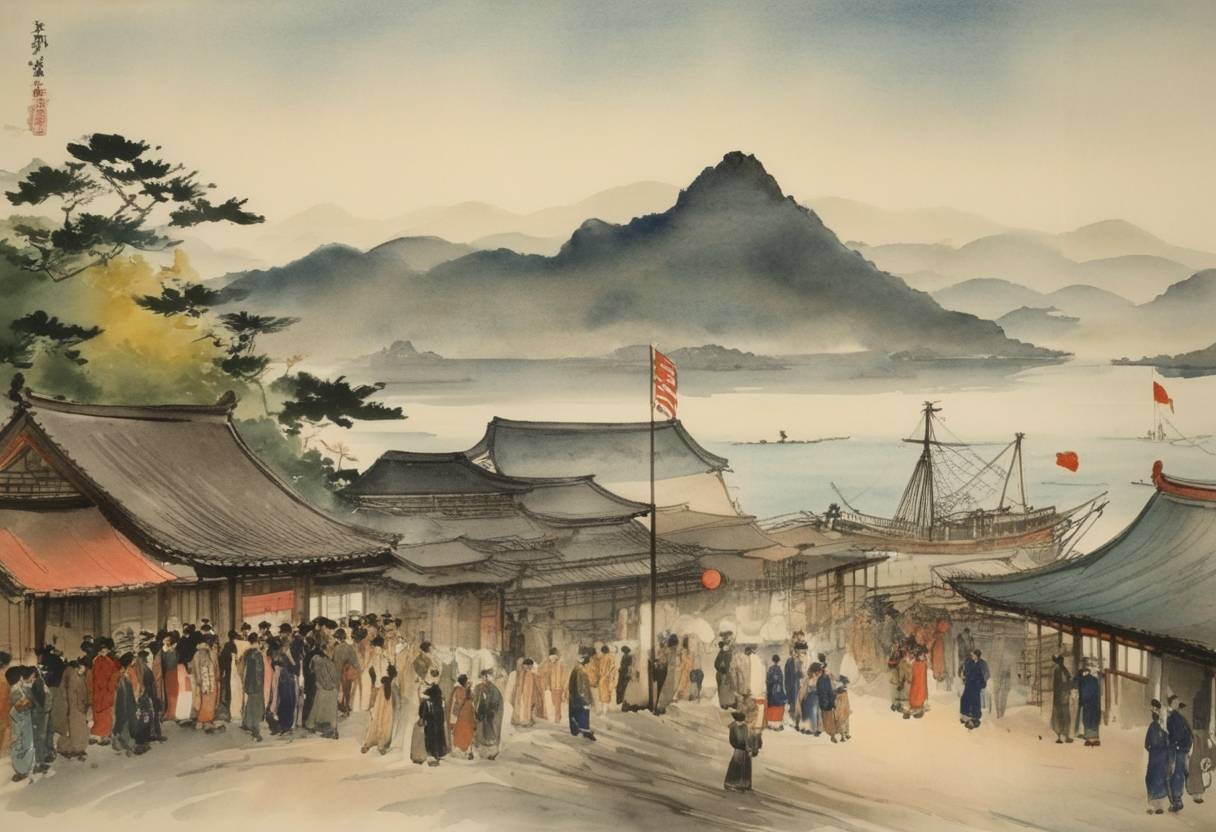
The Treaty of Shimonoseki: April 17, 1895
Context and Prelude
The Treaty of Shimonoseki was a pivotal agreement that concluded the First Sino-Japanese War (1894-1895), a conflict primarily fought over influence and territorial ambitions in Korea. Japan sought to assert its growing power in East Asia, challenging China’s long-standing dominance in the region.
Key Provisions of the Treaty
Cession of Territories
- Taiwan and the Pescadores Islands: One of the most significant outcomes of the treaty was the cession of Taiwan and the Pescadores Islands to Japan. This marked the first time an Asian country was formally colonized by another Asian power, thus underlining Japan’s burgeoning imperial ambitions.
Independence of Korea
- Recognition of Korean Independence: The treaty stipulated the recognition of Korea as an independent state, thereby severing its long-standing tributary relationship with China. This provision was instrumental in Japan’s strategy to expand its influence over the Korean Peninsula.
War Indemnities
- Financial Reparations: China was compelled to pay a substantial indemnity of 200 million taels of silver to Japan. This financial burden exacerbated the economic difficulties faced by the Qing Dynasty and highlighted the significant disparity in military effectiveness between China and Japan.
Broader Implications
Japan’s Rise and China’s Decline
The Treaty of Shimonoseki exemplified Japan’s emergence as a formidable regional power and signaled a shift in the balance of power in Asia. For China, the treaty was a humiliating blow, laying bare its vulnerability and sparking internal debates about modernization and reform.
Diplomatic Repercussions
The diplomatic landscape of East Asia was significantly altered as a result of the treaty. It prompted increased interest and intervention from Western powers, who viewed Japan as an emerging power deserving of negotiation and alliances.
Legacy
The consequences of the treaty extended into the 20th century, influencing tensions and conflicts in the region. The political and territorial changes it initiated set the stage for further Japanese expansion and were an early indicator of the complexities that would later culminate in conflicts such as the Russo-Japanese War and World War II in the Pacific.
Aftermath
The geopolitical shifts induced by the Treaty of Shimonoseki had lasting consequences, shaping the trajectory of international relations and regional dynamics in East Asia well into the new century.