The November Constitution and the Second Schleswig War
1863 · Copenhagen, Denmark
King Christian IX of Denmark signed the November Constitution, which declared Schleswig a part of Denmark, leading to the Second Schleswig War.
May 23, 1734
The Order of St. Anna is established in the Duchy of Schleswig-Holstein by Charles Frederick, Duke of Holstein-Gottorp.
Gottorp, Duchy of Schleswig-Holstein | Duchy of Schleswig-Holstein
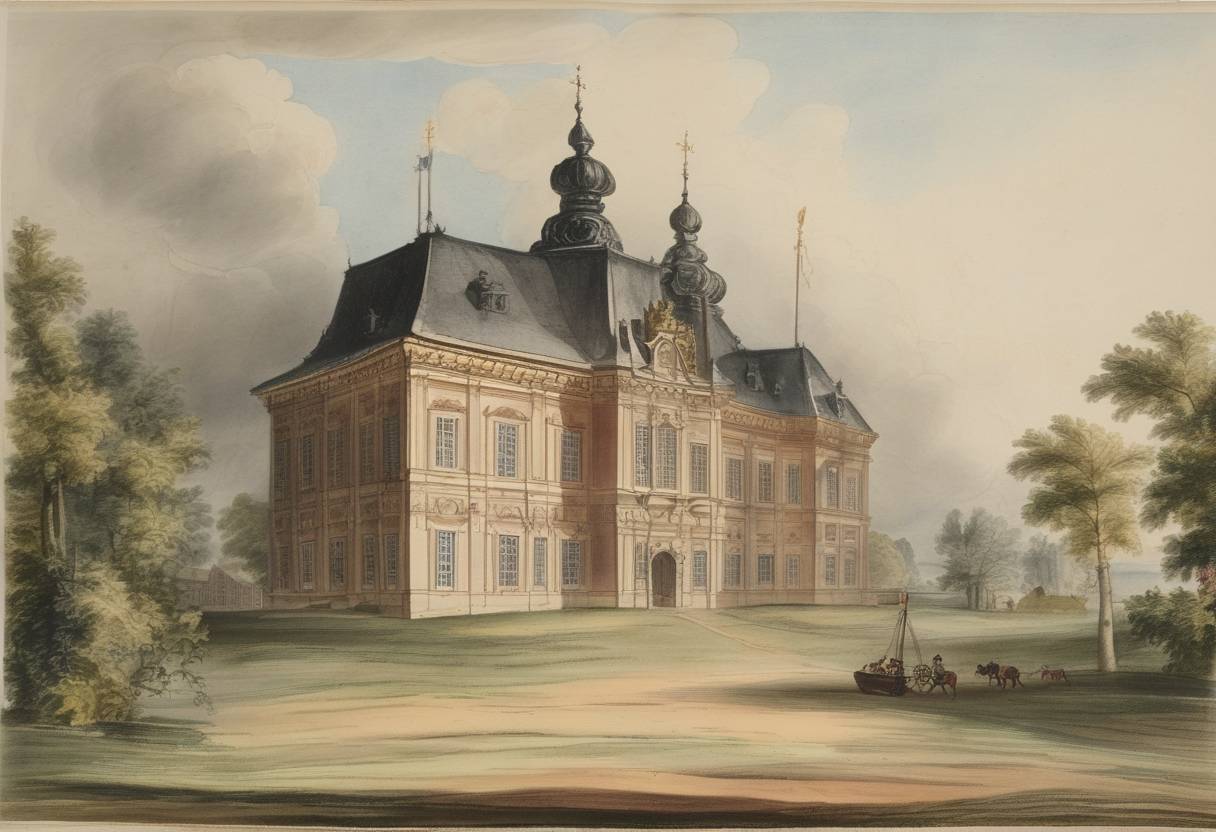
On May 23, 1734, Charles Frederick, Duke of Holstein-Gottorp, established the Order of St. Anna in the Duchy of Schleswig-Holstein. This chivalric order was inaugurated in honor of his wife, Anna Petrovna, the daughter of Peter the Great of Russia. Its foundation was both a personal tribute and a political maneuver, symbolizing alliances between the ducal line and imperial Russia.
The Duchy of Schleswig-Holstein, located in northern Europe, played a significant role in the complex political dynamics between Denmark and the Holy Roman Empire. Charles Frederick himself was a notable figure who, through this marriage and his status, sought to assert influence and navigate the intricate power landscape of the time.
The Order of St. Anna became a prestigious decoration and was known for its distinct emblem and the principles it represented—faith, loyalty, and service to the state. Although initially a regional honor, following later political developments such as the integration of Holstein-Gottorp into Russian territories, the order grew in prominence.
When Charles Frederick’s son, Peter III, became Emperor of Russia in 1762, he introduced the order to the Russian Empire. Under Russian administration, the Order of St. Anna was assimilated into the Russian honorific system. It maintained its repute over the years, eventually becoming a recognizable award within the Russian Empire’s orders of merit.
The establishment of such orders during this period showcased the interplay of personal relationships and political allegiances in shaping statecraft. The Order of St. Anna is an example of how chivalric orders were used to strengthen dynastic ties and signal political affiliations, enhancing the prestige and influence of the ruling Duke of Holstein-Gottorp within the European noble frameworks of the 18th century.
Source: en.wikipedia.org