Louis XIV's Coronation: The Beginning of a 72-Year Reign
1654 · Reims, France
Louis XIV was crowned King of France in Reims Cathedral, marking the beginning of his reign, which would last for 72 years.
November 14, 1380
King Charles VI of France, also known as Charles the Well-Beloved and later Charles the Mad, was crowned at the age of 12 at Reims, beginning his reign as King of France.
Reims, France | French Crown
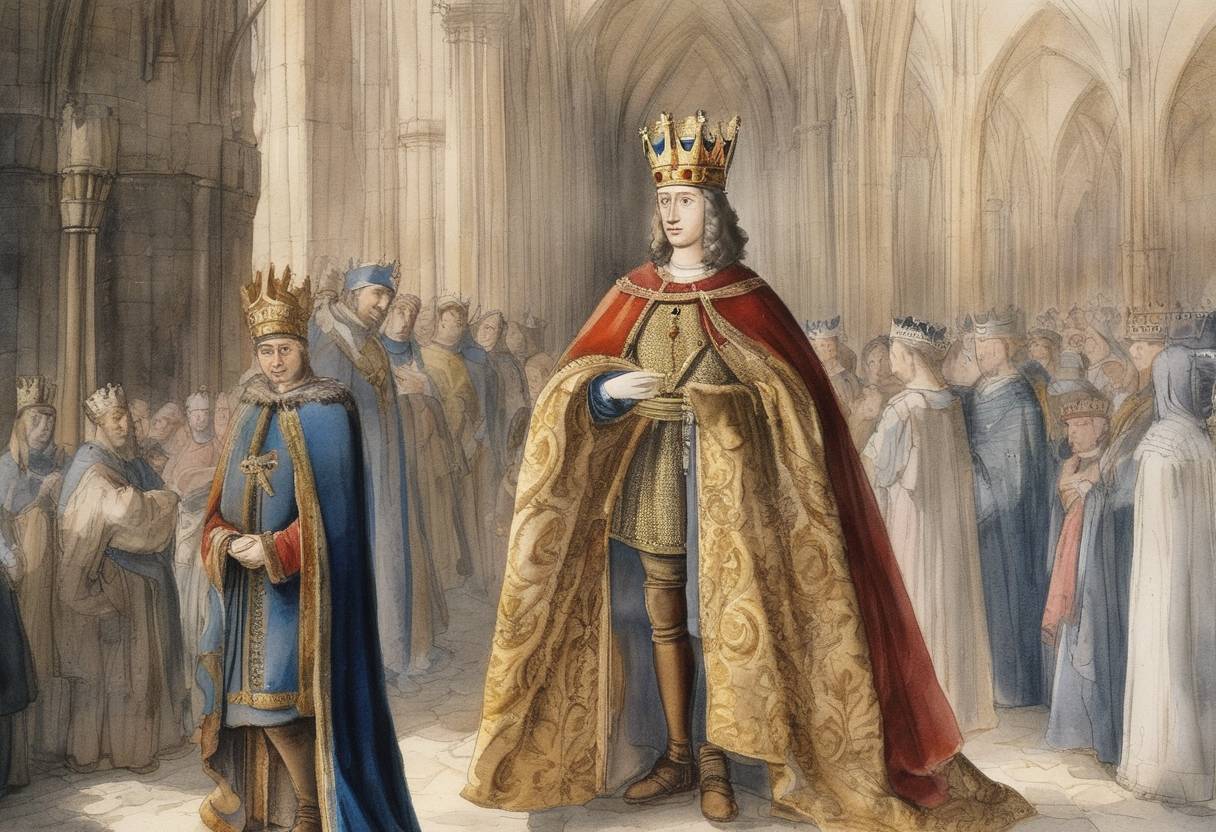
On November 14, 1380, Charles VI, also known as Charles the Well-Beloved and later Charles the Mad, was crowned King of France in the historic city of Reims. Ascending to the throne at the tender age of 12, Charles’s reign marked the beginning of a tumultuous period in French history characterized by political instability, periods of mental illness, and evolving power dynamics within the kingdom.
Charles VI was born on December 3, 1368, to King Charles V of France and Queen Joan of Bourbon. Charles V, known as Charles the Wise, had established a strong monarchy and was instrumental in restoring order to the French kingdom after the difficulties of the early Hundred Years’ War. However, upon his death on September 16, 1380, the crown passed to his young son Charles VI.
In view of Charles VI’s youth, a regency was formed to manage the affairs of the kingdom. Initially, the regency was held by his uncles, the Dukes of Anjou, Berry, and Burgundy, leading to significant intrigue and conflict as each sought greater influence over the young king and the governance of France.
The coronation ceremony of Charles VI took place at Reims Cathedral, the traditional site for the coronation of French kings. This ceremony was significant not only as a rite of passage for the young king but also as a crucial symbol of monarchy and divine right in medieval France. The event was marked by grandeur and the attendance of the French nobility, who witnessed the anointing and crowning of their new monarch.
The location of the crowning was especially symbolic; Reims Cathedral stood as a monument to the continuation of French royal lineage and the consecration of power, rooted in traditions dating back to the time of the Frankish kings.
Post-coronation, the early part of Charles VI’s reign was dominated by the regency of his uncles and their extravagant spending, leading to financial difficulties and popular discontent. Eventually, Charles sought to assert his authority, leading to the reduction of his uncles’ power.
However, Charles VI’s reign is most historically remembered for the onset of his mental illness, which began around 1392 and would recur episodically for the rest of his life, earning him the moniker “Charles the Mad.” His incapacity precipitated power struggles at court and significantly weakened royal authority, exacerbating issues in the already strained relations with England during the Hundred Years’ War.
Charles VI’s mental illness and erratic rule underscored the peril of dynastic instability and dramatically influenced the late medieval period of French history, emphasizing the complex interplay of mental health, leadership, and political stability.
His reign, which continued until 1422, left a lasting impact on the trajectory of France, ushering in a period of civil strife that included the Armagnac–Burgundian Civil War and increasing English encroachment under King Henry V, setting the stage for future transformations in France and the eventual rise of Charles VII.
Source: en.wikipedia.org