June 21, 1990

An earthquake measuring 7.4 on the Richter scale hits Iran, killing about 40,000 people.


Rudbar, Iran | Iranian government
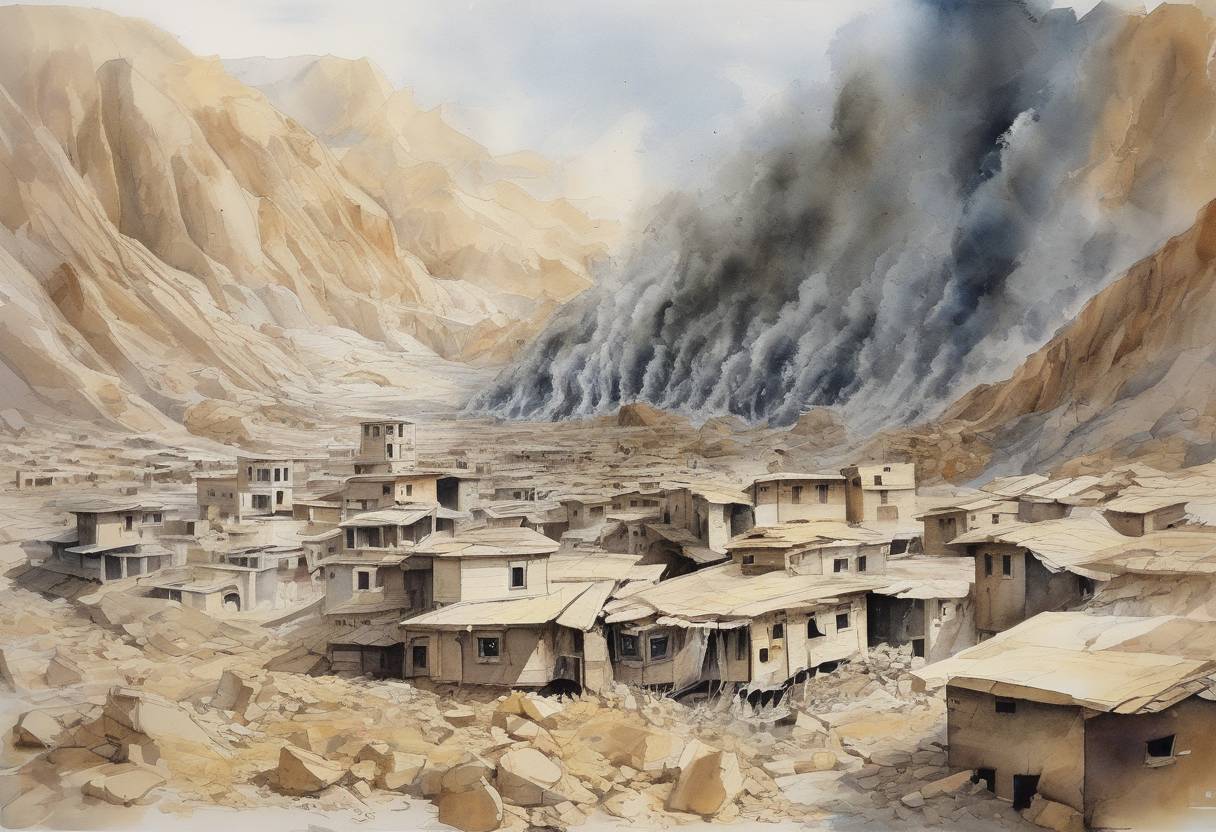
Watercolor painting based depiction of An earthquake measuring 7.4 on the Richter scale hits Iran, killing about 40,000 people. (1990)

The 1990 Manjil–Rudbar Earthquake in Iran

On June 21, 1990, a devastating earthquake struck northern Iran, primarily affecting the provinces of Gilan and Zanjan. This seismic event, known as the Manjil–Rudbar earthquake, registered a magnitude of 7.4 on the Richter scale and resulted in significant loss of life and widespread destruction.

Context and Background

Iran is situated on several major fault lines, making it highly susceptible to seismic activity. The region affected by the 1990 earthquake is part of the Alborz mountain range, which has a history of seismic events due to the complex tectonic interactions between the Arabian and Eurasian plates.

The Earthquake

  • Date and Time: The earthquake occurred on June 21, 1990, at approximately 00:30 local time.
  • Magnitude: It measured 7.4 on the Richter scale.
  • Epicenter: The epicenter was located near the towns of Manjil and Rudbar, approximately 200 kilometers northwest of Tehran.

Impact

  • Casualties: The earthquake resulted in the tragic loss of approximately 40,000 lives. It also left around 60,000 people injured.
  • Destruction: Over 500,000 people were rendered homeless as the earthquake destroyed or severely damaged around 100,000 homes. Infrastructure, including roads, bridges, and power lines, was heavily impacted, complicating rescue and relief efforts.
  • Economic Damage: The economic cost of the disaster was substantial, with estimates reaching billions of dollars due to the extensive damage to residential, commercial, and agricultural sectors.

Aftermath and Response

  • Rescue Efforts: The Iranian government, along with international aid organizations, launched extensive rescue and relief operations. However, the scale of the disaster and the challenging terrain hindered immediate response efforts.
  • Reconstruction: In the years following the earthquake, significant efforts were made to rebuild the affected areas. This included constructing more earthquake-resistant buildings and infrastructure to mitigate the impact of future seismic events.
  • Policy Changes: The disaster highlighted the need for improved earthquake preparedness and response strategies in Iran, leading to changes in building codes and increased emphasis on disaster management planning.

Historical Significance

The 1990 Manjil–Rudbar earthquake remains one of the deadliest in Iran’s history. It underscored the vulnerability of the region to seismic activity and the importance of preparedness and resilient infrastructure. The lessons learned from this tragedy have informed subsequent efforts to enhance earthquake resilience in Iran and other earthquake-prone regions worldwide.