Capture of Inca Emperor Atahualpa by Francisco Pizarro
1532 · Cajamarca, Peru
Spanish conquistador Francisco Pizarro captures Inca Emperor Atahualpa at the Battle of Cajamarca.
August 10, 1904
The Battle of Waterberg takes place during the German campaign against the Herero in German South West Africa, modern-day Namibia. This battle was part of the larger Herero Wars between the German colonial forces and the Herero people.
Waterberg, German South West Africa | German colonial forces
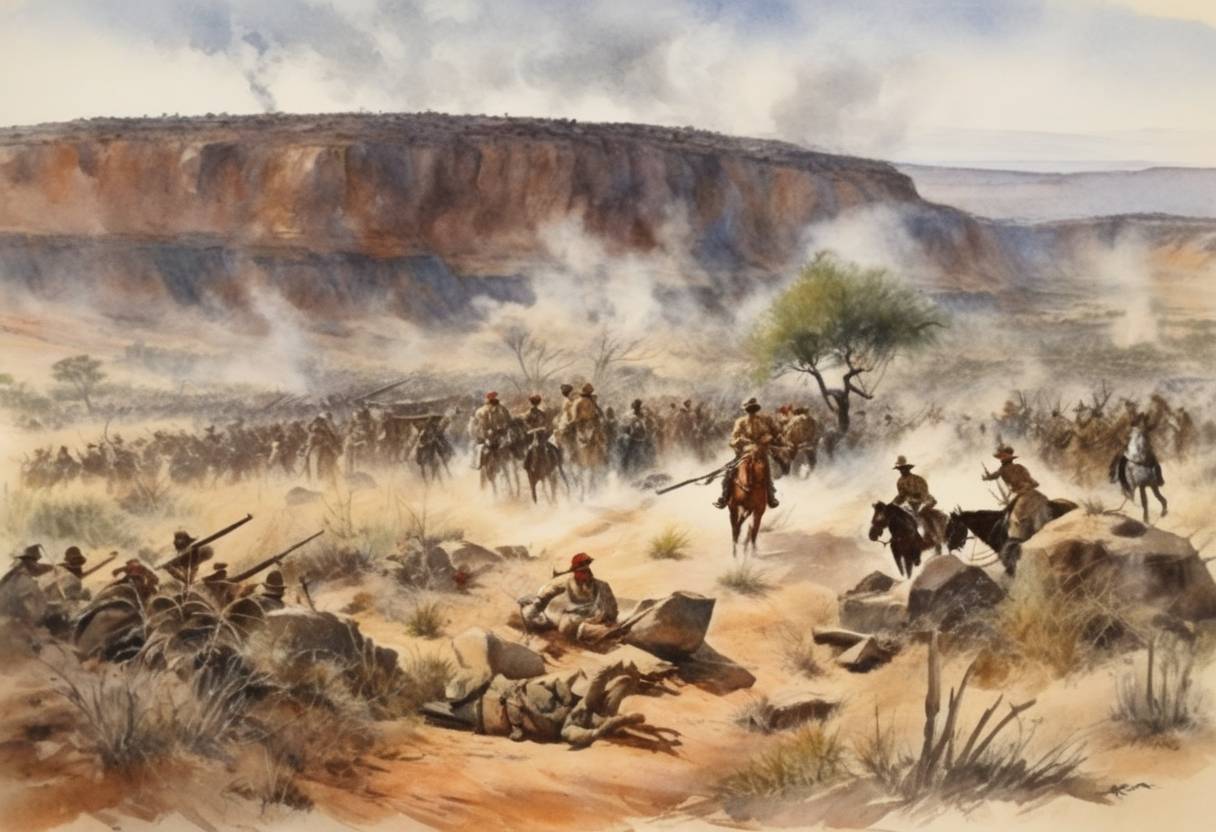
The Battle of Waterberg, although the main clash occurred on August 11, 1904, was part of an extensive military campaign during the Herero Wars in German South West Africa, present-day Namibia. This conflict was characterized by the German Empire’s attempts to suppress the Herero people, who were resisting colonial expansion and exploitation.
Leading up to the battle, tensions between the Herero people and German settlers had been escalating due to the appropriation of Herero lands for German colonialists and the harsh treatment of indigenous populations. In January 1904, the Herero, led by Chief Samuel Maharero, launched a rebellion against German rule, which initiated the Herero Wars.
In response, the German Empire dispatched troops under the command of General Lothar von Trotha. By August 1904, the Herero had gathered at the Waterberg plateau, preparing for a decisive engagement in hopes of negotiating peace or escaping further conflict.
The battle commenced on August 11 as the German forces, equipped with modern weaponry and artillery, launched a coordinated attack against the Herero positions. The Herero, though numerically significant, were disadvantaged in terms of armament and logistic support.
Von Trotha’s forces aimed to encircle the Herero, cutting off their potential retreat and supply lines. Despite some fierce resistance, the Herero were ultimately overwhelmed by the vastly superior German military might.
Following the battle, the Herero were forced to flee into the harsh conditions of the Omaheke Desert to the east. Pursued by German forces, many perished from dehydration and starvation, marking the start of what is considered one of the first instances of genocide in the 20th century.
General von Trotha issued the Vernichtungsbefehl, or extermination order, which sought the eradication of the Herero population. These actions led to the dramatic decrease of the Herero people, casting long shadows on German colonial rule and shaping the historical narrative of imperialism and its impacts in Africa.
The Battle of Waterberg and the resulting genocide had far-reaching ramifications, influencing international relations and colonial governance policies. It remains a pivotal moment in Namibian history and a somber reminder of the causes and consequences of colonial expansion.
Source: en.wikipedia.org