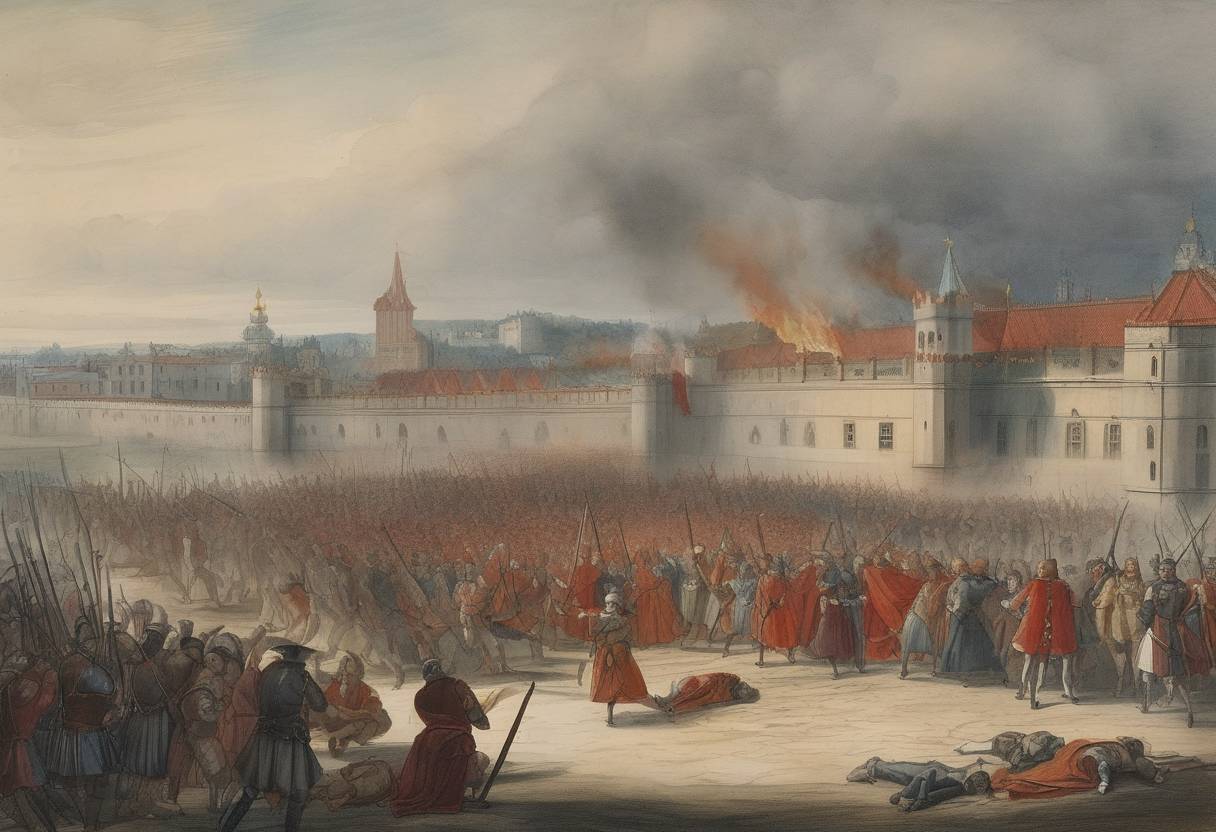
The Linköping Bloodbath
On March 20, 1600, a significant and brutal event in Swedish history, known as the Linköping Bloodbath, took place. This incident was a pivotal moment in the internal conflict following the War against Sigismund and played a crucial role in shaping Sweden’s future.
Context and Background
The Linköping Bloodbath occurred in the aftermath of the War against Sigismund, a civil war that pitted supporters of Sigismund III Vasa, the King of Poland and Sweden, against forces loyal to Duke Charles of Södermanland (later King Charles IX of Sweden). Sigismund, a Catholic monarch, was seen by the Protestant factions in Sweden as a threat to their religious and political stability due to his attempts to govern Sweden from Poland and his preferential treatment of Catholics.
Following decisive victories by Duke Charles’ forces at battles such as the Battle of Stångebro in 1598, which effectively ended Sigismund’s attempt to enforce his rule in Sweden, the stage was set for Duke Charles to solidify his control over the country. In the ensuing power consolidation, Charles sought to eliminate any remaining opposition to his rule.
The Executions
On March 20, 1600, five Swedish nobles who had supported Sigismund were executed by beheading in the city of Linköping. This execution was ordered by Duke Charles as a demonstration of power and to serve as a warning to any potential insurgents against his claim to the throne. The executed nobles included:
- Erik Sparre: A former member of the Swedish Riksdag and a key supporter of Sigismund.
- Ture Bielke: A prominent nobleman and politician.
- Gustaf Banér: A Count and former member of the Privy Council.
- Sten Banér: Brother of Gustaf Banér and also a former Privy Council member.
- Bengt Falck: A nobleman with ties to the rebellious factions.
These executions were carried out after a trial that many historians argue was merely a formality, with the verdict largely predetermined as a result of political motivation rather than justice.
Aftermath and Significance
The Linköping Bloodbath reinforced Duke Charles’ authority and facilitated his eventual coronation as King Charles IX of Sweden in 1604. This event highlighted the intense struggle between Catholic and Protestant factions within the Swedish realm during this period. It also underscored the lengths to which leaders would go to maintain power in a time of religious and political turmoil.
Overall, the Linköping Bloodbath stands as a stark reminder of the ruthless measures often employed in the quest for political dominance and religious conformity in early modern Europe. The consequences of this event resonated throughout Swedish politics and set a precedent for dealing with opposition that would influence future rulers.