Operation Desert Storm: Ground Phase Begins
1991 · Kuwait, Iraq
In the Gulf War, ground troops cross the Saudi Arabian border and enter Iraq, marking the beginning of the ground phase of Operation Desert Storm.
January 29, 1991
The Battle of Khafji begins during the Gulf War, marking the first major ground engagement of the conflict between Iraqi troops and coalition forces led by Saudi Arabia.
Khafji, Saudi Arabia | Coalition Forces
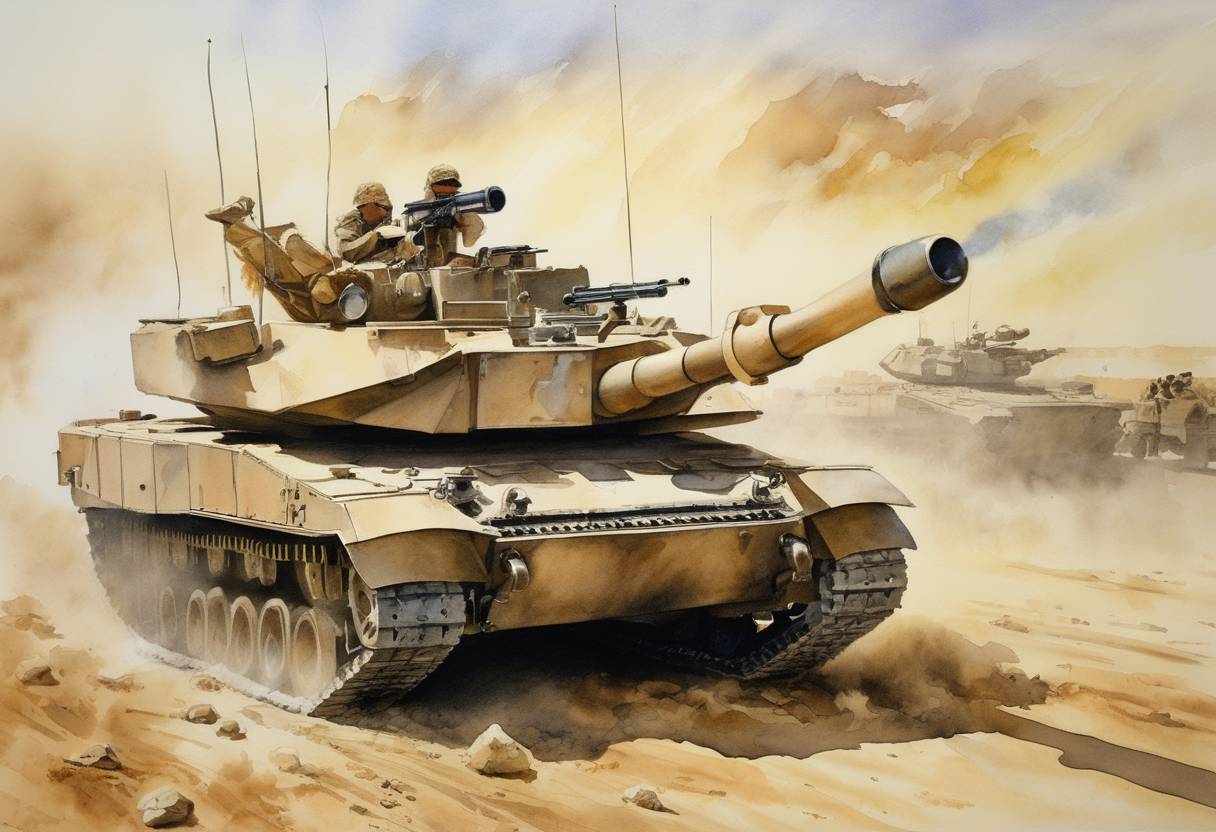
The Battle of Khafji, which began on January 29, 1991, marked a significant turning point in the Gulf War as the first major ground engagement between Iraqi forces and coalition troops led by Saudi Arabia, with support from the United States and other allied nations. This battle unfolded in the context of Operation Desert Storm, which was initiated to liberate Kuwait following Iraq’s invasion in August 1990.
In the months leading up to the battle, the coalition had imposed economic sanctions on Iraq and amassed a formidable military presence in the Persian Gulf region. Operation Desert Storm commenced on January 17, 1991, with a sustained aerial bombing campaign aimed at crippling Iraq’s military infrastructure.
Saddam Hussein, the Iraqi president, ordered a brigade-sized force to launch a surprise offensive into Saudi Arabia. His strategic intention was to disrupt coalition supply lines and draw coalition forces into a protracted ground conflict, potentially turning public opinion against the war.
Situated near the border with Kuwait, Khafji was a small town in northeastern Saudi Arabia. On the night of January 29, Iraqi forces, comprising approximately two divisions (about 2,000 troops), began their assault, eventually capturing the town. The Iraqis encountered initial minimal resistance from a small contingent of Saudi National Guard units.
In response to the Iraqi invasion, coalition forces quickly mobilized. Led primarily by Saudi Arabian national guardsmen, with significant support from Qatari troops and U.S. Marines, coalition forces aimed to swiftly reclaim Khafji. American airpower played a critical role, providing close air support to hinder Iraqi advancements and supply lines.
After two days of intense combat, with air strikes and ground assaults, coalition forces successfully expelled Iraqi troops from Khafji by January 31. The battle resulted in a decisive coalition victory, with heavy Iraqi casualties and prisoners.
The Battle of Khafji was pivotal for several reasons:
The successful defense and recapture of Khafji bolstered confidence in the coalition’s ability to conduct ground operations, setting the stage for subsequent offensives that eventually led to the liberation of Kuwait in late February 1991.
Source: www.militarytimes.com